
Psellidotus annamariae
(Brimley, 1925)
soldier fly
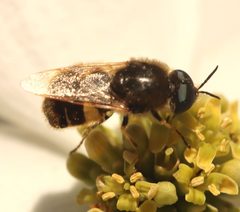
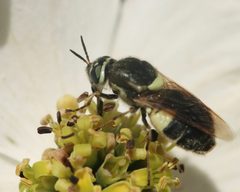
Psellidotus annamariae is a of soldier fly in the Stratiomyidae, first described by Brimley in 1925. It belongs to the Stratiomyinae and tribe Stratiomyini. The Psellidotus is closely related to Odontomyia and Hedriodiscus, with species boundaries becoming less distinct in the Neotropics. Like other stratiomyine soldier flies, typically exhibit strikingly patterned with horizontal banding, a trait associated with detection of horizontally polarized light and linked to aquatic larval .
Pronunciation
How to pronounce Psellidotus annamariae: /psɛlɪˈdoʊtəs ˌænəˈmɑːriˌeɪ/
These audio files are automatically generated. While they are not always 100% accurate, they are a good starting point.
Identification
Psellidotus annamariae can be distinguished from related by features of the wing venation and body structure, though definitive separation from Hedriodiscus becomes difficult in the Neotropics. The exhibits the characteristic horizontally banded pattern typical of the Stratiomyinae. are generally -mimicking in appearance with a somewhat robust body form. Specific diagnostic features for this species versus are not well documented in available literature.
Images
Distribution
United States (based on Wikipedia and Catalogue of Life records). The Psellidotus occurs in both the Nearctic and Neotropical regions, with poorly known outside their original descriptions.
Life Cycle
Larvae of the Stratiomyinae are aquatic, developing in various freshwater . Specific larval habitat details for P. annamariae are not documented.
Behavior
have been observed visiting flowers. The horizontally banded pattern suggests capability for detecting horizontally polarized light, which may function in locating mates and suitable oviposition sites near water.
Similar Taxa
- OdontomyiaSimilar overall appearance and -mimicking habit; Psellidotus was historically confused with this . Distinguished by subtle differences in wing venation and genitalia, though separation can be challenging.
- HedriodiscusVery closely related with overlapping morphological characteristics; distinction between Psellidotus and Hedriodiscus becomes fuzzy in the Neotropics and requires careful examination of structural features.
More Details
Taxonomic History
The was originally described by Brimley in 1925. The Psellidotus contains multiple species that remain poorly known outside their original descriptions, particularly in the Neotropics where species boundaries with related genera are not well resolved.
Eye Pattern Function
The horizontal banding pattern observed in Psellidotus and related stratiomyines is analogous to that seen in Tabanidae (horse flies and deer flies), where it functions in detection of horizontally polarized light. This visual capability is common among aquatic insects and likely assists in locating water bodies for oviposition.