
Physocephala sagittaria
(Say, 1823)
thick-headed fly
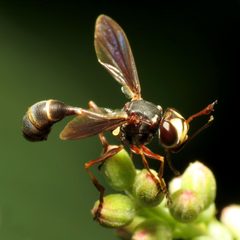
A of thick-headed fly in the Conopidae. are mimics that frequent flowers for nectar. Females are known to parasitize bumble bees by forcing between abdominal segments, with larvae developing internally and eventually killing the . The species occurs in eastern North America.
Pronunciation
How to pronounce Physocephala sagittaria: /ˌfaɪsoʊˈsɛfələ ˌsædʒɪˈtɛriə/
These audio files are automatically generated. While they are not always 100% accurate, they are a good starting point.
Identification
Distinguished from similar Physocephala by specific morphological characters; appears -like with elongated and heavily pigmented wing margin mimicking the folded wing appearance of potter wasps. Body length approximately 12-15 mm.
Images
Habitat
Found in areas with abundant flowers where (bumble bees) are present.
Distribution
Eastern North America, with records from Vermont and other eastern US states.
Diet
feed on nectar from flowers. Larvae are internal of bumble bees (Bombus spp.), feeding on tissues before emerging.
Host Associations
- Bombus - Females attack bumble bees in , forcing between abdominal segments; larvae develop internally and kill after 10-12 days
Life Cycle
Females lay in through forced oviposition. Larvae hatch and feed internally, eventually killing the host. occurs inside the hollow host . likely occurs the following summer, though southern may have multiple .
Behavior
Females actively pursue bumble bees in mid-air to oviposit. frequently found on flowers feeding on nectar.
Ecological Role
of bumble bees; control of .
Similar Taxa
- Physocephala tibialisSimilar -mimicking appearance and ; both are in the same
- PhysoconopsRelated conopid with similar potter wasp mimicry and parasitic lifestyle