
Psychodomorpha
Family Guides
3- Blephariceridae(Net-winged Midges)
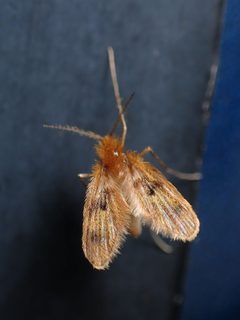
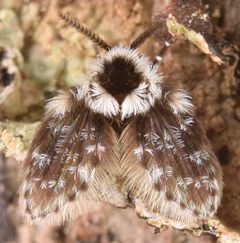
- Psychodidae(Moth flies)
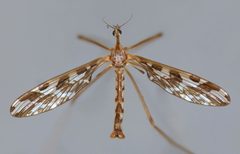
- Tanyderidae(Primitive crane flies)
is a nematoceran infraorder of flies comprising three —Psychodidae, Blephariceridae, and Tanyderidae—plus the superfamily Scatopsoidea (Canthyloscelidae, Scatopsidae, Valeseguyidae). These flies are generally small to minute with hairy or scaled wings and long, often multi-segmented . The group includes moth flies, sand flies, and other obscure dipterans with diverse aquatic and semi-aquatic larval .
Pronunciation
How to pronounce Psychodomorpha: //ˌsaɪkoʊdoʊˈmɔrfə//
These audio files are automatically generated. While they are not always 100% accurate, they are a good starting point.
Identification
is distinguished from other nematoceran infraorders by wing venation patterns and larval . typically possess broad, hairy wings held roof-like over the body; Psychodidae often appear -like due to dense wing scaling. Blephariceridae have distinctive reduced mouthparts and specialized larval attachment organs. Tanyderidae are larger and more elongate with relatively simple wing venation. Scatopsoidea are minute with reduced wing venation and short compared to Psychodidae.
Images
Habitat
Larval vary considerably across constituent . Psychodidae larvae occur in moist organic matter including decaying vegetation, sewage, and aquatic margins; some inhabit caves. Blephariceridae larvae are specialized for torrential mountain streams, using sucking discs to attach to rocks in fast-flowing water. Tanyderidae larvae have been found in moist forest soils and decaying wood. Scatopsoidea larvae inhabit decaying organic matter, fungi, and .
Distribution
distribution with -level variation. Psychodidae are worldwide in distribution. Blephariceridae are primarily found in mountainous regions of the Northern Hemisphere and parts of the Southern Hemisphere including South America and New Zealand. Tanyderidae have disjunct distributions in South America, Australia, and New Zealand. Scatopsoidea are widespread but poorly documented in many regions.
Life Cycle
Complete with , larval, pupal, and stages. Larval development is aquatic or semi-aquatic for most , with duration varying by conditions. Blephariceridae have specialized larval stages adapted to torrential stream environments. occurs in or near the larval habitat; adults are generally short-lived and do not feed extensively.
Behavior
are generally weak fliers with or activity patterns. Many Psychodidae are attracted to light. Blephariceridae adults are rarely encountered, reflecting their brief adult lifespan and specialized requirements. Mating is poorly documented for most .
Ecological Role
Larvae contribute to decomposition and nutrient cycling in aquatic and terrestrial . Blephariceridae larvae serve as bioindicators of high-quality, oxygen-rich stream environments. Some Psychodidae are medically significant as of (Phlebotominae ).
Human Relevance
Certain Psychodidae (sand flies, Phlebotomus and related genera) are of Leishmania causing in humans and animals. Moth flies (Psychodidae) are common nuisance pests in bathrooms and drains. The group otherwise has minimal direct economic impact.
Similar Taxa
- CulicomorphaBoth are nematoceran infraorders with aquatic larvae, but Culicomorpha (mosquitoes, , black flies) have scaled wings in only specific , distinct larval mouthpart structures, and generally more slender bodies with longer legs relative to body size.
- BibionomorphaAnother nematoceran infraorder with broad wings, but Bibionomorpha typically have shorter, stouter and larvae that are primarily terrestrial or in decaying wood rather than the specialized aquatic of many .
Misconceptions
The name is sometimes misspelled as 'Psychomorpha,' which is actually a of noctuid , not a dipteran .
More Details
Taxonomic composition
The infraorder contains approximately 6,000 described across its constituent , with Psychodidae being the most diverse. Scatopsoidea was historically placed elsewhere but molecular and morphological evidence supports its placement within .
Conservation relevance
Tanyderus pictus, a member of Tanyderidae, is classified as vulnerable with distribution restricted to threatened forest in Chile (Valdivian and Maulino forests).