
Blephariceridae
Net-winged Midges
Genus Guides
4- Agathon
- Bibiocephala(net-winged midges)
- Blepharicera(net-winged midge)
- Philorus
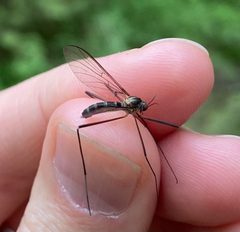
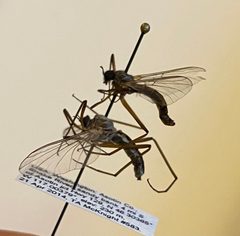
, or net-winged , are a of nematoceran flies distinguished by wings with a distinctive network of fissures and folds resembling cracked glass. superficially resemble crane flies but differ in wing shape, structure, and leg posture. Larvae are specialized inhabitants of torrential streams, possessing six suckers that enable attachment to rocks in flows exceeding 2 m/s. The family contains over 200 across dozens of worldwide, with highest diversity in mountainous regions. Larvae are ecologically significant as diatom grazers in lotic .
Pronunciation
How to pronounce Blephariceridae: //ˌblɛfəˌrɪˈsɛrɪdiː//
These audio files are automatically generated. While they are not always 100% accurate, they are a good starting point.
Identification
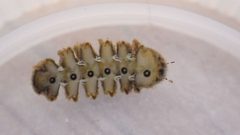
distinguished from crane flies (Tipulidae) by: projecting anal angle in wings; different shape; absence of V-shaped on ; legs more laterally outstretched and forward-facing. Wing venation with distinctive reticulate pattern of fissures and folds is diagnostic. Larvae identified by presence of six suckers with piston-cavity mechanism, unique among aquatic Diptera.
Images
Habitat
Larvae inhabit torrential streams and high-velocity microhabitats with water flows exceeding 2 m/s. Attachment to rocks that are regularly washed or splashed by water is essential for larval development. found near streams and rivers, often clinging to moist rock or suspended from vegetation. distribution within streams correlates with hydraulic stress, with sucker and size adapted to local flow conditions.
Distribution
Worldwide distribution with dozens of . Documented from: North America (Canada, United States including southern Appalachian Mountains, western regions); South America (Colombia: Complejo Humedales Hato Corozal, Arcabuco río Pómeca, Mongua quebrada La Batea); Australia (Tasmania); New Zealand. Southern Appalachian Mountains harbor particularly diverse fauna with 13 Blepharicera . Disjunct distribution pattern in Edwardsininae suggests possible Gondwanan relict or transantarctic history.
Seasonality
Larval activity periods vary by : winter-active types (e.g., Blepharicera magna), spring-active types, and summer-active types (e.g., B. similans). Fourth-instar stadium is protracted in some species. Temporal isolation between winter- and summer-active species contributes to ecological partitioning among .
Diet
Larvae are true scrapers feeding almost exclusively on diatoms. Grazing involves scraping diatoms and other microorganisms from rock surfaces. Fourth-instar larvae show peak diatom consumption at mid-stage. Preferential ingestion of adnate and prostrate diatom results in consistently low grazing . Dietary composition varies significantly throughout fourth-instar stadium in some species (B. similans) but not others (B. magna). obtain food by scraping diatoms and microorganisms from surfaces; females of numerous lineages exhibit predatory , seizing mayflies and other small insects with specialized hind .
Life Cycle
Holometabolous. Larval stage inhabits fast-flowing streams with specialized sucker-based attachment. Larval development includes multiple instars with protracted fourth instar in some . occurs on rocks using paired adhesion disks. Upon , resemble delicate craneflies. Seasonal activity patterns (winter, spring, summer types) result in temporal partitioning among sympatric species.
Behavior
Larvae attach to substrate via six suckers using adhesion rather than suction: mechanical interlocking with substrate irregularities combined with capillary forces from secreted fluid. Attachment achieved by upward piston movement; release involves cavity flooding followed by piston lowering to expel water. First sucker functions as during foraging, with and piston moving synchronously to facilitate grazing. Sucker attachment enables maintenance of position in extreme flows without muscular effort, allowing simultaneous feeding and respiration. often suspend from vegetation similar to flies or cling to moist rock near larval .
Ecological Role
Important in structure and function of lotic . Member of scraper functional feeding group, grazing on diatom . Ecological isolation among achieved through spatial and phenological mechanisms, including partitioning of food resources and temporal isolation. Balance between sucker and hydraulic conditions defines a key dimension of for larvae.
Human Relevance
No documented direct economic importance. Serve as indicators of high-quality, fast-flowing stream . Uncommon and rarely encountered by non-.
Similar Taxa
- Tipulidae (crane flies) superficially similar but distinguished by projecting anal angle in wings, different shape, absence of V on , and more laterally outstretched forward-facing legs
More Details
Sucker Function
Larval suckers function primarily through adhesion rather than true suction, combining mechanical interlocking with substrate irregularities and capillary forces from secreted fluid. This enables resistance to dislodgement in flows exceeding 2 m/s without muscular effort.
Taxonomic Note
One recent classification based largely on fossils treats this as the sole member of its infraorder (Blephariceromorpha), but this has not gained wide acceptance.
Biogeographic Significance
Edwardsininae exhibits disjunct distribution pattern interpreted as either transantarctic or relict Gondwanan distribution.
Sources and further reading
- BugGuide
- Wikipedia
- GBIF taxonomy match
- iNaturalist taxon
- NCBI Taxonomy
- Catalogue of Life
- Edwardsininae (Diptera: Blephariceridae): Transantarctic dispersal or relict distribution?
- Feeding ecology of larval net-winged midges (Diptera: Blephariceridae: Blepharicera Macquart) from the southern Appalachian Mountains
- The function of the suckers of larval net‐winged midges (Diptera: Blephariceridae)
- REVIEW OF THE CANADIAN SPECIES OF THE DIPTEROUS FAMILY BLEPHARICERIDAE