
Agathon
Röder, 1890
Species Guides
1- Agathon comstocki(Comstock's Net-winged Midge)
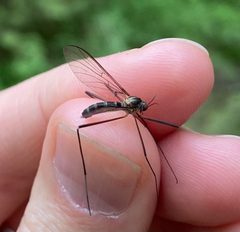
Agathon is a of net-winged midges in the Blephariceridae, established by Röder in 1890. These aquatic Diptera are characterized by their distinctive wing venation and are typically found in fast-flowing mountain streams. The genus has a broad distribution across the Holarctic and Oriental regions.
Pronunciation
How to pronounce Agathon: /ˈaɡəˌθɒn/
These audio files are automatically generated. While they are not always 100% accurate, they are a good starting point.
Identification
Distinguished from other Blephariceridae by wing venation patterns and genitalia structure. may be separated from similar by the combination of net-veined wings, slender body, and association with fast-flowing streams. Larvae and pupae are dorsoventrally flattened with specialized attachment structures for life in torrential currents.
Images
Habitat
Fast-flowing mountain streams and torrential waters; larvae and pupae attach to rocks in current-swept zones. typically found near larval .
Distribution
Holarctic and Oriental regions; recorded from Europe, Asia, and North America. Specific localities include mountainous areas with suitable lotic .
Life Cycle
Holometabolous with aquatic , larval, and pupal stages. Larvae are filter-feeders in torrential streams, attaching to substrates with specialized suckers. Pupae also aquatic, attached to rocks. are short-lived and do not feed.
Behavior
Larvae maintain position in fast currents using suckers. are weak fliers typically found near streams, often resting on riparian vegetation or rocks.
Ecological Role
Larvae contribute to organic matter processing in headwater stream . Serve as prey for aquatic including fish and other .
Human Relevance
Occasionally used as bioindicators of high-quality, minimally disturbed lotic due to specific requirements for clean, oxygenated, fast-flowing water. Not of medical or economic importance.
Similar Taxa
- BlephariceraAlso in Blephariceridae; distinguished by wing venation details and male genitalia structure
- PhilorusAnother blepharicerid ; differs in wing venation and pupal case
- BibiocephalaRelated blepharicerid; separation based on wing venation patterns and geographic distribution
More Details
Taxonomic Note
The name Agathon was also borne by an Athenian tragic poet of the 5th century BCE, creating potential for confusion in non-biological contexts. The entomological was established by Röder in 1890 and is valid under zoological .
Aquatic Adaptations
Blephariceridae, including Agathon, represent one of the most specialized lineages of aquatic Diptera, with larval and pupal stages highly adapted to life in torrential currents through morphological modifications including flattened bodies and powerful sucking discs.