
Canthyloscelidae
Genus Guides
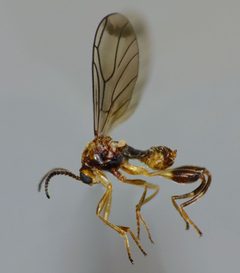
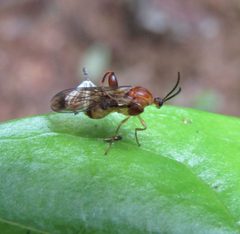
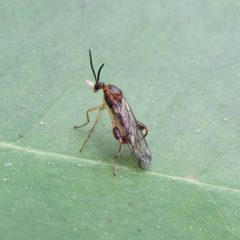
2Canthyloscelidae is a small of nematoceran flies closely related to Scatopsidae. The family contains approximately 15 extant distributed across New Zealand, North America, South America, Japan, and Russia, plus one species known from Jurassic fossils. Most species are considered endangered due to their specialized requirements.
Pronunciation
How to pronounce Canthyloscelidae: /ˌkænθɪloʊskəˈlaɪdiː/
These audio files are automatically generated. While they are not always 100% accurate, they are a good starting point.
Identification
Distinguished from related Scatopsidae by -level characters; historically separated as Synneuridae before taxonomic revision. Stout body and leg structure in combination with small size and dark coloration are characteristic.
Images
Appearance
are small to medium-sized (2.5–9.0 mm), relatively stout, usually dark-coloured with stout legs.
Habitat
Associated with ancient woodland. Larval is moist, rotting wood of stumps and fallen trees.
Distribution
New Zealand, North America, South America, Japan, and Russia. One known from Jurassic fossil record (Itat Formation, Russia, Bathonian).
Diet
Larvae are xylosaprophagous, feeding on moist decaying wood.
Life Cycle
Larval stage occurs in moist, rotting wood of stumps and fallen trees. Details of pupal and not documented in available sources.
Ecological Role
Larvae contribute to wood decomposition as xylosaprophages in forest .
Human Relevance
Most are considered endangered due to vulnerability of their ancient woodland .
Similar Taxa
- ScatopsidaeClosely related ; Canthyloscelidae historically confused with or separated from Scatopsidae before recognition as distinct family
Misconceptions
Originally treated as two separate (Synneuridae and Canthyloscelidae); Synneuridae is now synonymized under Canthyloscelidae as Synneurinae, with subsequent reclassification reducing Synneurinae to synonymy of Canthyloscelinae.
More Details
Taxonomic history
underwent significant revision: originally two families (Synneuridae and Canthyloscelidae), then Synneuridae as Synneurinae, now Synneurinae synonymized under Canthyloscelinae per Amorim phylogenetic reclassification.
Conservation status
Most considered endangered due to vulnerability; dependent on ancient woodland with moist decaying wood.
Fossil record
Prohyperoscelis jurassicus from Itat Formation (Russia, Bathonian) represents only known fossil ; additional extinct species Synneuron eomontana and Synneuron jelli described in 2020.