
Aulagromyza
Enderlein, 1936
Species Guides
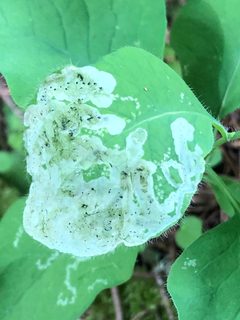
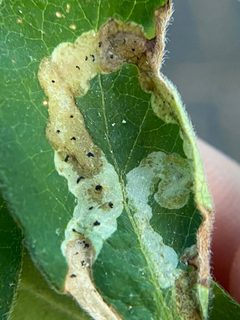
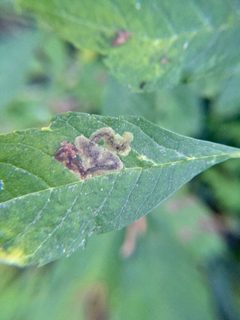
4Aulagromyza is a of leaf-miner flies in the Agromyzidae, comprising approximately 50 described distributed across the Holarctic region. Species in this genus are primarily phytophagous, with larvae that feed internally within leaf parenchyma, creating distinctive blotch or serpentine mines. Several species are monophagous or oligophagous, showing strong associations with particular plant genera including Fraxinus (ash), Lonicera (honeysuckle), and Populus (poplar). The genus is of ecological interest due to its role in leaf herbivory and its interactions with .
Pronunciation
How to pronounce Aulagromyza: /ˌaʊləˈɡroʊmɪzə/
These audio files are automatically generated. While they are not always 100% accurate, they are a good starting point.
Identification
-level identification relies on morphological features typical of Agromyzidae, including reduced wing venation with a characteristic and specific patterns of bristles on the and . -level identification often requires examination of male genitalia and subtle differences in coloration, particularly of the scutellum and . in antennal coloration has been documented in some species (e.g., A. heringii: males with bright yellow third antennal segment, females with distally darkened segment). Wing venation can be variable within species; the second crossvein may be present or absent.
Images
Habitat
Associated with deciduous broadleaf trees and shrubs. Larval is the leaf parenchyma of plants. are found in wooded areas, forest edges, and gardens where host plants occur. Elevation range includes lowlands to montane areas (recorded up to 1,320m in Iran).
Distribution
Holarctic distribution, widespread across Europe and extending eastward through central Asia to China and Japan. Documented from: Austria, China, Czech Republic, Denmark, England, Finland, France, Germany, Hungary, Iran, Italy, Japan, Kazakhstan, Kyrgyzstan, Moldova, Norway, Poland, Romania, Russia, Sweden, The Netherlands, Turkey, Uzbekistan, Ukraine, and North America (United States: Vermont).
Seasonality
Most appear to be , with larval activity in autumn (October-November) and in spring (May). Some variation likely exists among species and geographic regions.
Diet
Larvae are internal plant feeders (leaf miners) in leaf parenchyma; phytophagous. Specific associations documented for some : Fraxinus excelsior (A. heringii, A. fraxini, A. fraxinivora), Lonicera spp. (A. lonicerae, A. lonicerina, A. loniceroides), Populus spp. (A. populi, A. populicola, A. tremulae), Jasminum (A. jasmini), Caragana (A. caraganae), Cydonia (A. cydoniae), and Galium (A. galii).
Host Associations
- Fraxinus excelsior - plantEuropean ash; primary of A. heringii, A. fraxini, A. fraxinivora
- Lonicera - plantHoneysuckle; of multiple including A. lonicerae, A. lonicerina, A. loniceroides
- Populus - plantPoplar; of A. populi, A. populicola, A. tremulae
- Lamprotatus crassipes - Pteromalidae; pupal endoparasitoid of A. heringii (documented from Iran)
Life Cycle
Larvae develop within leaf mines, forming either blotch mines or serpentine mines depending on . Pupariation occurs within the leaf mine (not externally) in at least some species. with single per year: larval feeding in autumn, pupal through winter, in spring. Front spiracula of may penetrate upper leaf .
Behavior
Larvae are sedentary internal feeders. Mine -specific: some form green blotches with central white spots that later turn brownish with distinct lines (A. heringii). are active in spring, presumably mating and ovipositing on new foliage. No known migratory .
Ecological Role
Leaf herbivores that reduce photosynthetic capacity of plants through mine formation. Serve as hosts for (Hymenoptera: Pteromalidae, Eulophidae, Braconidae), contributing to complexity in forest and shrub . may be affected by host plant health; ash die-off from Hymenoscyphus pseudoalbidus has been noted to impact A. heringii .
Human Relevance
Minor economic significance; some may cause aesthetic damage to ornamental trees and shrubs. A. heringii and related species on ash may be affected by ongoing ash dieback management. Used as model organisms in studies of leaf-miner , - interactions, and insect-plant .
Similar Taxa
- PhytomyzaCongeneric in Agromyzidae; also leaf miners but distinguished by wing venation patterns and male genitalia structure. Phytomyza generally has more and broader range.
- AgromyzaRelated agromyzid ; often with more linear serpentine mines and different deposition patterns. Requires microscopic examination for reliable separation.
- LiriomyzaAnother agromyzid leaf-miner ; often smaller with different mine and pupariation habits (frequently external).
More Details
Taxonomic history
established by Enderlein in 1936. Many were originally described in other genera (particularly Phytomyza) and later transferred to Aulagromyza based on morphological revisions.
Research significance
A. heringii has been subject of detailed biological study due to its specialized association with Fraxinus excelsior, making it useful for tracking impacts of ash dieback on associated insect .