
Juriniopsis aurifrons
Brooks, 1949
Juriniopsis aurifrons is a of bristle fly in the Tachinidae, first described by Brooks in 1949. The species is known from the southwestern United States and Mexico. Like other tachinid flies, it is likely a , though specific records remain undocumented. have been observed visiting flowers, particularly those of rubber rabbitbrush (Ericameria nauseosa).
Pronunciation
How to pronounce Juriniopsis aurifrons: //ˌdʒʊərɪˈnaɪəpˌsɪs ˌɔːrɪˈfrɒnz//
These audio files are automatically generated. While they are not always 100% accurate, they are a good starting point.
Identification
The golden indicated by the name 'aurifrons' likely serves as the primary diagnostic feature distinguishing this species from . Accurate identification requires examination of male terminalia and comparison with , as Juriniopsis species are morphologically similar and best distinguished by subtle genitalic differences. The species occurs in a geographic region where it may overlap with related Juriniopsis species, necessitating careful morphological study for definitive identification.
Images
Appearance
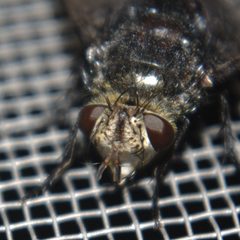
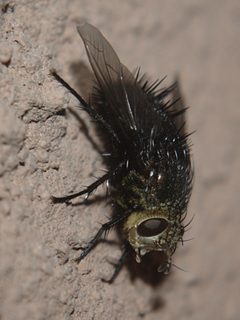
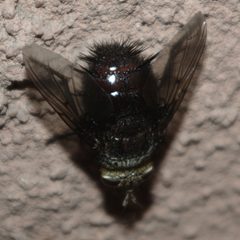
are medium-sized bristle flies with the characteristic robust body and prominent bristles typical of Tachinidae. The specific epithet 'aurifrons' (golden-fronted) suggests a distinctive golden or yellowish coloration on the (front of the ). Detailed morphological descriptions of this are limited in available literature.
Habitat
have been collected in montane and submontane of the southwestern United States, including pinyon-juniper woodlands and areas with flowering rabbitbrush. The appears associated with open, dry habitats at moderate to high elevations where its presumed insects and adult nectar sources occur.
Distribution
Documented from Mexico and the United States. Specific U.S. records include Arizona (Kaibab Plateau area) and potentially other southwestern states. The distribution aligns with the Madrean and Rocky Mountain faunal regions.
Seasonality
activity recorded in September, with observations from early to mid-autumn in the southwestern United States. This late-season activity pattern coincides with flowering of key nectar plants such as rubber rabbitbrush.
Behavior
have been observed visiting flowers of Ericameria nauseosa (rubber rabbitbrush), suggesting nectar-feeding typical of many adult tachinid flies. No other specific behaviors have been documented.
Ecological Role
As a member of Tachinidae, this likely functions as a of other insects, though specific relationships remain unknown. flower-visiting suggests a minor role as a .
Human Relevance
No direct economic or medical significance documented. The is of interest to dipterists and collectors studying southwestern Nearctic Tachinidae.
Similar Taxa
- Juriniopsis adustaOccurs in same geographic region and ; also recorded from flowers of Ericameria nauseosa. Distinguished by subtle morphological differences, particularly in coloration of the and abdominal patterning.
- Archytas metallicusAnother large, bristly tachinid fly found on the same flowers in the southwestern U.S.; can be confused in the field due to similar size and , but belongs to a different with distinct morphological features.
More Details
Taxonomic Note
The Juriniopsis was established by Townsend and contains several Nearctic that are poorly studied. Juriniopsis aurifrons was described by Brooks in 1949 based on material from the southwestern United States. The genus is placed in the tribe Tachinini, Tachininae.
Field Observation Context
The only detailed field observation of this in recent literature comes from a collecting trip report noting 'enormous numbers of a large, black, bristly tachinine fly—possibly Archytas metallicus or Juriniopsis adusta' on Ericameria nauseosa flowers. This suggests Juriniopsis aurifrons and related species may be locally abundant when conditions are favorable, though positive identification to species level from field observations is challenging.