
Trichopoda indivisa
Townsend, 1897
feather-legged fly
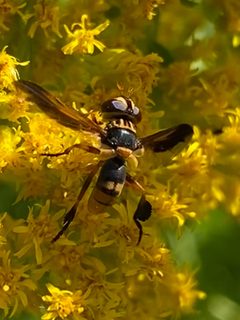
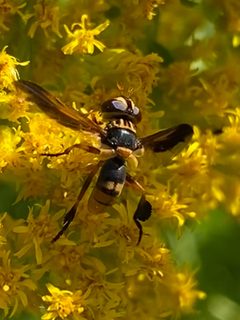
Trichopoda indivisa is a of tachinid fly in the Tachinidae, commonly known as a feather-legged fly. It is native to North America and has been recorded in the United States and Mexico. Like other members of its , it is a of true bugs (Hemiptera).
Pronunciation
How to pronounce Trichopoda indivisa: //ˌtrɪkoʊˈpoʊdə ˌɪndɪˈvaɪzə//
These audio files are automatically generated. While they are not always 100% accurate, they are a good starting point.
Identification
Members of the Trichopoda are distinguished by conspicuous feather-like setae on their hind legs. Specific identification of T. indivisa requires examination of morphological details not covered in available sources.
Images
Distribution
United States and Mexico.
Diet
feed on nectar and pollen, particularly from late-season flowering plants such as goldenrods (Solidago spp.).
Host Associations
- True bugs (Hemiptera) - Based on -level ; specific for T. indivisa not documented in available sources.
Life Cycle
Females deposit on true bugs. Eggs hatch into larvae that bore into the , develop internally, then exit to pupate in soil. Adults emerge to feed, mate, and locate new hosts.
Behavior
are attracted to flowering plants, particularly goldenrods. Females locate using produced by the hosts themselves.
Ecological Role
As a of true bugs, this contributes to natural of pest insects. It has been observed in association with agricultural systems where occur.
Human Relevance
Has potential value in programs targeting squash bugs and other pest Hemiptera, though specific efficacy data for T. indivisa is not documented in available sources.
Similar Taxa
- Trichopoda pennipesClosely related congeneric with similar and ; T. pennipes is better studied and specifically documented as a of squash bugs (Anasa tristis) and brown marmorated stink bugs (Halyomorpha halys).
More Details
Taxonomic note
T. indivisa is less well-documented in scientific literature than the congeneric T. pennipes. Many biological details currently attributed to the may apply, but -specific confirmation is lacking.