
Belvosia
Robineau-Desvoidy, 1830
Species Guides
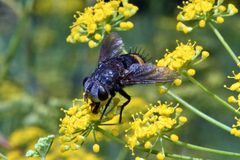
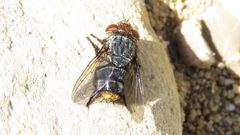
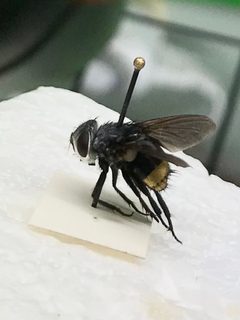
6Belvosia is a of tachinid flies (Diptera: Tachinidae) in the tribe Goniini. The genus contains over 100 distributed across the New World from Canada to Argentina. Belvosia species are of caterpillars, with females laying microtype on food plant foliage that are ingested by feeding larvae. A 2023 revision described 33 new species from Rica, bringing the total from 72 to 107 species.
Pronunciation
How to pronounce Belvosia: //bɛlˈvoʊziə//
These audio files are automatically generated. While they are not always 100% accurate, they are a good starting point.
Identification
Belvosia are distinguished from other Goniini by morphological characters detailed in the 2023 revision, which provides a key to North and Mesoamerican species. The was previously divided into Brachybelvosia and Belvosiomimops, now synonymized. Species-level identification requires examination of specimens using the provided key.
Images
Habitat
Tropical and subtropical forests including rain forest, dry forest, and cloud forest. In Rica, occurs in Area de Conservación Guanacaste in northwestern part of the country.
Distribution
New World exclusively. Ranges from Canada through the United States, Mexico, Central America (including Rica and Panama), and throughout the Neotropical Region in South America to Argentina. Type locality for B. bicincta is the West Indies.
Host Associations
- Lepidoptera: Erebidae - caterpillars reared from wild-caught specimens
- Lepidoptera: Eupterotidae - caterpillars reared from wild-caught specimens
- Lepidoptera: Noctuidae - caterpillars reared from wild-caught specimens
- Lepidoptera: Notodontidae - caterpillars reared from wild-caught specimens
- Lepidoptera: Saturniidae - caterpillars reared from wild-caught specimens
- Lepidoptera: Sphingidae - caterpillars reared from wild-caught specimens; includes Hyles lineata
Life Cycle
Females lay microtype on foliage of food plants. Eggs are ingested by feeding caterpillars, hatch, and larvae burrow through the gut wall to develop within the host body. Multiple eggs may be ingested by a single host. The larva kills the host during and pupates within the host's pupal case.
Behavior
involves passive transmission: are not actively deposited on but fortuitously ingested during feeding. Extensive inventory work in Rica reared more than 750,000 wild-caught caterpillars to document these associations.
Ecological Role
of caterpillars (Lepidoptera larvae), contributing to regulation of lepidopteran . Involved in tri-trophic interactions among parasitoids, their lepidopteran , and host food plants.
Human Relevance
Potential agent for caterpillar pests. One has been documented as a of the White-lined Sphinx (Hyles lineata), a whose caterpillars occasionally damage crops.
Similar Taxa
- DrinoAnother of Goniini tachinids that are of caterpillars; distinguished by morphological characters in identification keys
- WinthemiaGoniini tachinid with similar on caterpillars; differs in morphological details and associations
- CompsiluraTachinid with caterpillar lifestyle; distinguished from Belvosia by taxonomic and morphological features
More Details
Taxonomic Revision
A 2023 revision by Fleming & Woodley in Biodiversity Data Journal described 33 new from Rica, synonymized Brachybelvosia and Belvosiomimops with Belvosia, proposed three new combinations, and established several new synonymies. The study provided data for all new species.
Rearing Methods
All described in the 2023 revision were reared from wild-caught caterpillars through an ongoing inventory program at Area de Conservación Guanacaste spanning more than 750,000 specimens.
Sources and further reading
- BugGuide
- Wikipedia
- GBIF taxonomy match
- iNaturalist taxon
- NCBI Taxonomy
- Catalogue of Life
- Bug Eric: White-lined Sphinx ("Hummingbird Moth")
- Revision of Belvosia Robineau-Desvoidy (Diptera, Tachinidae) and 33 new species from Area de Conservación Guanacaste in northwestern Costa Rica with a key to known North and Mesoamerican species