
Pegomya
Robineau-Desvoidy, 1830
Species Guides
15- Pegomya atlanis(root-maggot fly)
- Pegomya betae(Beet Leafminer)
- Pegomya bicolor
- Pegomya carduorum
- Pegomya depressiventris
- Pegomya disticha
- Pegomya exilis
- Pegomya flavifrons(root-maggot fly)
- Pegomya geniculata
Pegomya is a of flies in the Anthomyiidae comprising diverse with varied larval feeding strategies. Larvae exhibit leaf mining, stem boring, gall induction, seed feeding, and mycophagy. Several species are economically significant agricultural pests, including those attacking sugar beet, spinach, and cruciferous crops. Some species have been investigated for of plants.
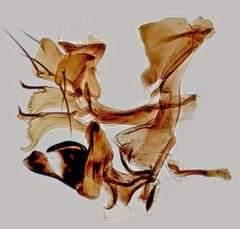
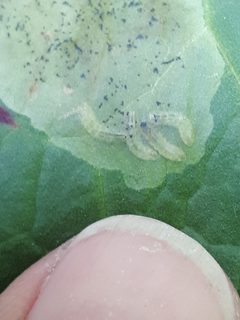
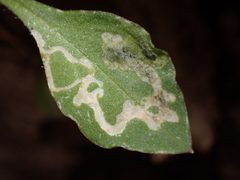
Pronunciation
How to pronounce Pegomya: /ˌpɛɡoʊˈmaɪə/
These audio files are automatically generated. While they are not always 100% accurate, they are a good starting point.
Images
Distribution
Europe (primary native range); some introduced to North America (e.g., Pegomya curticornis, P. euphorbiae) and Japan (P. cunicularia, P. exilis). GBIF records indicate presence in Denmark, Norway, and Sweden.
Diet
Highly variable across : leaf parenchyma (leaf miners), stem pith and vascular tissue (borers), seeds (e.g., Hypericum spp.), and fungal sporocarps (Boletaceae). Specific diet is species-dependent and not generalizable to level.
Life Cycle
deposited on or near tissue. Larvae feed internally in leaves, stems, seeds, or fungi depending on . occurs within host tissue or soil. Some species exhibit facultative (observed in P. mixta).
Behavior
Larvae of some exhibit gregarious feeding within shared mines (e.g., P. nigritarsis). Clutch size varies with leaf size and correlates with larval survival. Some species induce gall formation through stem boring combined with callus induction.
Ecological Role
Agricultural pests of root and leaf crops; potential biocontrol agents for plants (e.g., leafy spurge, Hypericum spp.). Mycophagous contribute to fungal sporocarp decomposition.
Human Relevance
Several are significant agricultural pests: P. betae (beet fly), P. hyoscyami complex (beet and spinach leaf miners), P. brassicae (turnip maggot). Some species investigated for of weeds.
Sources and further reading
- BugGuide
- Wikipedia
- GBIF taxonomy match
- iNaturalist taxon
- NCBI Taxonomy
- Catalogue of Life
- Notes on the Biology of Pegomya Brassicae Bouche1
- STRUCTURAL DAMAGE AND GALL INDUCTION BY PEGOMYA CURTICORNIS AND PEGOMYA EUPHORBIAE (DIPTERA: ANTHOMYIIDAE) WITHIN THE STEMS OF LEAFY SPURGE (EUPHORBIA × PSEUDOVIRGATA) (EUPHORBIACEAE)
- A revision of the beet leaf-miner complex, Pegomya hyoscyami s.lat. (Diptera: Anthomyiidae)
- Notes on the Life History and Habits of Pegomya Brassicae
- Taxonomic revision of the Pegomya meridiana species group (Diptera: Anthomyiidae) including natural enemies of invasive Hypericum spp. (Clusiaceae)
- Taxonomic review of the major larval pests of bolete fungi (Boletaceae) in Europe: The Pegomya fulgens, furva and tabida species groups (Diptera: Anthomyiidae)
- Clutch size in a leaf‐mining fly ( Pegomya nigritarsis : Anthomyiidae)
- Änderung im Stoffwechsel von Zuckerrübenblättern durch Befall mit Pegomya betae Curt. (Muscidae: Anthomyidae)1,2
- DIAPAUSE AND PARASITISM OF THE SUGAR BEET LEAFMINER, PEGOMYA MIXTA VILLENEUVE (DIPTERA: ANTHOMYIIDAE), PUPAE REARED FROM CERTAIN CHENOPODIACEOUS HOST PLANTS AT GIZA
- Diachasma hispanicum, un nuevo parasitoide de Pegomya cunicularia (Rondani) sobre Beta vulgaris L. (Hymenoptera, Braconidae)