
Braula
Nitzsch, 1818
bee lice, bee louse
Species Guides
1- Braula coeca(bee louse)
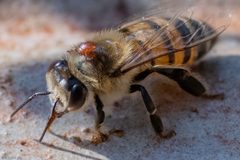
Braula is a of wingless, highly modified flies in the Braulidae. are obligate commensals of honey bees (Apis mellifera), living on the bodies of , queens, and drones and stealing food during . Larvae tunnel through wax honeycomb. The genus is and contains five described , with Braula coeca being the most studied.
Pronunciation
How to pronounce Braula: //ˈbraʊ.la//
These audio files are automatically generated. While they are not always 100% accurate, they are a good starting point.
Identification
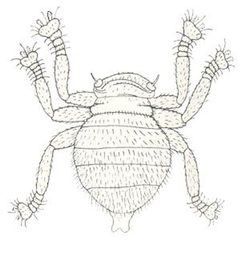
Distinguished from all other Diptera by complete winglessness and extreme dorsoventral flattening. Resembles or mites superficially but has six legs (not eight) and dipteran mouthparts. Distinguished from the related Megabraula by subtle morphological differences in body proportions. Within colonies, identified by presence on bodies and characteristic slow, clinging movement.
Images
Appearance
Wingless, dorsoventrally flattened flies approximately 1.6 mm in length. Body shape is oval and compact, with reduced or absent wing structures making them barely recognizable as Diptera. Legs are adapted for clinging to bees. are reduced. Overall appearance resembles small arachnids or rather than typical flies.
Habitat
Exclusively associated with colonies of the western honey bee (Apis mellifera). occupy the interior of hives, clinging to , queens, and drones. Larvae develop within wax honeycomb. Adults occasionally found at external sites where bees congregate, including flowers and salt licks, where they await opportunities to transfer to new colonies.
Distribution
distribution, coincident with the range of its Apis mellifera. Records from Europe (Denmark, Norway, Sweden), Africa, and other regions where honey bees are established.
Seasonality
Activity patterns follow those of colonies; present year-round within hives in temperate regions, with continuous in managed colonies.
Diet
feed by stealing food from the mouths of bees during . They do not consume host tissues. Larvae presumably feed on wax or organic material within honeycomb tunnels, though specific diet is not well documented.
Host Associations
- Apis mellifera - obligate commensalprimary ; live on , queens, and drones
- Apis mellifera scutellata - obligate commensalAfrican honey bee ; of B. coeca
Life Cycle
Behavior
select using mandibular gland as chemical cues, showing preference for with higher levels of (9-oxo-2(E)-decenoic acid) and worker substance (10-hydroxy-2(E)-decenoic acid). This allows them to exploit bees with greater trophallactic dominance. Adults remount previously occupied hosts successfully. Transfer between colonies occurs at congregation sites.
Ecological Role
Commensal with minimal to no demonstrated impact on colony health. Debate exists regarding whether Braula causes meaningful damage to honey bees; generally considered a minor or incidental associate rather than a significant pest.
Human Relevance
Known as "bee lice," these flies are familiar to beekeepers but are not considered economically important pests. Their presence may cause minor concern, but management is rarely warranted. Sometimes mistaken for Varroa mites by novice beekeepers due to small size and clinging .
Similar Taxa
- MegabraulaRelated in Braulidae; also wingless and commensal on honey bees; distinguished by morphological differences in body proportions
- Varroa destructorExternal of honey bees; similar size and clinging , but is an arachnid (mite) with eight legs, not a fly with six legs
- Braula coecaMost widespread and studied in the ; other Braula species distinguished by subtle morphological features and geographic distribution
Misconceptions
Despite "bee louse," Braula are true flies (Diptera), not (). Their status as pests is debated; some sources label them pests while others emphasize their commensal nature with minimal impact on bees.
Sources and further reading
- BugGuide
- Wikipedia
- GBIF taxonomy match
- iNaturalist taxon
- NCBI Taxonomy
- Catalogue of Life
- Beelouse, Braula coeca Nitzsch (Insecta: Diptera: Braulidae)
- Bee louse, bee fly, braulid, Braula coeca Nitzsch (Insecta: Diptera: Braulidae)
- Distribution of the Bee LouseBraula CoecaNitzsch in Honeybee Colonies and its Preferences Among Workers, Queens and Drones
- A Hitchhiker’s Ride: The Honey Bee Louse Braula Coeca (Diptera: Braulidae) Selects its Host by Eavesdropping