
Varroa
Oudemans, 1904
Varroa Mites
Species Guides
1- Varroa destructor(Varroa mite)
Varroa is a of parasitic mesostigmatan mites that are obligate of honey bees (Apis spp.). The genus contains four , with Varroa destructor being the most significant pest of Western honey bees (Apis mellifera) worldwide. Originally of Asian honey bees (Apis cerana) in mainland Asia, these mites have spread globally through activities. V. destructor is recognized as the most devastating pest of managed honey bees, causing colony losses through direct and by vectoring viruses such as deformed wing virus. The genus was named for Marcus Terentius Varro, a Roman scholar and beekeeper.
Pronunciation
How to pronounce Varroa: /væˈroʊ.ə/
These audio files are automatically generated. While they are not always 100% accurate, they are a good starting point.
Identification
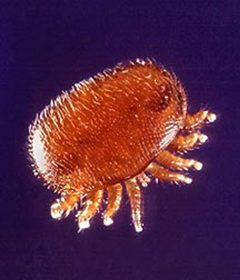
female are approximately 1.6 mm in length with a reddish-brown coloration. They possess bristling hairs (setae) that aid in attachment to . The body is oval and dorsoventrally flattened. shield area measurements have been used to distinguish mite , with mites from varroa- colonies showing consistently smaller body size (approximately 6.8% reduction in dorsal shield area) compared to those from non-resistant colonies. Identification to level requires molecular or detailed morphological analysis; V. destructor and V. jacobsoni were historically confused until separated by Anderson & Trueman in 2000 based on genetic and reproductive differences.
Images
Habitat
Distribution
Originally restricted to Asia as of Apis cerana. Varroa destructor has achieved worldwide distribution in managed Apis mellifera colonies following spread through shipments of colonies and queens. Documented in North America since 1987, New Zealand since 2000, and the United Kingdom since 1992. Previously absent from Australia until detection in June 2022 at the Port of Newcastle. Remains absent from some isolated regions including the Isle of Man and Isle of Colonsay (UK).
Seasonality
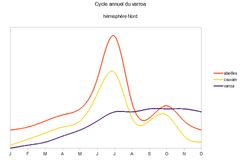
Mite increase during fall, coinciding with reduced rearing and increased phoretic phase. Population growth is closely tied to colony brood cycle. Invasion of brood occurs when larvae are in the final developmental stage before capping. Warmer fall temperatures associated with climate change may extend periods of mite on foraging bees.
Diet
Feeds on the tissue of , pupal, and larval honey bees. Previously assumed to feed on (blood), but recent research confirms fat body tissue as the primary food source. The fat body serves functions analogous to the mammalian liver, including detoxification, immune function, and nutrient storage.
Host Associations
- Apis mellifera - primary (V. destructor)Western honey bee; worldwide in managed colonies. Mites reproduce in both and drone , causing severe colony impacts.
- Apis cerana - original Asian ; natural in mainland Asia. Co-evolved relationship with reduced impact; mites reproduce only in drone and bees exhibit efficient and hygienic .
- Apis mellifera carnica - Carniolan honey bee; studied for responses.
- Apis mellifera jemenetica - Yemeni ; documented in Ethiopian .
Life Cycle
Two-stage : (1) phoretic (traveling) stage where female mites survive on adult bees, and (2) reproductive stage within capped . Female mites enter uncapped cells containing larvae about to enter the prepupal stage, hide in brood food, and begin feeding after capping. Laying of an unfertilized male occurs after approximately 60 hours, followed by fertilized female eggs every 30 hours. Mites undergo two developmental stages, reach maturity, and mate within the cell. The mother and mature daughter mites exit on the emerging adult . Male mites die within the cell. Reproductive success varies by and brood type.
Behavior
Invasion of is triggered by proximity to suitable cells and larval age/distance to cell rim. Two distinct reproductive strategies exist among : V. destructor from Korea/Japan reproduces in both and drone brood, while mites from A. cerana reproduce only in drone brood. Mites can disperse between colonies by hitchhiking on foraging workers, either through drifting of bees from collapsing colonies or through robbing .
Ecological Role
Obligate and of honey bees. Weakens colonies through direct feeding on tissue and vectoring , particularly deformed wing virus. Alters viral landscape of colonies, increasing viral and causing deformed wing virus to become predominant in long-term infested regions. Significant driver of colony mortality in managed and with major economic impact on global and pollination services.
Human Relevance
Major pest of global apiculture causing substantial economic losses in and agricultural pollination. Infested colonies require active management; chemical varroacides (amitraz, coumaphos, fluvalinate), organic acids (formic, oxalic), and (thymol) are commonly used. Non-chemical methods include drone removal, screened bottom boards, and breeding for stocks. Resistance to synthetic acaricides has developed in many . The condition of colony is termed varroosis (not varroatosis). Some regions maintain varroa-free status through strict import restrictions on bee-related supplies.
Similar Taxa
- TropilaelapsAnother of parasitic mites affecting honey bees; distinguished by smaller size, faster rate, and preference for over bees. Tropilaelaps does not survive long on adult bees and has more limited distribution, primarily in Asia.
- Acarapis woodi of honey bees; internal living in tracheal system rather than external parasite on and in . Causes different (K-wing, reduced lifespan) and requires different detection and treatment methods.
Misconceptions
The term 'varroatosis' is frequently but incorrectly used for varroosis; the correct name follows standard veterinary parasitology using the suffix -osis with the name. were long assumed to feed on , but they actually feed on tissue. V. jacobsoni was historically considered the infesting A. mellifera until genetic studies by Anderson & Trueman (2000) identified V. destructor as the virulent species on Western honey bees.
Sources and further reading
- BugGuide
- Wikipedia
- GBIF taxonomy match
- iNaturalist taxon
- NCBI Taxonomy
- Catalogue of Life
- If Varroa Mites Are Bugging You...Coming Soon: UC Davis Course and WAS Presentation | Bug Squad
- UC Davis Scientist Will Discuss Disarming Defenses of the Varroa Mite | Bug Squad
- Mite-Resistant Russian Honey Bees Might Not Prevent Varroa Infestations
- Survey Shines Light on Beekeepers' Efforts to Manage Varroa Mites
- Varroa Mites: New Guide Outlines Integrated Pest Management Options
- Social Patterns That Resist Varroa Mite Seen in Honey Bees for First Time
- Parasite-host interactions between the Varroa mite and the honey bee : a contribution to sustainable Varroa control
- Grooming behavior in relation to varroa (Varroa destructor) infestation level of Carniolan honey bee colonies (Apis mellifera carnica)
- Host-parasite interactions between the honey bee, Apis mellifera, and the mite Varroa destructor. Insights into virus spread and Varroa sensitive hygiene
- Varroa Infection Detection in Honeybee Colonies and Chemical Control Method Against Varroa
- Varroa Mite, Varroa destructor Anderson and Trueman (Arachnida: Acari:Varroidae)
- Reproduction in the Honeybee Brood mite, Varroa jacobsoni (Acarina: Varroidae)
- Reduced body size of Varroa destructor associated with varroa-resistant honey bee colonies across Europe
- Occurrences and Distributions of Honeybee (Apis mellifera Jemenetica)Varroa Mite (Varroa destructor) in Tigray Region, Ethiopia
- Elevated recapping behaviour and reduced Varroa destructor reproduction in natural Varroa resistant Apis mellifera honey bees from the UK
- Honey bees (Apis mellifera) preselected for Varroa sensitive hygiene discriminate between live and dead Varroa destructor and inanimate objects
- Honey bee hygienic selection impacts virus dynamics of both bees and Varroa mites.
- Microbiota diversity and hygienic behavior in a honey bee breeding population: Insights into Varroa resistance.
- Widespread pyrethroid resistance in Varroa destructor in Türkiye: a molecular warning.
- Varroa mite resistance in a hybrid honey bee (Apis mellifera) population in Southern California.