
Leptopeza
Macquart, 1828
Species Guides
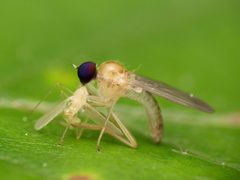
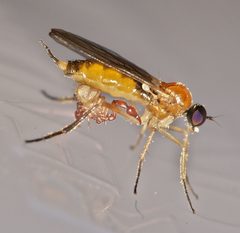
2Leptopeza is a of small predatory flies in the Hybotidae, Ocydromiinae. The genus was established by Macquart in 1828 and contains approximately 13 described distributed across multiple continents. Hybotid flies, including Leptopeza, are generally characterized by their habit of running on vegetation rather than flying when hunting prey. The genus shows a Holarctic and Oriental distribution pattern based on described species.
Pronunciation
How to pronounce Leptopeza: /lɛptoʊˈpiːza/
These audio files are automatically generated. While they are not always 100% accurate, they are a good starting point.
Identification
Leptopeza can be distinguished from other hybotid by characters of the male terminalia and wing venation. Members of Ocydromiinae, including Leptopeza, typically possess a distinctively shaped hypopygium and reduced wing venation compared to other dance fly . Specific identification to species level requires examination of genitalic structures and antennal ; several species were described based on antennal differences.
Images
Distribution
The has been recorded from the Palearctic (Europe, Japan), Nearctic (North America), and Oriental (Java) regions. such as L. borealis and L. flavipes are European, while L. compta and L. disparilis are North American. L. javana represents the Oriental distribution.
Behavior
As members of Hybotidae, Leptopeza are presumed to be predatory, capturing small prey. Hybotid flies characteristically hunt by running rapidly over vegetation and soil surfaces rather than capturing prey in , though specific behavioral observations for Leptopeza are limited in published literature.
Similar Taxa
- OcydromiaAlso in Ocydromiinae; distinguished by differences in wing venation and male genitalia structure
- TachydromiaRelated hybotid with similar habitus; Tachydromia often have more pronounced leg modifications for prey capture
- PlatypalpusAnother large hybotid ; Platypalpus typically show different wing venation patterns and antennal structure
More Details
Species diversity
The contains 13 described as of current , with the most recent described species being L. flaviantennalis Kato, 1971 from Japan. No comprehensive revision of the genus has been published in recent decades.
Taxonomic history
Leptopeza was established by Pierre-Justin-Marie Macquart in 1828. Several were transferred from other , including L. biplagiata and L. flavipes which were originally described in Rhaphium and Tachydromia respectively.