
Ocydromiinae
Genus Guides
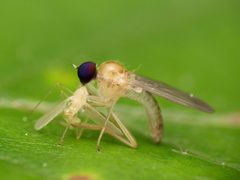
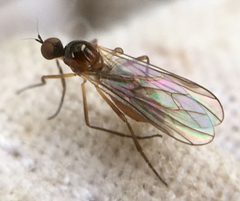
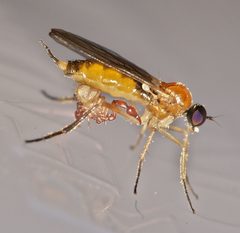
2Ocydromiinae is a of dance flies within the Hybotidae (Diptera: Empidoidea). The subfamily comprises two recognized tribes: Ocydromiini and Bicellariini. It includes approximately 13 with distributions spanning the Neotropical, Australasian, and New Zealand regions. Several genera are to restricted geographic areas, including Pseudoscelolabes and Austropeza in New Zealand, and Leptodromia in Australia. Taxonomic revisions have been published for multiple genera, indicating ongoing systematic research but limited ecological study.
Pronunciation
How to pronounce Ocydromiinae: //ˌoʊsaɪˈdroʊmɪaɪniː//
These audio files are automatically generated. While they are not always 100% accurate, they are a good starting point.
Identification
Ocydromiinae can be distinguished from other hybotid by genitalic characters, particularly features of the male and female terminalia. The subfamily includes two tribes: Bicellariini ( Bicellaria, Hoplocyrtoma, Leptocyrtoma) and Ocydromiini (remaining genera). Genus-level identification relies on characters of the , wing venation, and leg structure. For example, Leptodromia are to Australia and can be recognized by specific wing markings including bimaculate or t-maculate patterns. Scelolabes species in the Neotropics are distinguished from the related genus Hoplopeza by genitalic . Comprehensive identification keys to genera exist for the New Zealand fauna.
Images
Distribution
The has a disjunct distribution across the Southern Hemisphere. The Neotropical region supports including Scelolabes, Chvalaea, and Hoplopeza (the latter also in Andean forests of Colombia). The Australasian region (Australia) contains the genus Leptodromia and the genus Chvalaea. New Zealand has a distinctive fauna including the endemic genera Pseudoscelolabes and Austropeza, plus Oropezella and Abocciputa. The genus Hoplopeza has also been recorded from the Andean of Colombia at high elevations.
Similar Taxa
- HybotinaeAnother of Hybotidae; Ocydromiinae differs in genitalic and geographic distribution (Hybotinae is more widespread in the Northern Hemisphere)
- TachydromiinaeThird of Hybotidae; distinguished from Ocydromiinae by wing venation, leg structure, and male terminalia characters
More Details
Taxonomic composition
The contains two tribes: Ocydromiini (with Abocciputa, Apterodromia, Austropeza, Hoplopeza, Leptodromiella, Leptodromia, Leptopeza, Neotrichina, Ocydromia, Oropezella, Pseudoscelolabes, Scelolabes, Stylocydromia) and Bicellariini (Bicellaria, Hoplocyrtoma, Leptocyrtoma).
Research gaps
Available literature focuses almost exclusively on alpha and descriptions. No published studies were found addressing larval , feeding , mating systems, or ecological function for any Ocydromiinae .
Type specimen issues
The Scelolabes was historically poorly studied because the of the type S. bivittatus Philippi was lost or destroyed, requiring recent revisions to establish diagnostic criteria based on expert-identified specimens.
Sources and further reading
- BugGuide
- Wikipedia
- iNaturalist taxon
- NCBI Taxonomy
- Catalogue of Life
- Revision of the New Zealand endemic genus Pseudoscelolabes Collin (Diptera: Hybotidae: Ocydromiinae)
- Revision of Neotropical Scelolabes Philippi (Diptera, Hybotidae, Ocydromiinae): two new species and a proposal of delimitation
- A revision of the Ocydromiinae (Diptera: Empidoidea: Hybotidae) of New Zealand with descriptions of new genera and species
- Two new species of the genus Hoplopeza Bezzi (Diptera, Hybotidae, Ocydromiinae) from the high Andean forests of Colombia
- Revision of the genus Leptodromia Sinclair & Cumming, 2000 (Diptera: Hybotidae: Ocydromiinae), with the description of six new species
- Neotropical Chvalaea Papp & Földvári (Diptera: Hybotidae: Ocydromiinae): new records, an illustrated key to species and description of three new species
- The first documented record of Chvalaea Papp & Földvári, 2002 (Diptera, Hybotidae, Ocydromiinae) from the Australasian Region: a new species and its possible relationship to other members of the genus