
Ochlerotatus taeniorhynchus
(Wiedemann, 1821)
black salt marsh mosquito
Ochlerotatus taeniorhynchus, commonly known as the black salt marsh mosquito, is a floodwater mosquito native to coastal and salt marsh across the Americas. It is a significant nuisance species and , known to transmit Dirofilaria immitis (heartworm) and susceptible to Everglades virus and . The species has been observed expanding its range and increasing in abundance following extreme weather events such as hurricanes and flooding. Laboratory studies indicate it readily feeds on both pork and cow blood through artificial , with feeding preferences varying by .
Pronunciation
How to pronounce Ochlerotatus taeniorhynchus: /ˌɒkləroʊˈteɪtəs ˌtiːniəˈrɪŋkəs/
These audio files are automatically generated. While they are not always 100% accurate, they are a good starting point.
Identification
can be identified by distinct external visible under scanning electron microscopy, useful for distinguishing from sympatric such as Ochlerotatus sollicitans in coastal . may be distinguished from similar floodwater Aedes/Ochlerotatus species by combination of habitat association and geographic range, though specific diagnostic characters require additional morphological keys not provided in sources.
Images
Appearance
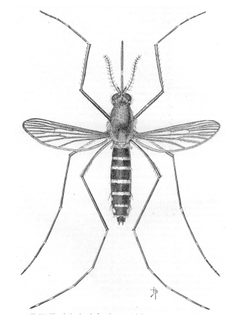
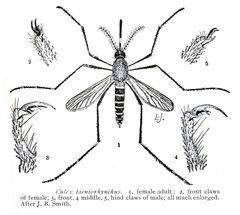
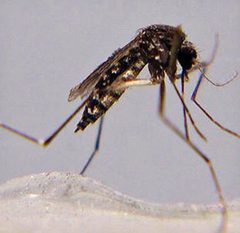
are medium-sized mosquitoes with dark scaling. has been characterized via scanning electron microscopy, showing distinct external features useful for identification from aquatic . Specific body coloration and pattern details require additional sources.
Habitat
Coastal salt marshes, floodwater environments, and aquatic subject to periodic inundation. Oviposition occurs in coastal dredge spoil and other flood-prone substrates. are deposited in dry floodplain areas that flood following rainfall, hatching when water levels rise sufficiently.
Distribution
Widespread in the Americas: southeastern United States (including North Carolina, Florida, Massachusetts), Caribbean, coastal Yucatan (Mexico), and South America (Brazil: São Luís Island, Pará, Rio de Janeiro, Niterói). Documented as far north as New England in recent years, with increasing in Massachusetts following hurricane-related flooding events.
Seasonality
Abundance peaks following major rainfall and flooding events. In Massachusetts, three distinct abundance peaks were documented in 2021, each closely following large summer rainfall events including remnants of Hurricane Elsa in early July. Activity patterns otherwise typical of floodwater mosquitoes with explosive after inundation.
Diet
Females blood-feed on vertebrate to obtain protein for development; males feed on nectar. Laboratory successfully maintained on frozen food-grade pork and cow blood using artificial feeding systems, with both blood types producing greater than 80 percent feeding rates.
Host Associations
- Dirofilaria immitis - Primary of heartworm in coastal Yucatan, Mexico
- Everglades virus - susceptibleSusceptible to ; competence documented
- Eastern Equine Encephalitis virus - potential Implicated as potential
- Humans - biting Aggressive biter; significant nuisance
Life Cycle
are deposited in dry or damp substrates in flood-prone areas, hatching when flooded by rainfall or tidal inundation. Larval development occurs in temporary aquatic . Laboratory colonies have been maintained year-round, indicating continuous breeding possible under favorable conditions. Specific details of pupal stage and time require additional sources.
Behavior
Exhibits floodwater pattern: remain until flooding triggers hatching, followed by rapid increase. Laboratory populations show feeding preference for polytetrafluoroethylene (PTFE) tape over parafilm when offered artificial blood meals. Wild populations feed at lower rates on artificial membranes compared to laboratory strains.
Ecological Role
Significant nuisance in coastal areas; of veterinary and potential public health importance. explosions following extreme weather events can alter local mosquito composition and increase biting pressure on humans and animals. Part of floodwater mosquito guild that responds rapidly to environmental disturbance.
Human Relevance
Major nuisance biter in coastal and recently flooded areas, capable of producing intolerable biting conditions. for heartworm in dogs and potential vector for . Subject of mosquito control efforts including larval treatment of floodplains and area-wide adulticiding. Laboratory colonies used for testing and vector research.
Similar Taxa
- Ochlerotatus sollicitansSympatric in coastal of North Carolina; distinguished by and habitat distribution patterns
- Aedes vexansShares floodwater strategy and responds to similar rainfall events; distinguished by geographic distribution and preferences—Ae. vexans more common in freshwater floodplains while Oc. taeniorhynchus dominates salt marsh environments
- Psorophora feroxBoth increase dramatically after flooding events in northeastern U.S.; Ps. ferox distinguished by larger size and more painful bite, and has been replacing Ae. vexans (and potentially overlapping with Oc. taeniorhynchus) in some floodplain
More Details
Climate change and range expansion
Historical data from Massachusetts indicates gradual northward range expansion, with increasing trap collections in recent years. The 2021 season following Hurricane Elsa and subsequent storms produced record-breaking abundance in New England, suggesting climate-driven extreme weather events may facilitate range expansion and increases in previously marginal .
Laboratory maintenance
Successfully maintained in year-round laboratory colonies using frozen food-grade blood (pork or cow) heated on electric germination mats and offered through PTFE tape or parafilm . This method avoids use of live animal and has been adopted by mosquito control districts for testing programs.
Taxonomic note
Listed as synonym of Aedes taeniorhynchus in some databases; treated here as Ochlerotatus taeniorhynchus following recent taxonomic revisions placing former Aedes subgenus Ochlerotatus at generic rank.
Sources and further reading
- BugGuide
- GBIF taxonomy match
- NCBI Taxonomy
- Need to Feed Mosquitoes? Head for the Freezer Aisle
- Another Invasive Mosquito Species Arrives in Florida
- Notes From Puerto Rico: Quakes Increase Risk for Mosquito-Borne Disease Outbreak
- Two tiny vampires leave their itchy calling cards along the Potomac: black flies, Simuliidae and no-see-ums, Ceratopogonidae — Bug of the Week
- Mosquito redux - Culicidae — Bug of the Week
- Mosquito Management in the Era of Extreme Weather
- Scanning electron microscopy of eggs of Ochlerotatus taeniorhynchus (Diptera: Culicidae, Aedini)