
Ochlerotatus
Lynch-Arribalzaga, 1891
Species Guides
35- Ochlerotatus abserratus
- Ochlerotatus atlanticus
- Ochlerotatus atropalpus
- Ochlerotatus bimaculatus
- Ochlerotatus campestris(Campestris mosquito)
- Ochlerotatus canadensis(Canadian mosquito)
- Ochlerotatus cantator(brown saltmarsh mosquito)
- Ochlerotatus communis
- Ochlerotatus diantaeus
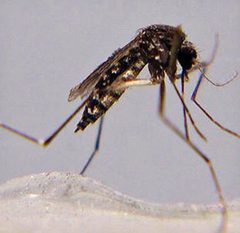
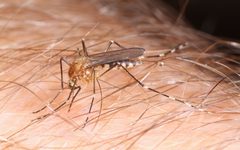
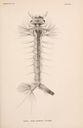
Ochlerotatus is a of mosquitoes in the Culicidae, tribe Aedini. Originally established as a genus in 1891, it was treated as a subgenus of Aedes from 1917 until 2000, when taxonomic studies of male genitalia characteristics led to its reclassification as a distinct genus. This change resulted in the transfer of numerous from Aedes to Ochlerotatus, though the revised remains contentious and some authors continue to use traditional . The genus contains species of epidemiological significance, including of such as La Crosse virus.
Pronunciation
How to pronounce Ochlerotatus: //ˌɒkləroʊˈteɪtəs//
These audio files are automatically generated. While they are not always 100% accurate, they are a good starting point.
Identification
Ochlerotatus can be distinguished from related Aedes mosquitoes by characteristics of the male genitalia, which formed the basis for the -level reclassification. Species-level identification relies on combinations of larval and morphological traits, though these characters show varying diagnostic utility. , particularly COI mtDNA, reliably distinguish Ochlerotatus from related genera and resolve species boundaries, whereas ITS2 rDNA lacks sufficient resolution for some species pairs. Ochlerotatus caspius and O. dorsalis, for example, show no evident phylogeographic structure in COI despite their wide distributions.
Images
Habitat
vary by . Ochlerotatus caspius is strongly associated with rice fields in peri-urban Europe, particularly in agricultural-urban interfaces such as the Lomellina rice districts of northern Italy, from which undertake to adjacent hills and settlements. Ochlerotatus baisasi occupies crab holes in coastal areas of Okinawa. Floodplain species such as O. trivittatus exploit temporary water bodies created by rainfall and flooding events. Many species utilize standing freshwater habitats including containers, pools, and wetlands.
Distribution
Holarctic distribution with strong representation in the Nearctic and Palearctic regions. Documented from North America (including Massachusetts, Colorado, and Florida), Europe (particularly northern Italy, Denmark, Norway), and Asia (Okinawa, Japan). Specific documented locations include Alessandria Province and Lomellina rice districts in Italy; Colorado Springs, Colorado; Norfolk County, Massachusetts; and Okinawa, Japan. GBIF records indicate presence in Colombia (Cundinamarca).
Seasonality
Activity patterns are -specific and climate-dependent. Ochlerotatus caspius shows predictable post-sunset -seeking activity concentrated in the first 10–50 minutes after sunset during temperate European summers. Ochlerotatus baisasi in Okinawa exhibits seasonal larval occurrence patterns. In Massachusetts, floodplain-associated species show peaks following summer rainfall events and hurricane remnants, with explosive emergences after repeated flooding. Colorado Front Range records indicate July activity for O. dorsalis.
Diet
females are blood-feeders, requiring protein from vertebrate blood for development. Ochlerotatus caspius is described as -seeking. Males do not blood-feed; they obtain from nectar and other plant sugars. Larval feeding habits are not explicitly documented in available sources but are presumably detritivorous or filter-feeding as in related culicid larvae.
Life Cycle
Complete with , larva, pupa, and stages. Ochlerotatus baisasi has been studied for oviposition , egg , and larval seasonal occurrence in Okinawa. Floodplain such as O. trivittatus lay eggs in dry areas that require flooding to hatch. Specific developmental rates and strategies vary by species and region.
Behavior
migratory is documented in O. caspius, which flies from rice fields toward adjacent hills and settlements in predictable post-sunset waves. Ochlerotatus baisasi show specific daily activity patterns. Males and females both seek nectar sources; females additionally engage in -seeking for blood meals. Females are the biting sex. Some are attracted to light traps and CO₂-baited traps, facilitating monitoring.
Ecological Role
Significant nuisance in peri-urban and agricultural settings. of : O. triseriatus is an efficient vector of La Crosse virus, a leading cause of pediatric in the United States. Ochlerotatus caspius poses arboviral risk in European rice-growing regions. Species participate in as larvae (aquatic consumers) and (terrestrial blood-feeders and prey for ).
Human Relevance
Major pest of humans and domestic animals due to biting . Public health significance as of La Crosse virus and potentially other . Subject of intensive mosquito control efforts including ultra-low volume (ULV) spraying with ; control efficacy depends on precise timing aligned with post-sunset activity peaks. Climate change is expanding ranges and increasing abundance of some , with extreme weather events triggering explosions. Taxonomic instability complicates surveillance and control program design.
Similar Taxa
- AedesOchlerotatus was treated as a subgenus of Aedes until 2000 and remains closely related; distinguished by male genitalia characteristics and supported by COI mtDNA differentiation, though some authors continue to classify Ochlerotatus within Aedes.
- PsorophoraCo-occurs in floodplain and shows similar explosive responses to flooding; distinguished by and , with Psorophora ferox and P. ciliata recently increasing in abundance in New England alongside Ochlerotatus .
More Details
Taxonomic Controversy
The elevation of Ochlerotatus to rank in 2000 by Reinert, based on male genitalia characteristics, generated worldwide debate regarding impacts on established scientific, government, and lay . As of 2016, many scientific journals continued to accept previously established names (i.e., Aedes), and taxonomic revisions of related Aedini tribe remain ongoing.
Genetic Differentiation
COI mtDNA reliably distinguishes Ochlerotatus and resolves the from Aedes, whereas ITS2 rDNA lacks proper resolution for some species-level problems. Ochlerotatus dorsalis shows cryptic diversity with two highly distinctive COI phylogroups corresponding to Nearctic and Palearctic regions, likely resulting from Pleistocene vicariance.
Sources and further reading
- BugGuide
- Wikipedia
- GBIF taxonomy match
- iNaturalist taxon
- NCBI Taxonomy
- Catalogue of Life
- Another Invasive Mosquito Species Arrives in Florida
- Two tiny vampires leave their itchy calling cards along the Potomac: black flies, Simuliidae and no-see-ums, Ceratopogonidae — Bug of the Week
- Mosquito redux - Culicidae — Bug of the Week
- Mosquito Management in the Era of Extreme Weather
- Bug Eric: My Personal National Moth Week, 2017
- Bug Eric: September 2017
- Comparative Phylogeography and Integrative Taxonomy of Ochlerotatus caspius (Dipera: Culicidae) and Ochlerotatus dorsalis
- Quantitative Genetics of Vector Competence for La Crosse Virus and Body Size in Ochlerotatus hendersoni and Ochlerotatus triseriatus Interspecific Hybrids
- Evaluating the Interplay of Barrier Strategies and Monitoring Systems for Migratory Ochlerotatus caspius from Rice-Fields
- B14 Biology of crab-hole mosquito, Ochlerotatus baisasi in Okinawa IV : Mating behavior and detection of blood source
- B12 Biology of crab-hole mosquito, Ochlerotatus baisasi in Okinawa II : Seasonal occurrence of the larva
- Aspectos bioecológicos de Culex quinquefasciatus e Ochlerotatus scapularis, abrigados em habitats do Parque Ecológico do Tietê na cidade de Säo Paulo, SP
- B13 Biology of crab-hole mosquito, Ochlerotatus baisasi in Okinawa III : Daily activity of adults mosquitoes
- B15 Biology of crab-hole mosquito, Ochlerotatus baisasi in Okinawa V : Oviposition and egg biology