
Olcella
Enderlein, 1911
frit flies
Species Guides
2- Olcella parva(chloropid fly)
- Olcella trigramma
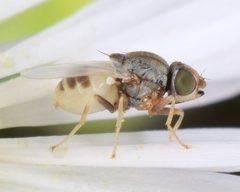
Olcella is a of small frit flies in the Chloropidae, Oscinellinae. The genus contains approximately 11 described with highest diversity in South America, particularly Argentina. Several Nearctic species have been documented engaging in kleptoparasitism, feeding on prey fluids from insects captured by such as spiders, assassin bugs, and mantids. Species in this genus possess a long geniculate (elbowed) that facilitates feeding on exposed fluids without disturbing the predator.
Pronunciation
How to pronounce Olcella: /ɔlˈkɛl.lə/
These audio files are automatically generated. While they are not always 100% accurate, they are a good starting point.
Identification
Distinguished from other kleptoparasitic chloropid by the combination of small size, brown coloration, and long geniculate . In the Nearctic, documented include O. quadrivittata and O. parva. Separation from other Oscinellinae genera requires examination of genitalic and chaetotaxy characters; specific identification generally requires examination.
Images
Appearance
Small flies with a long, geniculate (elbowed) . Body typically brown in coloration. Size generally diminutive relative to other chloropids. Antennal structure and wing venation consistent with Oscinellinae.
Habitat
Associated with agricultural and natural where predatory insects capture hemipteran or hymenopteran prey. Documented in soybean fields in Argentina and diverse North American habitats. Attracted to situations where insects are damaged or stressed, including sweep nets containing rattled stink bugs.
Distribution
New World with highest diversity in South America, particularly Argentina (type from Mendoza). Documented in Nearctic region with increasing frequency. Specific distribution varies by species; O. quadrivittata recorded in Canada, O. parva with documented chemical attraction studies.
Diet
Kleptoparasitic; feeds on fluids from prey captured by other including spiders (Nephila clavipes, crab spiders), assassin bugs (Apiomerus), robber flies (Asilidae), and mantids. Attracted to damaged insects and defensive secretions of pentatomid stink bugs and coreid leaf-footed bugs. Chemical cues from heteropteran defensive sprays serve as primary attractants.
Behavior
Engages in kleptoparasitism by congregating around feeding on prey, crawling over both predator and prey to access fluids. Tolerates proximity to active predators; observed being dislodged by assassin bug but returning immediately. Attraction to chemical cues allows location of food sources and may assist in mate location through -dependent .
Ecological Role
Acts as kleptoparasite in -prey systems, potentially affecting nutrient transfer from prey to predator. Chemical attraction to defensive secretions of herbivorous may serve as indirect indicator of events. Role in energy flow likely minor but understudied.
Human Relevance
Documented in agricultural settings (soybean fields) where associated with pest stink bugs (Piezodorus guildinii). Potential use in monitoring activity or pest presence through chemical attraction. No direct economic importance documented.
Similar Taxa
- Milichiella lacteipennisSimilar kleptoparasitic and association with prey; distinguished by larger size and black coloration; Milichiidae rather than Chloropidae
- Other Chloropidae (Oscinellinae)Several in Oscinellinae engage in similar kleptoparasitism; separation requires examination of structure, coloration, and genitalic characters
- DrosophilidaeSimilar small size and brown coloration caused initial misidentification in field observation; distinguished by wing venation, antennal structure, and
More Details
Chemical ecology
Attraction to defensive secretions of pentatomid and coreid demonstrated experimentally (Eisner et al. 1991). Specific chemical components of heteropteran defensive sprays serve as . Sivinski (1985) documented mating of kleptoparasitic chloropids on spider , suggesting chemical attraction may also facilitate mate location.
Taxonomic history
established by Enderlein in 1911. Type from Mendoza, Argentina. Increasingly documented in Nearctic region due to observant photographers rather than traditional collecting methods.