
Elachiptera
Macquart, 1835
frit flies
Species Guides
7- Elachiptera angusta(frit fly)
- Elachiptera costata(frit fly)
- Elachiptera erythropleura
- Elachiptera flaviceps
- Elachiptera longiventris(frit fly)
- Elachiptera nigriceps(frit fly)
- Elachiptera vittata
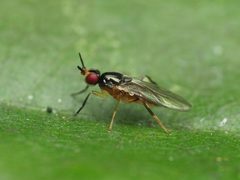
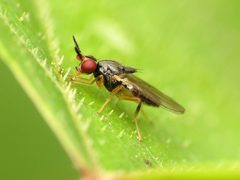
Elachiptera is a of small frit flies in the Chloropidae, Oscinellinae. The genus contains approximately 81 valid distributed across North America, Europe, and Asia, with some species extending into the Oriental Region. Several species are known agricultural pests of cereal crops, with larvae feeding internally within stems of wheat and maize. The genus includes both fully winged and wingless (brachypterous) species.
Pronunciation
How to pronounce Elachiptera: //ˌɛləˈkɪptərə//
These audio files are automatically generated. While they are not always 100% accurate, they are a good starting point.
Identification
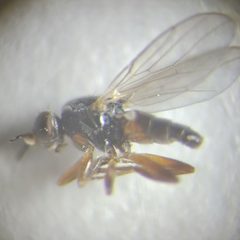
are small chloropid flies, generally 2–4 mm in length. Many are morphologically similar to other Oscinellinae, particularly Meromyza and Oscinella, requiring examination of genitalia for definitive identification. The wingless species E. viator is distinguished by reduced or absent wings. Species-level identification typically relies on male and female genitalia and subtle differences in width, thoracic markings, and antennal structure.
Images
Habitat
Agricultural fields, particularly wheat and maize crops; grasslands and meadows. Specific microhabitat data for most is limited. Larvae occur within stems of grasses and cereals.
Distribution
Holarctic distribution with extensions into the Oriental Region. Recorded from North America (Canada, United States), Europe (Denmark, Norway, Sweden, and other countries), and Asia (China, including Beijing and Xinjiang Uygur Autonomous Region).
Diet
Larvae feed internally within stems of grasses and cereals. E. decipiens specifically feeds on wheat (Triticum aestivum) and maize (Zea mays). feeding habits are not documented in available sources.
Host Associations
- Triticum aestivum - larval common wheat; larva feeds within stems causing 'white '
- Zea mays - larval maize; secondary for E. decipiens
Life Cycle
Larva develops within plant stem. Pupae of E. decipiens have been collected in July in Xinjiang, China. Complete details and number of per year are not documented in available sources.
Behavior
Larvae are stem-borers, feeding internally within plant stems and causing characteristic damage . Some are fully winged; at least one species (E. viator) is brachypterous (wingless). of E. decipiens are morphologically similar to other chloropid species, making field identification difficult.
Ecological Role
Some are significant agricultural pests of cereal crops. E. decipiens causes stunting, distortion, decreased tillering, and 'white ' in wheat. pest status in China for E. decipiens, first detected in 2021.
Human Relevance
Economic pest of wheat and maize production. E. decipiens is an pest in China with potential for significant yield losses. Morphological similarity to non-pest chloropids complicates monitoring and management.
Similar Taxa
- MeromyzaMorphologically similar , particularly M. saltatrix; distinguished by genitalia and subtle structural differences
- OscinellaOverlapping size range and general appearance; O. pusilla specifically noted as difficult to distinguish from E. decipiens in the field
- LasiochaetaFormerly congeneric now transferred to this based on revised ; historical confusion in literature
Sources and further reading
- BugGuide
- Wikipedia
- GBIF taxonomy match
- iNaturalist taxon
- NCBI Taxonomy
- Catalogue of Life
- First report of wingless grass flies from China (Diptera: Chloropidae) with a key to the Chinese and Oriental species of Elachiptera
- The taxonomy of species globally described in or formerly included in the genus Elachiptera and new combinations with Lasiochaeta and Gampsocera (Diptera: Chloropidae)
- The complete mitochondrial genome analysis of Elachiptera decipiens (Loew, 1863) (Diptera: Chloropidae).