
Celticecis
Gagné, 1983
hackberry gall midges
Species Guides
15- Celticecis aciculata(Hackberry Aciculate Gall Midge)
- Celticecis acuminata(Hackberry Narrow-tipped Gall Midge)
- Celticecis capsularis(Hackberry Rosette Gall Midge)
- Celticecis celtiphyllia(hackberry acorn gall midge)
- Celticecis connata(Hackberry Aggregate Gall Midge)
- Celticecis cornuata(Hackberry Horn Gall Midge)
- Celticecis cupiformis(hackberry barrel gall midge)
- Celticecis globosa(Hackberry Globular Leaf Gall Midge)
- Celticecis ovata(Hackberry Tenpin Gall Midge)
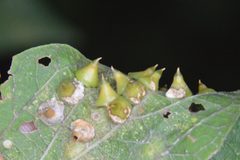
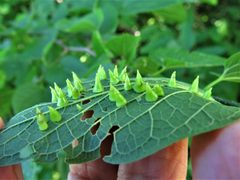
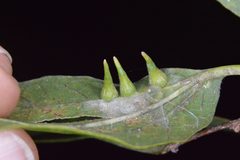
Celticecis is a of gall midges in the Cecidomyiidae, commonly known as hackberry gall midges. in this genus induce leaf galls on Celtis species (Ulmaceae), commonly called hackberries or sugarberries. The genus was described by Gagné in 1983. At least one species, Celticecis japonica, is known to serve as a for in the genus Torymus.
Pronunciation
How to pronounce Celticecis: //ˌkɛl.tɪˈsiː.sɪs//
These audio files are automatically generated. While they are not always 100% accurate, they are a good starting point.
Identification
Members of this are distinguished from other gall midges by their specific association with Celtis plants and the characteristic leaf galls they induce. Identification to level requires examination of morphological features and gall .
Images
Habitat
Associated with Celtis (Ulmaceae), including hackberries and sugarberries. Larvae develop within leaf galls on plants.
Distribution
Japan (confirmed for Celticecis japonica). Distribution of other in the is not specified in available sources.
Host Associations
- Celtis species (Ulmaceae) - obligate gall inducerLarvae develop within leaf galls induced on plants
- Torymus species (Hymenoptera: Torymidae) - Torymus celticolus and T. celtidigalla parasitize Celticecis japonica larvae
Life Cycle
Larvae develop within leaf galls induced on Celtis plants. emerge from galls. Specific details of , larval instars, , and adult longevity are not documented in available sources.
Behavior
Induces leaf galls on plants. Gall induction is the primary known .
Ecological Role
Gall inducer that modifies plant tissue for larval development. Serves as host for , contributing to local structure.
Similar Taxa
- Other Cecidomyiidae generaMany gall midges induce similar leaf galls; Celticecis is distinguished by exclusive association with Celtis (Ulmaceae) plants
- Other gall-inducing insects on CeltisDifferent gall and insect membership; Celticecis galls are induced by dipteran rather than hymenopteran or other groups
More Details
Etymology
The name combines "Celtis" (the plant genus) with "cecid" (from cecidium, meaning gall), reflecting the obligate association with Celtis host plants.
Taxonomic history
described by Raymond J. Gagné in 1983, a in Cecidomyiidae .