
Celticecis ovata
Gagné, 2013
Hackberry Tenpin Gall Midge
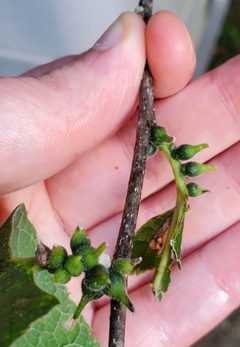
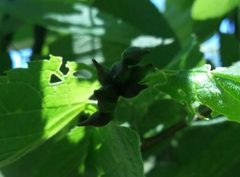
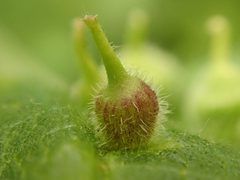
Celticecis ovata is a gall midge in the Cecidomyiidae, described by Gagné in 2013. It induces distinctive galls on hackberry trees (Celtis spp.), specifically forming tenpin-shaped structures on leaves. The species is part of a specialized on Celtis , with multiple Celticecis species known to produce morphologically distinct galls on the same host genus.
Pronunciation
How to pronounce Celticecis ovata: //ˌkɛltɪˈsiːs oʊˈveɪtə//
These audio files are automatically generated. While they are not always 100% accurate, they are a good starting point.
Identification
Distinguished from other Celticecis by the specific of its gall—tenpin-shaped structures on hackberry leaves. are tiny, delicate flies typical of Cecidomyiidae, with long and reduced wing venation. Species-level identification of adults requires examination of genitalia and other microscopic features.
Images
Habitat
Associated with hackberry trees (Celtis spp.) in deciduous woodlands, riparian forests, and urban plantings where trees occur.
Distribution
North America; distribution follows that of its Celtis .
Host Associations
- Celtis - gall inductionForms tenpin-shaped galls on leaves
Ecological Role
Induces gall formation on hackberry leaves, creating specialized microhabitats that may support and within the gall .
Human Relevance
Of minor economic importance; galls are primarily a curiosity and do not significantly harm trees. May be encountered by botanists and naturalists studying hackberry trees.
Similar Taxa
- Other Celticecis speciesSame (Celtis) but produce distinct gall morphologies—C. ovata specifically forms tenpin-shaped galls, whereas produce bullet, nipple, or other gall forms
- Other cecidomyiid gall midges on CeltisDifferent may also gall hackberry; requires gall shape and microscopic examination of for definitive identification
Sources and further reading
- BugGuide
- GBIF taxonomy match
- iNaturalist taxon
- Catalogue of Life
- Is Jade Lucky? Well, Bumble Bees Like It! | Bug Squad
- Bug Eric: Candystripe Spider
- Two new species of wart sea slugs discovered from Indonesia
- Flatfaced longhorn: Leptostylus transversus | Beetles In The Bush
- These are a few of my favorite trees | Beetles In The Bush
- Juglandaceae | Beetles In The Bush