
Celticecis globosa
Gagné, 2013
Hackberry Globular Leaf Gall Midge
Celticecis globosa is a gall midge in the Cecidomyiidae, described by Gagné in 2013. The species induces distinctive globular leaf galls on hackberry trees (Celtis spp.). As a member of the Celticecis, it is part of a specialized radiation of gall midges associated with this plant genus. The reflects both the gall and host association.
Pronunciation
How to pronounce Celticecis globosa: /ˌkɛltɪˈsiːs ɡloʊˈboʊsə/
These audio files are automatically generated. While they are not always 100% accurate, they are a good starting point.
Identification
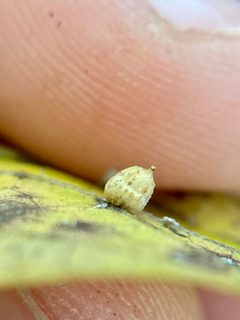
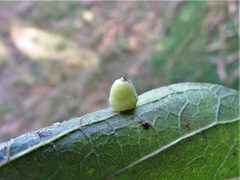
The is identified by the globular, rounded leaf galls it induces on Celtis (hackberry) species. Galls are typically spherical to subspherical, smooth, and attached to the leaf blade. The is minute (approximately 2-4 mm), with reduced wing venation characteristic of Cecidomyiidae, long , and relatively short legs. Species-level identification of adults requires examination of genitalia and other microscopic features.
Images
Habitat
Found in areas supporting hackberry trees (Celtis spp.), including riparian woodlands, floodplain forests, upland deciduous forests, and urban/suburban plantings where hackberry occurs.
Distribution
North America, with records primarily from the eastern and central United States where Celtis are native or cultivated.
Seasonality
and gall formation occur during the growing season when hackberry leaves are expanding; specific data are limited.
Diet
Larval development occurs within leaf galls on Celtis ; the exact nutritional relationship (whether phytophagous tissue feeding or other) has not been explicitly documented.
Host Associations
- Celtis - gall inductioninduces globular leaf galls
Life Cycle
Has been observed to induce leaf galls; the complete including number of per year remains incompletely documented. Like other Cecidomyiidae, presumably includes , larva, pupa, and stages, with larval development occurring within the gall tissue.
Behavior
Induces formation of globular leaf galls on hackberry. The gall provides protected microhabitat for larval development. has not been specifically documented.
Ecological Role
As a gall inducer, modifies plant tissue and creates microhabitat that may be utilized by other organisms. The ecological significance of the gall in or nutrient cycling has not been studied.
Human Relevance
The galls are primarily of interest to naturalists and entomologists studying plant-insect interactions. No significant economic impact on hackberry trees has been documented; galls are generally considered cosmetic rather than damaging.
Similar Taxa
- Other Celticecis speciesMultiple Celticecis induce galls on Celtis; differentiation requires examination of gall , species, and genitalia. C. globosa is distinguished by its specifically globular gall shape.
- Other hackberry gall-forming insectsAphids, psyllids, and other also form galls on Celtis; these differ in gall (e.g., pouch galls, nipple galls, irregular swellings).