
Celticecis capsularis
(Patton, 1897)
Hackberry Rosette Gall Midge
Celticecis capsularis, commonly known as the hackberry rosette gall midge, is a of gall midge in the Cecidomyiidae. It is known for inducing distinctive rosette-shaped galls on hackberry trees (Celtis species). The species was described by William H. Patton in 1897. As a gall midge, it represents one of numerous cecidomyiid species specialized in manipulating plant tissue to form protective structures for larval development.
Pronunciation
How to pronounce Celticecis capsularis: //ˈkɛl.tɪˌsiː.sɪs ˌkæp.sjʊˈlɛər.ɪs//
These audio files are automatically generated. While they are not always 100% accurate, they are a good starting point.
Identification
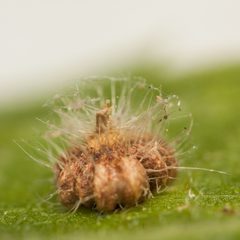
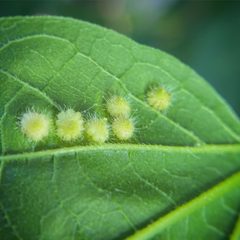
The is primarily identified by its association with the distinctive rosette galls on hackberry (Celtis). The rosette gall structure—tight clusters of shortened, distorted leaves emerging from a single point—distinguishes it from other Celticecis species that produce different gall morphologies. Celticecis spiniformis produces spiny, irregular galls, while Celticecis globosa forms rounded, detachable leaf galls. require microscopic examination for definitive identification; the galls provide the most reliable field diagnostic.
Images
Appearance
are small, delicate flies typical of gall midges, with long, slender legs and reduced wing venation characteristic of the Cecidomyiidae. The larvae develop within the rosette galls they induce on plants. The galls themselves appear as clustered, leafy rosette formations—distinct from other hackberry gall types in their compact, bud-like of distorted leaves and stems.
Habitat
Associated with hackberry trees (Celtis ) in temperate deciduous forests, woodland edges, riparian corridors, and urban plantings where trees occur. The presence of suitable host trees is the primary determinant.
Distribution
Eastern and central North America, following the range of its hackberry trees. Documented from the Great Plains eastward to the Atlantic coast, and from the Great Lakes region south to the Gulf Coast.
Seasonality
and gall formation occur during the growing season when hackberry leaves are expanding; specific not well documented in available sources. Galls persist on trees through fall and may remain visible in winter.
Host Associations
- Celtis - gall inducerHackberry ; specific species not definitively documented in available sources
Behavior
Induces rosette galls by chemical manipulation of hackberry bud or leaf tissue, causing abnormal proliferation of shortened leaves into a compact cluster. Larvae develop within the gall structure, feeding on nutritive tissue the plant produces in response to activity.
Ecological Role
As a gall inducer, creates microhabitat structures that may be utilized by other organisms. The galls represent a form of plant that redirects resources to development.
Human Relevance
Primarily of interest to entomologists and naturalists studying plant-insect interactions. The galls are conspicuous and may attract attention from observers of hackberry trees, but cause no significant economic or ecological impact. Occasionally noted in urban forestry contexts where hackberries are planted as street trees.
Similar Taxa
- Celticecis spiniformisAlso induces galls on hackberry, but produces irregular, spiny galls rather than compact rosettes
- Celticecis globosaForms rounded, detachable leaf galls on hackberry, distinct from the rosette structure of C. capsularis
- Pachypsylla speciesPsyllids that induce different gall types on hackberry; galls are typically pouch-like or nipple-shaped rather than rosette-forming
More Details
Gall morphology
The rosette gall is one of several distinct gall types found on hackberry, enabling rough identification based on gall structure alone when other Celticecis species co-occur.