Rhaphiomidinae
Genus Guides
1- Rhaphiomidas(flower-loving flies)
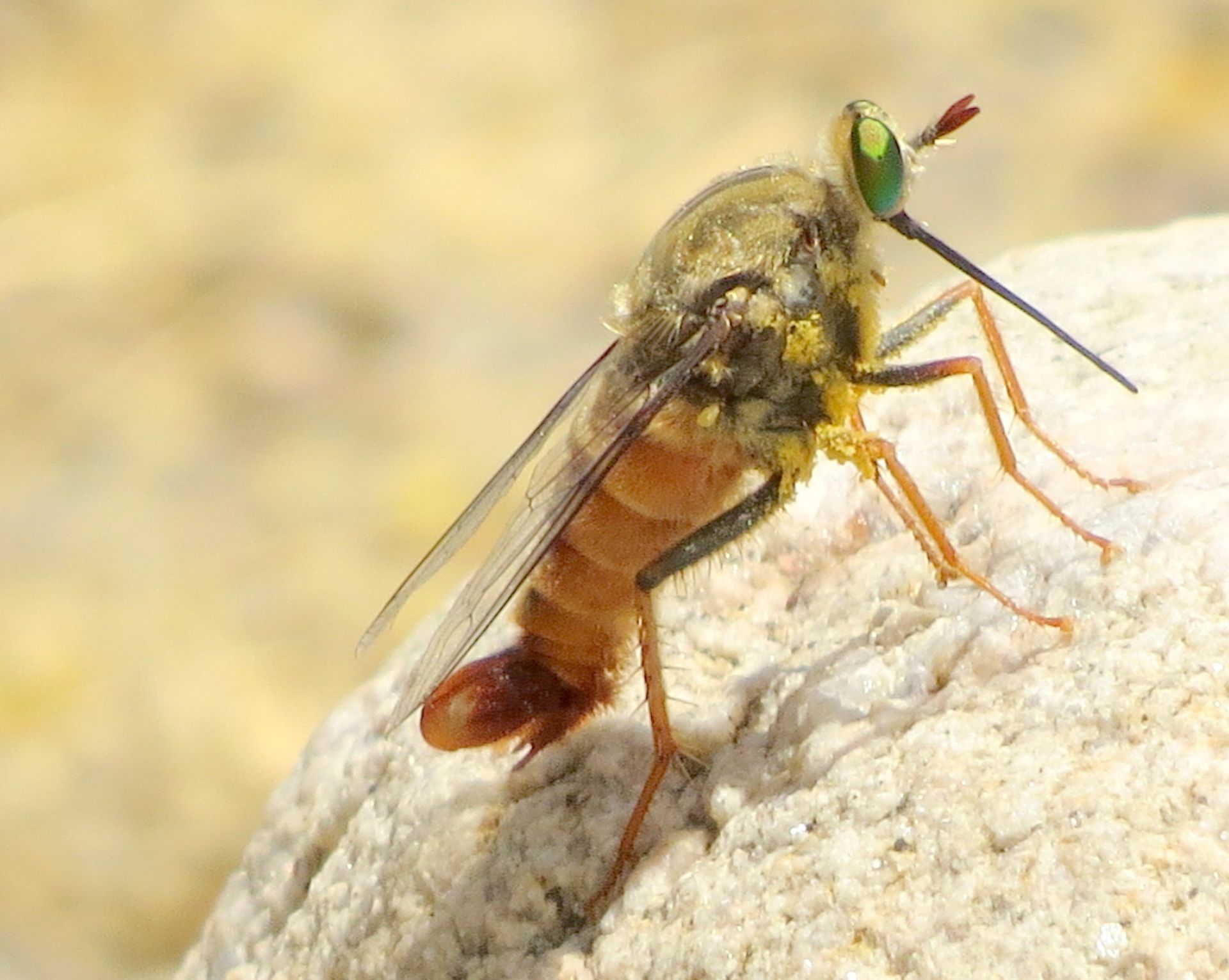
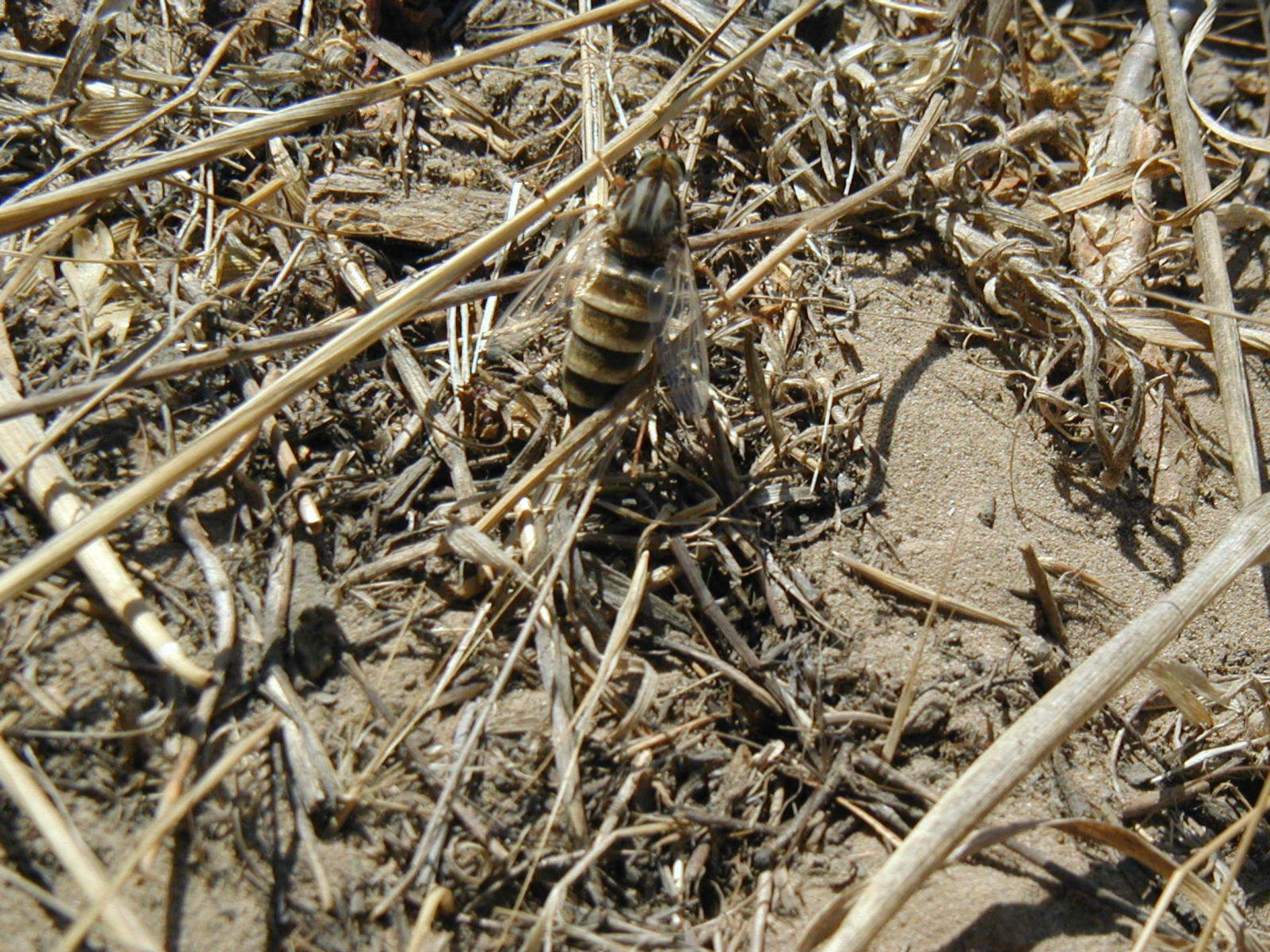
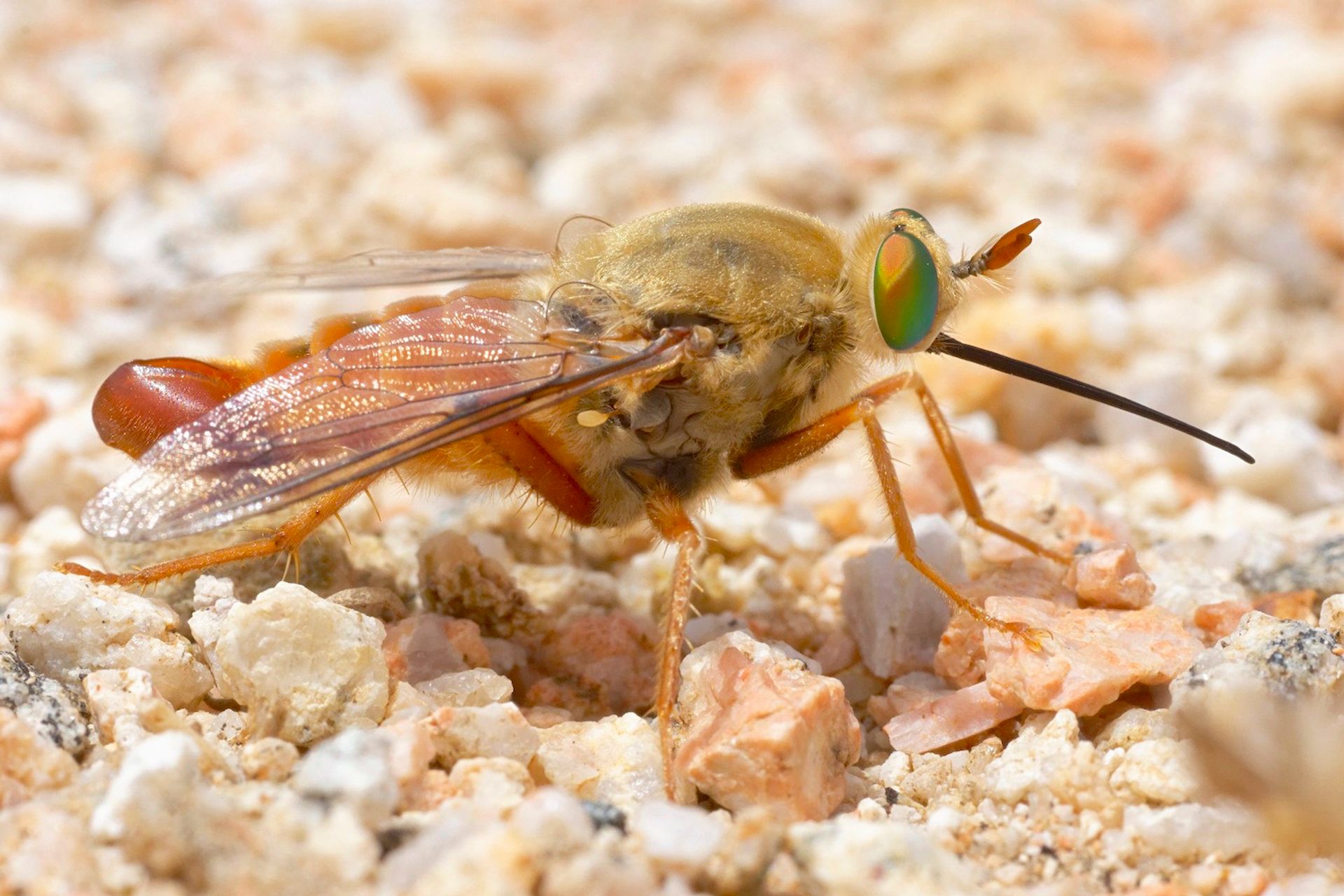
Rhaphiomidinae is a of mydid flies (Diptera: Mydidae) comprising the Rhaphiomidas and its close relatives. These are among the largest flies in North America, with reaching substantial body sizes. The group is notable for its extreme rarity, highly restricted geographic distributions, and brief adult activity periods concentrated in desert spring or fall seasons. Several are of significant conservation concern due to specialization on sand dune systems.
Pronunciation
How to pronounce Rhaphiomidinae: /ræfiːoʊˈmɪdənaɪ/
These audio files are automatically generated. While they are not always 100% accurate, they are a good starting point.
Identification
Rhaphiomidinae can be distinguished from other mydid by genitalic and wing venation characters visible only under magnification. Within the subfamily, identification relies on male genitalia structure, color pattern, and geographic location. are most readily identified by their combination of very large size, desert sand dune , and seasonal appearance during brief spring or fall windows. The Rhaphiomidas is the primary and best-known genus; other included genera are less documented. Separation from the subfamily Mydinae (which includes Mydas and related genera) requires examination of wing venation patterns and male terminalia.
Images
Habitat
Specialized to desert sand dune systems, particularly active dunes with blowouts and sparse vegetation. are most commonly encountered on or near dunes with mesquite (Prosopis), creosote bush (Larrea), or other desert scrub vegetation. Larval is poorly known but has been associated with sandy substrates where they are presumed to prey on other soil-dwelling organisms. The group shows extreme habitat fidelity, with individual often restricted to single dune systems or closely adjacent dune complexes.
Distribution
Restricted to desert regions of the southwestern United States (primarily California, Arizona, and adjacent areas) and northwestern Mexico (Baja California, Sonora, and adjacent regions). Distribution is highly discontinuous, with individual occupying isolated dune systems separated by unsuitable . This patchy distribution reflects both historical biogeographic processes and contemporary habitat fragmentation.
Seasonality
exhibit extremely brief seasonal activity periods, typically lasting only 2-6 weeks annually. Activity occurs either in spring (March–May) or fall (September–November), with timing varying by and locality. Some dune systems multiple Rhaphiomidinae species that are allochronic (temporally separated), reducing . This narrow phenological window is among the most restricted of any North American fly group.
Life Cycle
The complete remains poorly documented for most . Larval stages are thought to be predatory, spending multiple years in sandy substrates feeding on other arthropods or possibly larvae. occurs in sand. are nectar-feeders, with records from mesquite (Prosopis glandulosa) and other desert flowers. The extended larval period contrasts sharply with the brief adult lifespan.
Behavior
are strong, direct fliers that patrol dune areas in search of mates and nectar sources. Males are territorial and may engage in aerial pursuit of other males. Activity is concentrated during warm, calm periods of the day; adults become torpid or seek shelter during windy conditions or temperature extremes. The combination of large size, rapid , and desert makes adults conspicuous when present, despite their rarity.
Ecological Role
function as of desert plants, particularly mesquite and other spring- or fall-blooming . Larvae likely serve as in sandy soil , though specific prey relationships are undocumented. The group's extreme specialization makes individual vulnerable to local extinction with cascading effects on their restricted patches.
Human Relevance
Several are of significant conservation concern due to loss from dune stabilization, off-road vehicle recreation, and urban development. The El Segundo blue butterfly's dune habitat overlaps with Rhaphiomidas terminatus, and similar conservation conflicts exist for other species. The group is valued by entomologists as a flagship for desert conservation and as an example of extreme evolutionary specialization. No economic importance is known; do not bite or sting.
Similar Taxa
- MydinaeOther mydid containing large flies such as Mydas; distinguished by wing venation details, male genitalia structure, and generally broader geographic distribution outside the southwestern desert dune specialization.
- Asilidae (robber flies)Similar large size and predatory appearance; distinguished by presence of a mystax (bristles on facial depression), different wing venation with more complete anal lobe, and typically more widespread .
More Details
Conservation status
Multiple Rhaphiomidinae are candidates for federal listing or are already protected under state laws. Rhaphiomidas terminatus terminatus, the El Segundo flower-loving fly, was the first fly listed under the U.S. Endangered Species Act (1976). protection remains the primary conservation challenge.
Taxonomic history
The has undergone repeated taxonomic revision, with the number of recognized fluctuating as new dune systems were surveyed and cryptic species identified. Molecular phylogenetic studies have clarified relationships within Mydidae but Rhaphiomidinae remains relatively understudied genetically.