
Bombylius
Linnaeus, 1758
Greater Bee Flies, Bee Flies
Species Guides
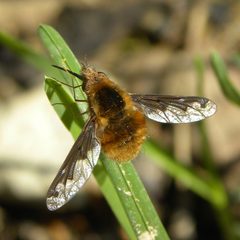
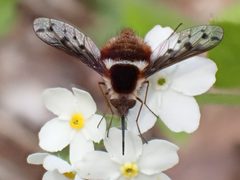
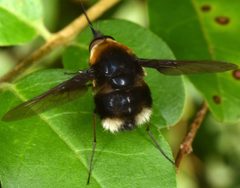
26Bombylius is a large of bee flies ( Bombyliidae) distributed worldwide, with most diverse in the Northern Hemisphere. are distinguished by their dense coat of fur, long rigid , and rapid, darting while hovering to feed on nectar. The genus exhibits striking of bees and bumblebees. Larvae are that develop in the nests of solitary bees, with females depositing by hovering over burrow entrances and flicking eggs into the tunnels.
Pronunciation
How to pronounce Bombylius: //bɔmˈbɪliəs//
These audio files are automatically generated. While they are not always 100% accurate, they are a good starting point.
Identification
possess a single pair of wings (Diptera), a long stiff used for probing deep flowers while hovering, and a thick coat of fur ranging from yellow to orange. Distinguished from actual bees by the wing count, rapid darting pattern, and leg structure. The r-m location on the wing distinguishes Bombylius from the similar Systoechus. -level identification requires examination of wing venation, coloration patterns, and geographic distribution.
Images
Habitat
Open areas with flowers including yards, gardens, forest edges, and sunny spots in woodlands. Associated with sandy or loose soils where solitary bees nest.
Distribution
Worldwide distribution with greatest diversity in the Palaearctic, Near East, and North Africa. Bombylius major is widely distributed throughout the northern hemisphere including North America, Europe, the Middle East, and temperate Asia.
Seasonality
active primarily in spring (March–June in temperate regions), with peak activity in April and May. Some may extend into early summer; activity patterns differ from the related Systoechus which tends toward fall activity.
Diet
feed on nectar from flowers using their elongated while hovering. Larvae are that consume provisions and then feed externally on developing larvae.
Host Associations
- Andrena (mining bees) - larval deposited into burrows, larvae parasitize developing bees
- Colletes (plasterer bees) - larval deposited into burrows, larvae parasitize developing bees
- Halictus (sweat bees) - larval deposited into burrows, larvae parasitize developing bees
- Halictus ligatus - larval Bombylius pulchellus documented as significant mortality factor in southern Ontario
- solitary bees (general) - larval larvae infest nests, consume food stores and
Life Cycle
Females hover over burrow entrances and flick into tunnels with abdominal movements. Larvae hatch and actively seek out individual containing host larvae. The fly maggot attaches externally to the host larva and feeds as an ectoparasitoid, killing the host. Mature larvae pupate, often spending winter in the pupal stage; pupae possess hooks, spines, and setae used to work through soil plugs to reach the surface. Some pupae may pass two winters before .
Behavior
exhibit remarkable hovering , appearing to levitate while feeding on nectar. Males hover at 2–3 feet above ground, possibly defending territories or displaying for females. Flight is rapid and darting, distinct from the flight of bees they mimic. A novel rapid around the vertical axis (yawing) has been documented in B. major, though its function remains unknown. Adults are skittish and difficult to approach for photography.
Ecological Role
Larvae act as significant mortality factors for of native solitary bees, regulating dynamics. may contribute to pollination through incidental pollen transport on their hairy bodies while visiting flowers, though they are primarily "flower visitors" rather than deliberate .
Human Relevance
are harmless to humans and pets despite resemblance to stinging insects and intimidating long . Sometimes mistaken for blood-sucking flies due to proboscis length. May be considered beneficial as natural enemies of some bees, though detrimental to native . Frequently photographed by naturalists due to charismatic appearance and hovering .
Similar Taxa
- SystoechusSimilar appearance in tribe Bombyliini; distinguished by location of r-m on wing and fall activity period versus spring activity in Bombylius
- AnthraxRelated bombyliid with similar lifestyle; distinguished by different and some parasitize tiger beetles rather than bees
- bees (Hymenoptera: Apoidea)Striking mimicry target; distinguished by two pairs of wings, different , and lack of long rigid
Sources and further reading
- BugGuide
- Wikipedia
- GBIF taxonomy match
- iNaturalist taxon
- NCBI Taxonomy
- Catalogue of Life
- Beware the bee fly - Bombylius sp. — Bug of the Week
- One-Shot Wednesday: Upside down bee fly | Beetles In The Bush
- Bug Eric: Fly Day Friday: Greater Bee Fly
- Bug Eric: Bee Flies
- Diptera | Beetles In The Bush | Page 5
- Bombyliidae | Beetles In The Bush | Page 2
- Unusual Flight Behaviour in the Beefly Bombylius major (Diptera: Bombylidae)
- The effect of Bombylius pulchellus (Diptera; Bombyliidae) and other mortality factors upon the biology of Halictus ligatus (Hymenoptera; Halictidae) in southern Ontario