
Bombyliini
bee flies
Genus Guides
5- Anastoechus(bee flies)
- Bombylius(Greater Bee Flies)
- Heterostylum(bee-flies)
- Systoechus(Woolly Bee Flies)
- Triploechus
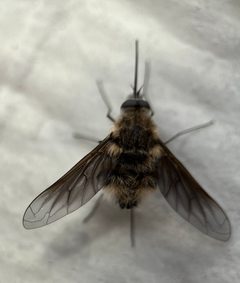
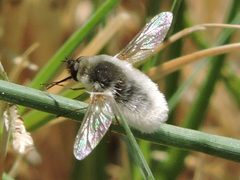
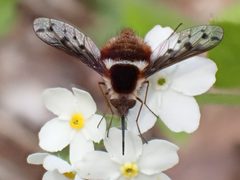
Bombyliini is a tribe of bee flies within the Bombyliidae, characterized by that are typically active in spring and exhibit -mimicking . Members of this tribe are distinguished from the related tribe Systoechini primarily by wing venation, specifically the position of the r-m . The Bombylius is the best-known representative, with such as B. mexicanus occurring in North America. Adults are nectar feeders, while larvae are of various insects including tiger larvae ().
Pronunciation
How to pronounce Bombyliini: //bɒm.bɪˈlaɪ.ɪˌnaɪ//
These audio files are automatically generated. While they are not always 100% accurate, they are a good starting point.
Identification
Members of Bombyliini can be distinguished from the related tribe Systoechini by the position of the r-m on the wing. within Bombyliini, such as Bombylius, typically exhibit spring activity, whereas Systoechus tend toward fall activity. The tribe is characterized by the bee fly body plan: a stout, furry body with a long for nectar feeding, and a single pair of wings with the hindwings modified into .
Images
Distribution
Bombyliini has a broad distribution with representatives in North America, South America, and other regions. The Bombylius occurs in the United States, with B. mexicanus documented from Missouri.
Seasonality
of Bombylius, the primary in this tribe, are active in spring. This seasonal pattern contrasts with Systoechus, a related genus in tribe Systoechini, which tends toward fall activity.
Diet
feed on nectar from flowers. Larvae are , with documented including tiger larvae () and potentially other insects.
Host Associations
- Cicindelidae - Larvae of Anthrax analis, a bombyliid fly, have been documented as of multiple tiger including Cicindela scutellaris, C. hirticollis, C. tranquebarica, Cicindelidia punctulata, Ellipsoptera marginata, Cicindelidia obsoleta, and Tetracha virginica.
Life Cycle
Larvae develop as , attaching externally to insects. The involves deposition near host burrows, larval attachment to and feeding on the host, and in soil. timing varies by , with Bombylius typically emerging in spring.
Behavior
are skittish and difficult to approach for photography. They are strong fliers and may exhibit erratic patterns. Some have been observed resting on sandy ground. Females of species fly backward and downward while thrusting the forward to deposit near burrow entrances.
Ecological Role
As , larvae regulate of insects including tiger beetles. serve as through nectar feeding.
Similar Taxa
- SystoechiniRelated tribe within Bombyliidae; distinguished by position of r-m on wing and typically fall activity versus spring activity in Bombyliini.
- Bombylius within Bombyliini; the primary representative of this tribe, with spring activity and characteristic wing venation.