
Heterostylum
Macquart, 1848
bee-flies
Species Guides
2- Heterostylum croceum
- Heterostylum robustum(bomber fly)
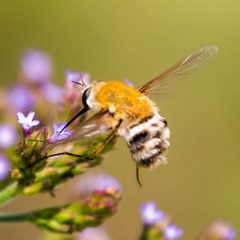
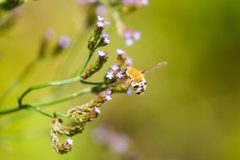
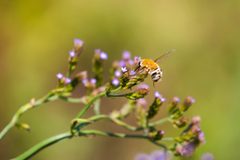
Heterostylum is a of -flies (Bombyliidae) comprising 14 described distributed throughout the Americas. These robust, densely hairy flies measure 10–15 mm in body length. The genus is distinguished by diagnostic morphological features including an indentation in the hind margin of the and distinctive wing venation patterns. Larvae are that develop within the nests of mining bees.
Pronunciation
How to pronounce Heterostylum: /ˌhɛtɛroʊˈstaɪləm/
These audio files are automatically generated. While they are not always 100% accurate, they are a good starting point.
Identification
Distinguished from similar -fly by the combination of an indentation in the hind margin of the and unique wing venation patterns. The robust, very hairy body and 10–15 mm size are supportive characters. -level identification requires examination of coloration patterns and geographic distribution.
Images
Habitat
Associated with supporting mining bee . Heterostylum ferrugineum has been documented in xerophilic forest habitats. distribution spans diverse environments from xeric regions of the southwestern United States to tropical forests of Central and South America.
Distribution
Distributed throughout the Americas. Nearctic records include the western and central United States (Arizona, California, Colorado, Kansas, Missouri, New Mexico, Oklahoma, Oregon, Texas, Utah, Wyoming, Idaho, Nevada, Georgia) and Canada (Alberta), plus northern Mexico. Neotropical distribution includes Mexico (Baja California, Sinaloa, Sonora, Tamaulipas, Zacatecas, Guerrero, Morelos, Puebla, Coahuila, Tabasco), Cuba, Haiti, U.S. Virgin Islands, and South America (Argentina, Bolivia, Brazil, Colombia, Paraguay, Venezuela, Peru, Guyana, Guatemala). First recorded in the Lesser Antilles (Martinique, Guadeloupe, Saint-Barthélemy) in 2005.
Diet
Larvae are that feed on the larvae of mining bees (Andrenidae). feeding habits are not documented in available sources.
Host Associations
- Nomia melanderi (alkali bee) - Heterostylum robustum specifically parasitizes this solitary .
- Mining bees (Andrenidae) - Larvae of the feed on mining bee larvae; specific associations beyond H. robustum are not documented.
Life Cycle
: females deposit near nesting sites; larvae enter host and develop within the bodies of developing bee larvae; occurs after consuming the host. Specific details on egg, larval instars, and pupal duration are not available from provided sources.
Behavior
females exhibit -laying adapted to locate and exploit of solitary nests. The parasitic strategy involves depositing eggs near nesting sites rather than direct host contact.
Ecological Role
Acts as a of solitary mining bees, potentially regulating . Heterostylum robustum parasitizes the alkali bee, an important of alfalfa, suggesting potential impact on agricultural pollination services through population suppression.
Human Relevance
Heterostylum robustum may impact alfalfa pollination by parasitizing the alkali bee, a managed for this crop. No other direct human interactions are documented.
Similar Taxa
- Other Bombyliidae generaLack the diagnostic indentation in the hind margin and unique wing venation characteristic of Heterostylum.
- Bees (Hymenoptera: Apoidea)Convergent hairy appearance, but distinguished by single pair of wings (Diptera), structure, and wing venation.
More Details
Taxonomic history
established by Macquart in 1848. Fourteen are currently recognized, with most described in the early 20th century and two added in 2005.
Conservation status
No -level conservation assessments are available for this .