
Bombylius mexicanus
Wiedemann, 1821
bee fly
Bombylius mexicanus is a of bee fly in the Bombyliidae, characterized by its -like appearance and long . The species is widespread across North America, from Canada through the United States to Mexico, despite its specific epithet suggesting a Mexican origin. are active in spring and are known to be skittish and difficult to approach. Like other bee flies, they likely parasitize the larvae of solitary bees.

Pronunciation
How to pronounce Bombylius mexicanus: //bɒmˈbɪliəs ˌmɛksɪˈkeɪnəs//
These audio files are automatically generated. While they are not always 100% accurate, they are a good starting point.
Identification
can be distinguished from the related Systoechus by the location of the r-m on the wing. Members of the genus Bombylius tend to be active in spring, while Systoechus are more active in fall. The species is part of the tribe Bombyliini within the Bombyliinae.
Images
Appearance
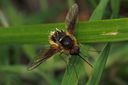
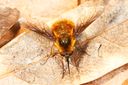
Hairy, -like fly with a single pair of wings (characteristic of Diptera). Possesses an exceptionally long adapted for reaching deep into flowers to sip nectar. The body is covered in dense setae that trap pollen, aiding in incidental pollination. Wing venation includes the r-m , which is used to distinguish it from similar such as Systoechus.
Habitat
Found in sand prairie remnants and open sandy areas. One documented observation occurred in the Mississippi lowlands of southeastern Missouri on sandy ground.
Distribution
Widespread in North America: from Ontario and British Columbia in Canada, south through the United States, and into Mexico.
Seasonality
Active as in spring. A fresh-looking individual was observed in mid-May in southeastern Missouri.
Diet
feed on nectar from flowers using their long . They do not deliberately collect pollen as food.
Host Associations
- solitary bees - Bee flies in the Bombylius are known to parasitize the larvae of solitary bees. Females follow bees back to their nests and deposit in or near the burrow. The fly larva enters the gallery, consumes the provisions left by the bee, then attaches to and feeds on the developing bee larva.
Life Cycle
Complete with , larva, pupa, and stages. Eggs are deposited in or near solitary nests. Larvae are that develop within bee nests, first consuming food provisions then feeding on the bee larva. The larval stage lasts approximately 12–15 days based on observations of related .
Behavior
are hyperactive, skittish, and difficult to approach. They exhibit rapid and are frequently observed hovering near flowers. When disturbed, they attempt immediate escape flight. One observed individual was documented falling onto its back after striking a plant during escape, then righting itself and flying away.
Ecological Role
serve as incidental due to their hairy bodies trapping and transferring pollen between flowers. Larvae function as of solitary bees, regulating . The occupies a position as both mutualist (pollination) and antagonist () within its .
Human Relevance
Contributes to pollination of wildflowers. May be encountered by naturalists and photographers due to its -mimic appearance. Not known to be a pest or directly beneficial to agriculture.
Similar Taxa
- Systoechus spp.Similar appearance and both in tribe Bombyliini, but distinguished by r-m position on wing and fall activity period versus spring activity in Bombylius.
- Anthrax spp.Related bee flies in Bombyliidae, but parasitize different including tiger larvae rather than solitary bees.
More Details
Etymology note
Despite the specific epithet 'mexicanus', the is not restricted to Mexico but has a broad North American distribution.
Expert consultation
Identification of specimens has been confirmed by dipterist Joel Kitts at University of Guelph.
Sources and further reading
- BugGuide
- Wikipedia
- GBIF taxonomy match
- iNaturalist taxon
- Catalogue of Life
- Field Guide Selected References
- One-Shot Wednesday: Upside down bee fly | Beetles In The Bush
- Bombyliidae | Beetles In The Bush | Page 2
- Diptera | Beetles In The Bush | Page 5
- May | 2012 | Beetles In The Bush
- Beware the bee fly - Bombylius sp. — Bug of the Week