
Xenox
Evenhuis, 1985
Tiger Bee Fly
Species Guides
4- Xenox delila
- Xenox habrosus
- Xenox tigrinus(Tiger Bee Fly)
- Xenox xylocopae
Xenox is a of bee flies in the Bombyliidae, established by Evenhuis in 1985. The genus contains five described , all of which are whose larvae develop inside the nests of carpenter bees in the genus Xylocopa. The most widely known member is Xenox tigrinus, commonly called the tiger bee fly, which is frequently observed near human structures where carpenter bees nest.
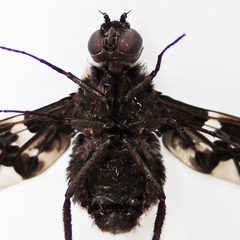
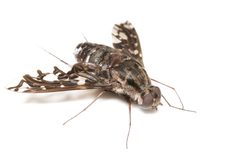
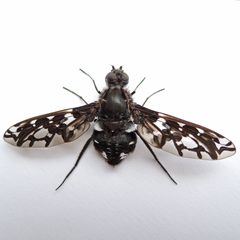
Pronunciation
How to pronounce Xenox: //ˈzɛnɒks//
These audio files are automatically generated. While they are not always 100% accurate, they are a good starting point.
Identification
Distinguished from true bees by having only one pair of wings (Diptera) versus two pairs (Hymenoptera). Distinguished from other bee fly by association with nests and specific wing patterns. Xenox tigrinus can be recognized by its dark coloration and presence near carpenter bee nesting sites on wooden structures.
Images
Appearance
have a single pair of wings characteristic of Diptera. The body is typically covered with hair, giving a -like appearance. Xenox tigrinus has distinctive dark coloration with patterned wings. The long is adapted for reaching deep into flowers to extract nectar.
Habitat
frequent meadows and areas with abundant flowers for nectar feeding. Larval is within the nests of carpenter bees, typically in wood tunnels, siding, or other wooden structures.
Distribution
occur in North America. Distribution records include Vermont and other parts of the United States. Specific range varies by species within the .
Seasonality
Diet
feed on nectar from flowers using their long . Larvae are that consume the larvae of carpenter bees (Xylocopa spp.) and their provisions.
Host Associations
- Xylocopa - All five Xenox parasitize larvae of carpenter bees in this
Life Cycle
Females deposit in or near nest entrances. Larvae enter the nest galleries, consume the food provisions left by the , then attach to and feed on the developing bee larvae. Development occurs entirely within the host nest.
Behavior
are agile, fast-flying often seen hovering at flowers. Females follow carpenter bees back to their nests to locate oviposition sites. Adults are and highly active, requiring substantial nectar intake to power muscles.
Ecological Role
function as while feeding on nectar. Larvae act as agents of , though they do not eliminate entirely. The relationship helps regulate populations of their carpenter bee hosts.
Human Relevance
Often noticed by homeowners due to presence near -infested structures such as decks, siding, and roof eaves. Frequently mistaken for bees or . Generally considered beneficial for pollination and natural control of carpenter bees, which can damage wooden structures.
Similar Taxa
- Bombylius majorAnother bee fly with similar appearance and , but parasitizes ground-nesting bees rather than carpenter bees
- Anthrax spp.Related bee fly with similar lifestyle, but attacks different groups including leafcutter bees and tiger beetles
Misconceptions
are frequently mistaken for bees due to their hairy bodies and flower-visiting , but they are true flies with only one pair of wings and cannot sting.
More Details
Taxonomic History
The Xenox was established by Evenhuis in 1985, though some were previously described under other names. The five described species are: X. delila, X. habrosus, X. nigritus, X. tigrinus, and X. xylocopae.