
Iphthiminus
Spilman, 1973
Species Guides
3- Iphthiminus lewisii
- Iphthiminus opacus(Cloudy Darkling Beetle)
- Iphthiminus serratus(Serrated Darkling Beetle)
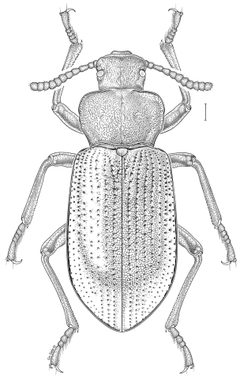
Iphthiminus is a of darkling beetles in the Tenebrionidae, Tenebrioninae. The genus contains at least four described distributed in North America. Members are primarily associated with coniferous forests, where they inhabit decaying wood and feed on fungal resources. They are and have been observed on the trunks and stumps of recently fallen or cut pines.
Pronunciation
How to pronounce Iphthiminus: //ɪfˈθɪmɪnəs//
These audio files are automatically generated. While they are not always 100% accurate, they are a good starting point.
Identification
The can be distinguished from similar darkling beetles by its association with coniferous bark and activity on pine trunks. Iphthiminus lewisii has been specifically noted on recently fallen Pinus ponderosa at night. Detailed morphological diagnostic features for the genus are not documented in available sources.
Images
Habitat
Found under bark and in rotting logs of coniferous trees, particularly Ponderosa Pine. Inhabits subcortical spaces in decaying wood, often in moist conditions associated with fungal growth. Nocturnally active on trunks and stumps of recently fallen or cut pine trees.
Distribution
North America. Documented from the southwestern United States including Arizona (Coconino County, Kaibab National Forest), Utah, and Vermont. Distribution records also include general US records.
Seasonality
Active in June based on field observations. activity observed during summer months in coniferous forest .
Diet
Feeds on subcortical fungi, fruiting fungi including Trichaptum, and rotting wood in moist conditions.
Host Associations
- Pinus ponderosa - Observed on trunks and stumps of recently fallen trees
- Trichaptum - foodFruiting fungus consumed
Behavior
. have been observed on trunks of recently fallen or cut ponderosa pines at night. Aggregates on woody substrates in coniferous forests.
Ecological Role
Decomposer in coniferous forest . Contributes to wood decay processes through feeding activities on fungi and rotting wood. Part of the subcortical fauna associated with dead and dying conifers.
Similar Taxa
- EleodesBoth are darkling beetles (Tenebrionidae) active in similar , but Eleodes are primarily ground-dwelling in open areas rather than specialized for subcortical conifer habitats
- Zopherus beetles found on conifer trunks, but Zopherus belongs to Zopheridae and has different ecological associations
More Details
Taxonomic History
established by Spilman in 1973. Contains four described : I. italicus, I. lewisii, I. opacus, and I. serratus.