
Eleodes eschscholtzii
Solier, 1848
desert stink beetle
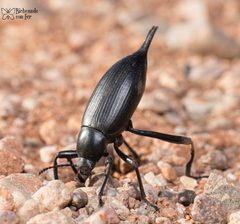
Eleodes eschscholtzii is a of darkling beetle ( Tenebrionidae) native to arid regions of western North America. The species is part of the diverse Eleodes , commonly known as clown beetles or desert stink beetles, characterized by defensive chemical secretion and a distinctive -stand posture when threatened. Two are recognized: E. e. eschscholtzii and E. e. lucae.
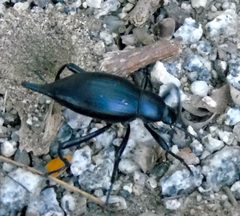
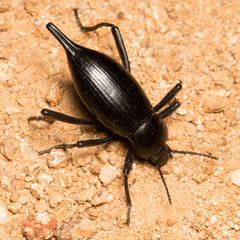
Pronunciation
How to pronounce Eleodes eschscholtzii: /ɛˈleɪədəz ɛˈʃoʊltsiaɪ/
These audio files are automatically generated. While they are not always 100% accurate, they are a good starting point.
Images
Habitat
Arid and semi-arid environments including deserts and dry grasslands. The occurs in regions with sandy or loose soil substrates suitable for burrowing.
Distribution
Western North America. Distribution records from Mexico (MX) confirmed. Range extends through arid regions of the southwestern United States and adjacent Mexico.
Behavior
Members of the Eleodes, including this , exhibit a characteristic defensive known as the '-stand' or 'hand-stand' posture. When disturbed, the raises its and stands on its head, presenting defensive glands at the . This posture is accompanied by the secretion of defensive chemicals from pygidial glands, producing an unpleasant odor that deters . The 'clown beetle' and 'desert stink beetle' derive from these behaviors.
Ecological Role
As a in arid , contributes to decomposition and nutrient cycling. Serves as prey for various including birds, reptiles, and mammals. The defensive chemical secretion indicates coevolutionary pressure from .
Human Relevance
Occasionally kept as pets due to low maintenance requirements and longevity in captivity. The defensive secretion can be irritating if handled carelessly. Not considered an agricultural pest.
Similar Taxa
- Eleodes suturalisSimilar size, coloration (black with reddish-brown sutural stripe), and preference in the Great Plains region. Distinguished by E. suturalis having sharply laterally carinate and broadly explanate pronotum.
- Eleodes hispilabrisClosely related with overlapping range and similar appearance, including occasional reddish-brown sutural stripe. Separated by subtle morphological differences in pronotal and elytral structure.
- Eleodes acutaOccurs in same and region with nearly identical coloration including rosy red sutural stripe. E. acuta averages larger (around 30 mm vs. under 26 mm for E. suturalis) and has rounded rather than upturned lateral pronotal borders.
More Details
Subspecies
Two recognized: Eleodes eschscholtzii eschscholtzii (nominate subspecies) and Eleodes eschscholtzii lucae.
Taxonomic Authority
First described by Solier in 1848. The specific epithet honors Johann Friedrich von Eschscholtz, a Baltic German physician and naturalist who participated in early 19th-century Pacific expeditions.