
Synchroidae
Lacordaire, 1859
synchroa bark beetles
Genus Guides
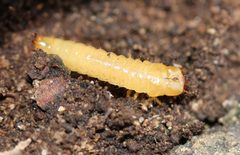
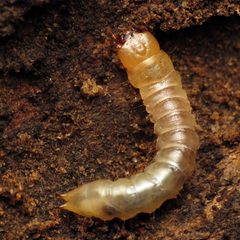
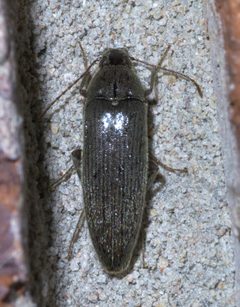
2is a small of tenebrionoid beetles containing three extant : Mallodrya (, North America), Synchroa (five , North America and Asia), and Synchroina (two species, Oriental region). The family has been historically confused with Melandryidae but was established as independent based on larval and characters. Members are elongate, slightly flattened beetles with brownish to black coloration, ranging 10–16 mm in length.
Pronunciation
How to pronounce Synchroidae: /sɪnˈkroʊɪdiː/
These audio files are automatically generated. While they are not always 100% accurate, they are a good starting point.
Identification
Distinguished from similar Melandryidae by unmodified maxillary palpomeres and larval . have elongate, tapered, slightly flattened bodies with brownish to black coloration. Synchroa possess elongated and with variable prosternal process and structures useful for species-level identification.
Images
Habitat
Larvae of Synchroa have been observed in rotting cambium tissue of deciduous trees. collection records include elevations of 754 m in montane regions of Xizang, China, suggesting association with forested environments.
Distribution
Widely distributed across Oriental, Palaearctic, and Nearctic regions with highest in Eastern Asia. Mallodrya: North America. Synchroa: North America, east Palearctic region, and Oriental region. Synchroina: Oriental region. Specific records include China (Xizang, Guangzhou), Vietnam, Laos, Russia, Japan, Korea, and the United States (Vermont).
Diet
Larvae of Synchroa feed on rotting cambium tissue in deciduous trees. feeding habits are not documented.
Behavior
are .
Similar Taxa
- MelandryidaeHistorical confusion due to morphological similarity in form; distinguished by larval and unmodified maxillary palpomeres in .
- ZopheridaeSuggested as close relatives based on larval and characters by Crowson (1966); not necessarily similar in appearance.
- StenotrachelidaeSuggested as close relatives based on larval and characters by Crowson (1966); not necessarily similar in appearance.
More Details
Taxonomic history
were long treated as members of Melandryidae until Böving & Craighead (1931) established them as an independent , a treatment followed by Crowson (1966). The 'synchroa bark beetles' is a recent coinage referring to body form rather than ecological relationship to true bark beetles (Scolytinae).
Species diversity
The contains approximately 9–10 extant across three , though counts vary by source. A new species, Synchroa medogensis, was described from Xizang, China in 2024, bringing the total to at least nine species in Synchroa alone.