Pyrota
Dejean, 1834
Species Guides
24- Pyrota akhurstiana
- Pyrota bilineata
- Pyrota concinna
- Pyrota deceptiva
- Pyrota discoidea(Winecup Pyrota)
- Pyrota engelmanni
- Pyrota fasciata
- Pyrota insulata(Yellow-crescent Blister Beetle)
- Pyrota invita
Pyrota is a of blister beetles in the Meloidae, comprising at least 30 described . The genus is characterized by complex and highly distinctive courtship involving prolonged physical contact between sexes. Males alternate between mounting above females for acts (palpation, dorsal , rocking) and positioning behind them for acts (leg grasp, palpal insertion beneath , lifting female body, posterior antennation, abdominal curvature and stroke, genital hold). exhibit little aggressive behavior and copulate in a linear position for extended periods with abdominal pumping by the male. Some species show extreme size dimorphism between mating individuals.
Pronunciation
How to pronounce Pyrota: /paɪˈroʊtə/
These audio files are automatically generated. While they are not always 100% accurate, they are a good starting point.
Identification
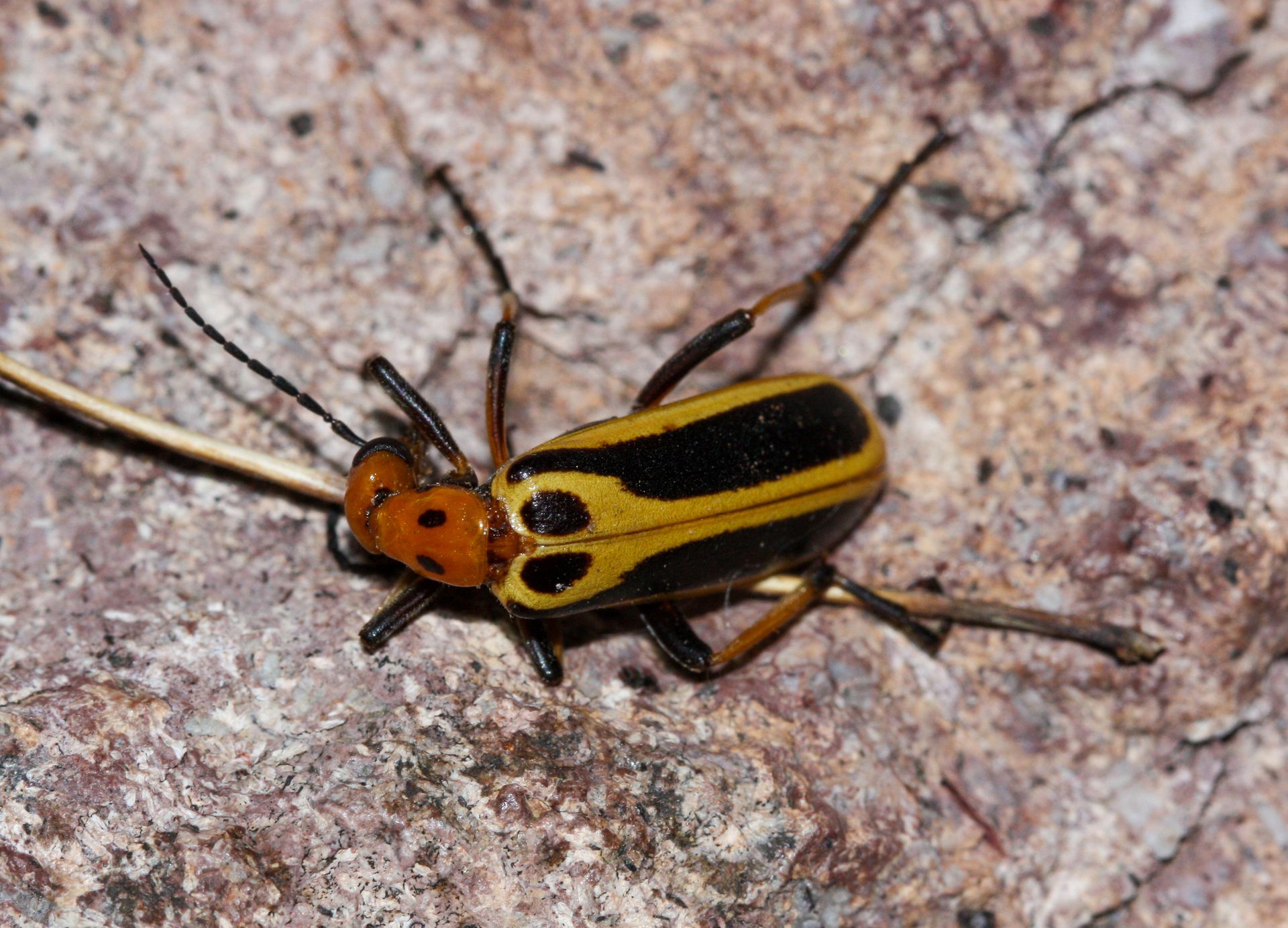
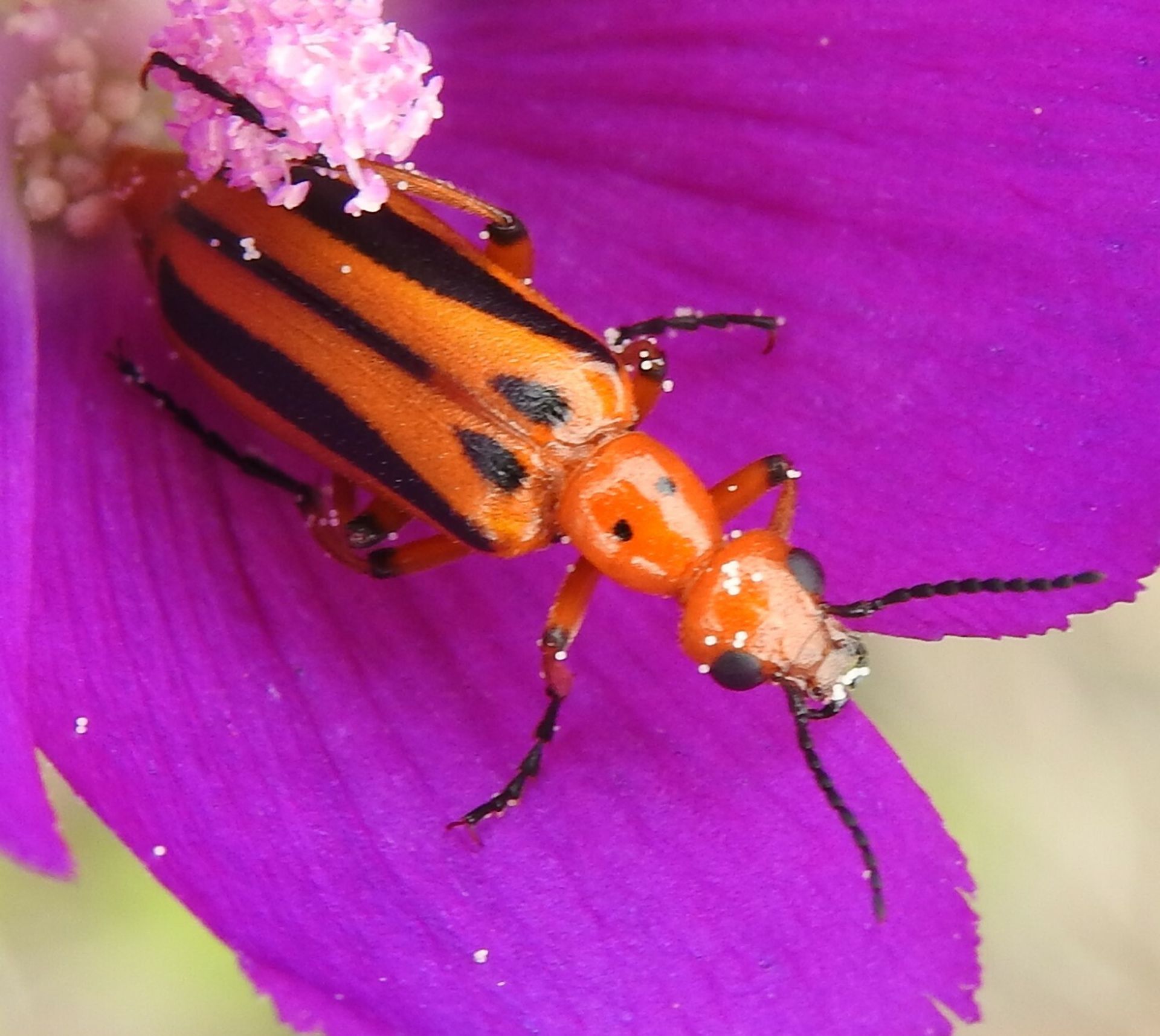
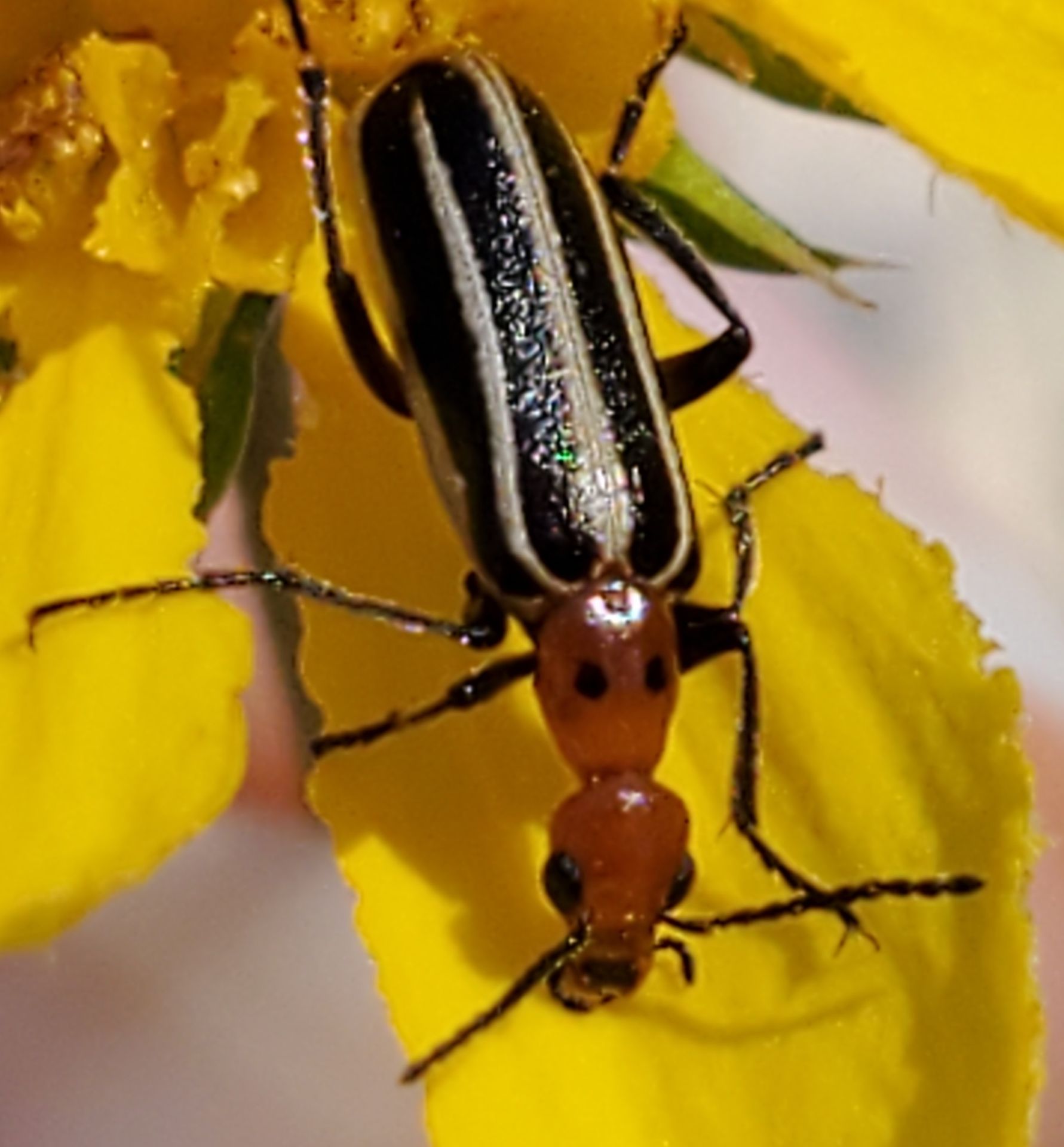
Members of Pyrota can be distinguished from similar blister beetles by their characteristic color patterns, which often include orange or reddish coloration with black markings. Pyrota bilineata specifically displays two black pronotal spots and distinctive black and white longitudinal elytral stripes. The belongs to the tribe Pyrotini within Meloinae. -level identification requires examination of specific color patterns and may involve dissection of genitalia.
Images
Distribution
of Pyrota occur in North America and South America. Specific localities documented include southern Utah (San Juan County), New Mexico, and Argentina. The has been observed in desert and semi-arid environments including Chihuahuan Desert .
Behavior
Courtship follows a regular cyclic pattern with males alternating between two positions: mounting above the female to perform palpation, , and rocking; then orienting behind her to perform leg grasp, palpal insertion beneath her , lifting of her body, antennation, abdominal curvature and stroke, and genital hold. Copulation entails abdominal pumping by the male and occurs in a linear position for extended periods. exhibit little aggressive . Some form large mating on flowers. Extreme size dimorphism has been observed in mating pairs, with males as small as one-third the size of females. Interspecific differences exist in the precise manner and temporal relationships of courtship acts.
Similar Taxa
- EpicautaBoth are of blister beetles in Meloinae with similar body plans and aposematic coloration; Epicauta is more speciose and widespread but lacks the distinctive cyclic courtship pattern of Pyrota
- LyttaAnother meloid with warning coloration; Pyrota differs in its complex cyclic courtship and specific color pattern elements
- MeloeOil beetles in the same but with dramatically different body form (short , rounded body) and simpler courtship ; Meloe are flightless as
Sources and further reading
- BugGuide
- Wikipedia
- GBIF taxonomy match
- iNaturalist taxon
- NCBI Taxonomy
- Catalogue of Life
- Meloidae Holdings | Entomology Research Museum
- Midget male meloid mates with mega mama | Beetles In The Bush
- ID Challenge #8 | Beetles In The Bush
- Bug Eric: New Mexico Dragonfly Blitz - Day 1
- Best of BitB 2013 | Beetles In The Bush
- Sexual Behavior in Blister Beetles (Coleoptera: Meloidae): I. The GenusPyrota