
Philonthus
Stephens, 1829
Species Guides
43Philonthus is a large of rove beetles (Staphylinidae) containing over 380 described . These beetles are generally robust found in diverse including decomposing organic matter, carrion, , and fungal substrates. The genus has a nearly distribution with particular diversity in the Palaearctic region. Several species have been documented as rapidly colonizing new habitats and competing with native species.
Pronunciation
How to pronounce Philonthus: //fɪˈlɒnθəs//
These audio files are automatically generated. While they are not always 100% accurate, they are a good starting point.
Identification
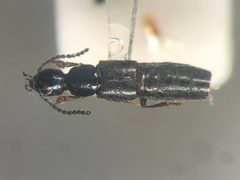
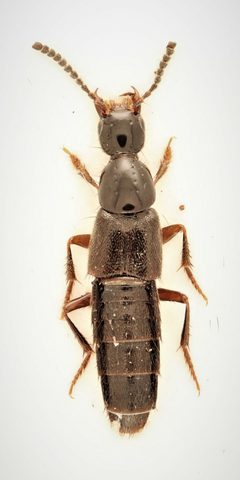
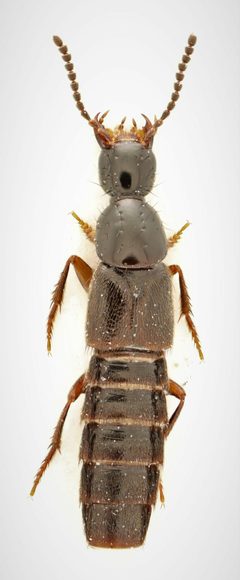
Members of Philonthus are recognized by their large size relative to other rove beetles, typically 10–35 mm in length. They possess the characteristic shortened of Staphylinidae, exposing most of the abdominal segments. Many exhibit distinctive coloration including metallic blue-green, black, or reddish markings. The body form is generally robust and somewhat flattened, with prominent . Species-level identification requires examination of male and female genitalia and detailed external morphological characters.
Images
Habitat
Decomposing organic matter including , compost, carrion, and plant debris; fungal substrates such as mushrooms and bracket fungi; epigeic (ground-dwelling) environments; both lowland and mountainous areas. Some are strongly associated with specific substrates like oyster mushrooms or carrion.
Distribution
Nearly . Particularly diverse in the Palaearctic region, with significant representation in Europe, Asia, and North America. Southern South America harbors at least 25 valid . Some species such as Philonthus spinipes have undergone rapid westward range expansion from East Asian origins and are now established across Europe.
Diet
Predatory. Both larvae and feed on small insects including beetles, flies, and other encountered in their . Some are documented of fungus beetles (Erotylidae) in mushroom habitats.
Behavior
are capable fliers and actively seek rich in prey. Some demonstrate rapid of new habitats and competitive interactions with native species. Several species have been observed as in carrion and fungal .
Ecological Role
in decomposition environments and fungal . Some function as agents by preying on other insects in and compost. Documented cases of competitive displacement of native species exist, such as Philonthus spinipes affecting of Philonthus nitidus in central Europe.
Human Relevance
Some are encountered in contexts due to their presence in carrion. A few species have been implicated as pests in mushroom . The serves as a subject for taxonomic and genomic research, with Philonthus spinipes being among the first rove beetles to have its sequenced.
Similar Taxa
- PlatydracusAlso large rove beetles in similar , but generally more elongate body form and different color pattern; Platydracus maculosus is notably larger (22–35 mm) and more robust than most Philonthus
- CreophilusLarge hairy rove beetles in carrion ; distinguished by conspicuous setae on the body and different antennal structure
- BelonuchusFormerly included now transferred to this ; distinguished by subtle morphological differences in genitalia and external characters requiring expert examination
Sources and further reading
- BugGuide
- Wikipedia
- GBIF taxonomy match
- iNaturalist taxon
- NCBI Taxonomy
- Catalogue of Life
- A Buggy New Year! | Bug Squad
- Bug Eric: Fungus Party-y-y!
- Bug Eric: More Beetles from Bones
- Bug Eric: 2022
- Revision of the southern South American species of Philonthus Stephens (Coleoptera: Staphylinidae)
- Notes on distribution and ecology of Philonthus spinipes Sharp (Coleoptera: Staphylinidae) in the Polish Carpathians
- The genome sequence of a rove beetle, Philonthus spinipes Sharp, 1874.