Diplotaxis frondicola
(Say, 1825)
May beetle, junebug
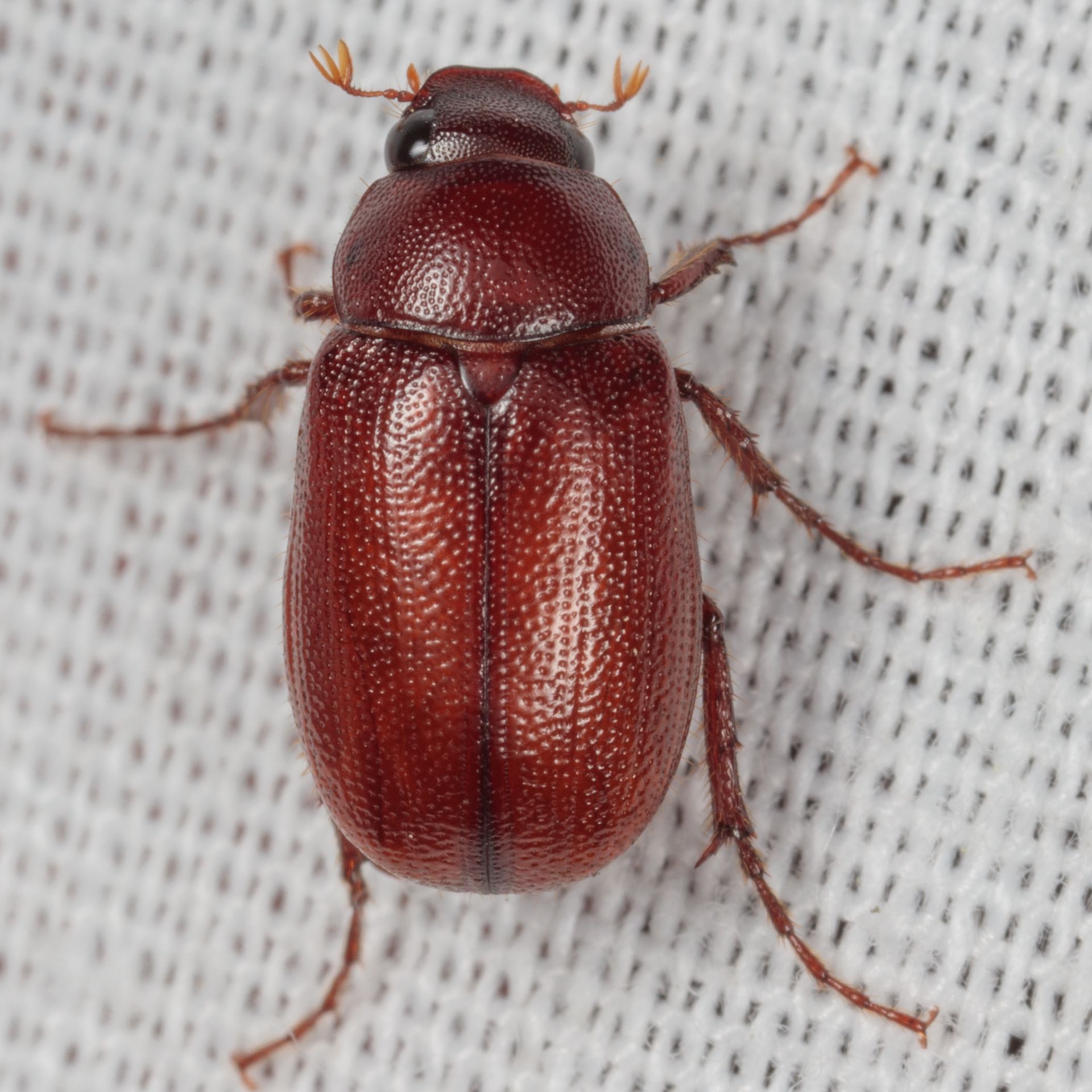
Diplotaxis frondicola is a of scarab beetle in the Melolonthinae, commonly known as a May beetle or junebug. It belongs to a large of small distributed across North America. The species was first described by Thomas Say in 1825. Like other Diplotaxis species, are typically attracted to lights at night and are often observed on vegetation.
Pronunciation
How to pronounce Diplotaxis frondicola: //ˌdɪploʊˈtæksɪs ˌfrɒnˈdɪkoʊlə//
These audio files are automatically generated. While they are not always 100% accurate, they are a good starting point.
Identification
Diplotaxis frondicola is one of approximately 50 in the Diplotaxis, most of which are small, dull-colored that are difficult to distinguish without close examination. Species in this genus generally lack the bright metallic colors or distinctive markings seen in many other scarab groups. Accurate identification to species level typically requires examination of genitalia and other microscopic characters. The genus can be recognized by its small size (usually under 10 mm), compact body form, and with 9 segments.
Images
Habitat
Based on collection records and related , D. frondicola occurs in open areas including fields, meadows, and forest edges. have been observed on low vegetation where they congregate, possibly in association with trails for mate location.
Distribution
Eastern and central United States. Documented from Alabama, Arkansas, District of Columbia, Florida, Illinois, Indiana, Iowa, Kansas, Kentucky, Louisiana, Maryland, Mississippi, Missouri, Nebraska, New Jersey, New York, North Carolina, Ohio, Oklahoma, Pennsylvania, South Dakota, Texas, Virginia, and Wisconsin.
Seasonality
are active in late spring through summer, with peak activity in May and June corresponding to the "May beetle" or "junebug."
Life Cycle
Complete with , larva, pupa, and stages. Larvae of Diplotaxis are root-feeders, though specific plants for D. frondicola have not been documented.
Behavior
are and attracted to lights. Has been observed congregating on low plants at night, possibly to intercept plumes for mate location. Some Diplotaxis are reluctant to fly to lights or do so only infrequently.
Ecological Role
Larvae function as root-feeding , contributing to soil nutrient cycling. may serve as prey for and as minor when feeding on flowers.
Human Relevance
Considered a minor agricultural pest in some areas where root-feeding larvae may damage crops, though less economically significant than larger scarab pests. are commonly encountered by entomologists and naturalists during night collecting with lights.
Similar Taxa
- Diplotaxis speciesMost congeneric are extremely similar in external appearance and require dissection of genitalia for reliable identification. The contains approximately 50 North American species.
- Serica speciesAnother of small, dull-colored scarabs with similar size and preferences, though Serica typically has more pronounced surface sculpturing on the .
- Phyllophaga speciesLarger May beetles/junebugs in the same Melolonthinae, but Phyllophaga are generally bigger (15-25 mm), more robust, and often have more variable coloration.
More Details
Taxonomic note
The Diplotaxis is taxonomically challenging, with many described based on subtle morphological differences. Several species remain poorly characterized, and the true diversity of the genus may be underestimated. New species continue to be discovered through targeted collecting on vegetation at night.
Collecting methods
Based on observations of related , D. frondicola is best collected by sweeping or beating low vegetation at night rather than relying solely on light trapping, as many Diplotaxis species are reluctant to fly to lights.