
Trichiotinus
Casey, 1915
Bee-like Flower Scarabs, Flower Scarabs
Species Guides
8- Trichiotinus affinis(Hairy Flower Scarab)
- Trichiotinus assimilis(hairy flower scarab)
- Trichiotinus bibens
- Trichiotinus lunulatus(Emerald Flower Scarab)
- Trichiotinus piger(Bee-like Flower Scarab)
- Trichiotinus rufobrunneus(Florida flower scarab)
- Trichiotinus texanus(Texas flower scarab)
- Trichiotinus viridans(Greenish Flower Chafer)
Trichiotinus is a of flower chafers in the Scarabaeidae, comprising approximately 8 described native to the New World. The genus is commonly known as -like flower scarabs due to the resemblance of some species to bees. Members are primarily associated with flowers, where feed and mate. Several species have restricted distributions, making them regional specialties in Texas, Oklahoma, and Florida.
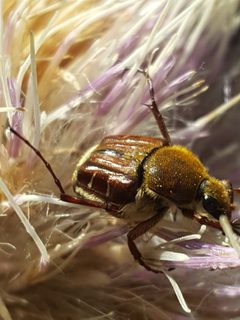
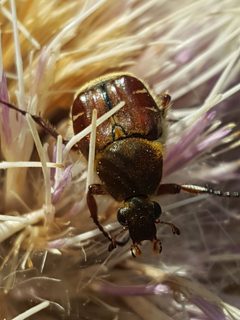
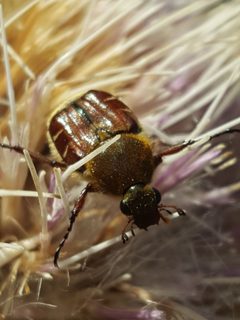
Pronunciation
How to pronounce Trichiotinus: /trɪˌkiːoʊˈtaɪnəs/
These audio files are automatically generated. While they are not always 100% accurate, they are a good starting point.
Identification
within Trichiotinus are distinguished by coloration, patterns, and geographic distribution. Trichiotinus texanus is recognized as a Texas/Oklahoma specialty with golden-green coloration. Trichiotinus rufobrunneus, the Florida flower scarab, exhibits reddish-brown coloration and is to Florida. Trichiotinus lunulatus, the emerald flower scarab, displays metallic green coloration with distinct lunulate markings. T. assimilis is notably hairy, earning the hairy flower scarab. T. piger is distinguished by its -like appearance.
Images
Habitat
occur in diverse including dry oak/pine sandhill woodlands, prairie grasslands with rocky exposures, and areas with abundant native wildflowers. Trichiotinus rufobrunneus has been specifically documented in sandhill habitats with Opuntia australis (Florida pricklypear cactus). Trichiotinus texanus occurs in native prairie between post oak woodlands and creek drainages in Oklahoma and Texas.
Distribution
All are native to the New World. Documented species distributions include: Trichiotinus affinis, T. assimilis, T. bibens, T. lunulatus, T. piger, T. rufobrunneus (Florida ), T. texanus (Texas/Oklahoma), and T. viridans. GBIF records indicate presence in the Nearctic region with specific records from Vermont and other US localities.
Seasonality
activity has been documented from spring through summer. In Florida, Trichiotinus rufobrunneus was observed in February. In Oklahoma and Texas, Trichiotinus texanus was collected in June. Activity appears correlated with flowering periods of plants, particularly Opuntia and various native wildflowers.
Diet
feed on pollen and floral tissues. Trichiotinus rufobrunneus has been observed feeding on flowers of Opuntia australis. Trichiotinus texanus has been collected from flowers of Allium sp., Cirsium undulatum, and various Asteraceae including Gaillardia pulchella and Coreopsis grandiflora.
Host Associations
- Opuntia australis - feedingFlorida pricklypear cactus; flowers provide food and mating site for T. rufobrunneus
- Allium sp. - feedingWild onion; flowers visited by T. texanus
- Cirsium undulatum - feedingWavyleaf thistle; flowers visited by T. texanus
- Gaillardia pulchella - feedingFirewheel; flowers visited by T. texanus
- Coreopsis grandiflora - feedingLarge-flowered tickseed; flowers visited by T. texanus
- Torilis arvensis - feedingErect hedge parsley; flowers visited by T. texanus
Behavior
are and strongly associated with flowers. Mating pairs have been observed on flowers, including within Opuntia petals. Adults are not skittish and can be approached closely when feeding. The exhibits flower constancy, with individuals remaining on particular plant during foraging bouts. activity has not been documented; adults do not appear at blacklights.
Ecological Role
function as while feeding on pollen and floral resources. Their flower-visiting facilitates pollen transfer among native wildflowers. The contributes to the diverse of flower-visiting beetles in North American grassland and woodland .
Human Relevance
are of interest to coleopterists due to restricted distributions of several members. Trichiotinus texanus and T. rufobrunneus are sought-after regional specialties for collectors. The has no documented agricultural pest status or economic importance.
Similar Taxa
- TrichodesBoth are flower-visiting beetles in superfamily Cleroidea (Trichodes in Cleridae), but Trichiotinus has clubbed with tips typical of Scarabaeidae, while Trichodes has thread-like antennae. Trichodes are typically more elongate with distinct color patterns of black and yellow/orange bands.
- EuphoriaBoth are cetoniine scarabs found on flowers, but Euphoria are generally more robust and often exhibit more variable coloration including brown, green, and metallic forms. Trichiotinus species tend to have more consistent coloration within species and more pronounced .
- StrigodermaBoth are flower chafers in Cetoniinae, but Strigoderma are typically smaller with more rounded body profiles and different elytral patterns.
More Details
Taxonomic History
The was established by Casey in 1915. Several were originally described in other genera and later transferred to Trichiotinus, including species originally described in Cetonia and Trichius.
Conservation Notes
Trichiotinus rufobrunneus and T. texanus have restricted ranges and may be vulnerable to loss. The Florida T. rufobrunneus is dependent on sandhill habitats with Opuntia australis, which are threatened by development and fire suppression.