
Trichiotinus lunulatus
(Fabricius, 1775)
Emerald Flower Scarab, Metallic Green Flower Scarab
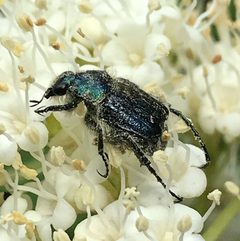
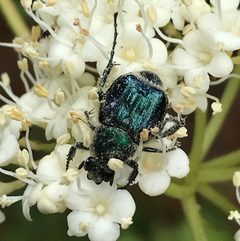
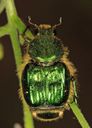
Trichiotinus lunulatus is a flower scarab beetle in the Scarabaeidae, distributed across the southeastern United States. are metallic green in color and have been observed visiting flowers, particularly those of pricklypear cactus (Opuntia). The is smaller and more widespread than some such as T. rufobrunneus.
Pronunciation
How to pronounce Trichiotinus lunulatus: //ˌtrɪ.kiˈoʊ.tɪ.nəs ˌluːˈnjuː.lə.təs//
These audio files are automatically generated. While they are not always 100% accurate, they are a good starting point.
Identification
Distinguished from by its smaller size and metallic green coloration. In Florida, it can be separated from the larger, Florida- Trichiotinus rufobrunneus by size and geographic distribution patterns. The is reliably identified by the combination of metallic green and overall smaller stature relative to similar flower scarabs.
Images
Habitat
Found in dry oak/pine sandhill woodland with grassy understory. Associated with flowering vegetation, particularly pricklypear cactus (Opuntia ).
Distribution
Southeastern United States: Alabama, Florida, Georgia, Louisiana, Maryland, Mississippi, North Carolina, South Carolina, Tennessee, Texas, and Virginia.
Seasonality
have been observed active in spring (April-May) in Florida, with activity likely extending through summer months when flowering plants are available.
Host Associations
- Opuntia australis - flower visitorFlorida pricklypear cactus; observed on flowers
- Opuntia - flower visitorpricklypear cactus flowers
Behavior
visit flowers, particularly those of pricklypear cactus. Has been observed in mating pairs on flowers. Activity appears to be , with adults found on flowers during daylight hours.
Ecological Role
Likely contributes to pollination of flowering plants while feeding on pollen and nectar. Serves as prey for .
Similar Taxa
- Trichiotinus rufobrunneusFlorida- flower scarab that is larger and has reddish-brown coloration; T. lunulatus is smaller, more widespread, and metallic green
- Trichiotinus texanusTexas flower scarab with different color pattern and geographic distribution
More Details
Collection records
Documented from Florida sandhill in dry oak/pine woodland with Opuntia australis. Collected by beating vegetation and examining cactus flowers.