
Anacaena limbata
(Fabricius, 1792)
Anacaena limbata is a water scavenger beetle in the Hydrophilidae. It is native to Europe and parts of Northern Asia, and has been introduced to North America. As a member of the Anacaena, it inhabits aquatic and semi-aquatic environments.
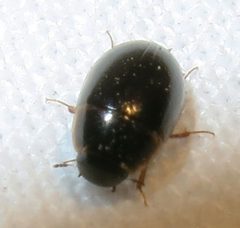
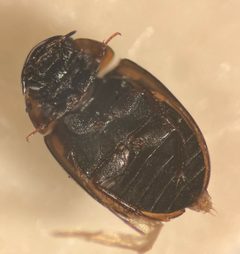
Pronunciation
How to pronounce Anacaena limbata: /ˌænəˈsiːnə lɪmˈbɑːtə/
These audio files are automatically generated. While they are not always 100% accurate, they are a good starting point.
Images
Habitat
Aquatic and semi-aquatic environments. Specific microhabitat preferences within these systems are not documented in available sources.
Distribution
Native to Europe and Northern Asia (excluding China). Introduced to North America, with records from Canada (New Brunswick, Newfoundland and Labrador, Nova Scotia, Ontario, Prince Edward Island, Quebec) and the United States (Alaska, California, Indiana, Massachusetts, Maryland, Maine, Michigan, New Hampshire, New York, South Carolina). GBIF records also indicate presence in North Africa (Algeria, Morocco), the Middle East (Armenia, Israel, Syria, Turkey), Central Asia (Kazakhstan), and China (Xinjiang), though some of these may represent data quality issues or misidentifications.
Human Relevance
Introduced to North America, where it has established in both Canada and the United States. The mechanism and timing of introduction are not documented.
Similar Taxa
- Anacaena lutescensHas been historically confused with A. limbata; distinguished as a separate in modern taxonomic revisions.
- Anacaena globulusEuropean in the same ; A. rufipes was previously treated as a variety of this .
More Details
Taxonomic history
Originally described as Sphaeridium limbata by Fabricius in 1792. Transferred to the Anacaena Thomson. The has undergone modern taxonomic revision as part of a comprehensive treatment of European Anacaena species.
Data quality note
GBIF distribution records include some anomalous localities (South Africa) that may represent data entry errors, misidentifications, or unverified reports. The core native range is well-established in Europe.