
Sphaeridium
Fabricius, 1775
Species Guides
4- Sphaeridium bipustulatum
- Sphaeridium lunatum(Crescent Water Scavenger Beetle)
- Sphaeridium marginatum
- Sphaeridium scarabaeoides
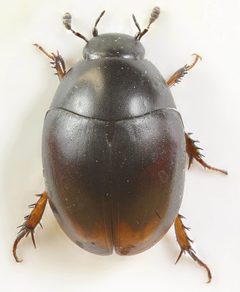
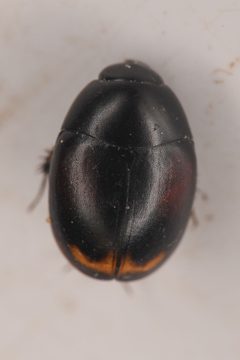
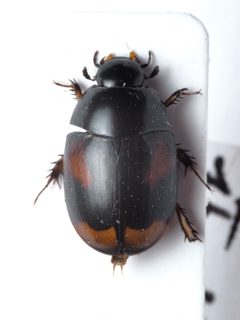
Sphaeridium is a of water scavenger beetles ( Hydrophilidae) comprising approximately 60 described . are small beetles, 4–7.5 mm in length, with short bearing hairy clubs. The genus is notable for its association with , where adults feed on organic matter while larvae function as of fly maggots. Multiple Sphaeridium species frequently coexist within a single dung pat.
Pronunciation
How to pronounce Sphaeridium: //sfɪəˈrɪdiəm//
These audio files are automatically generated. While they are not always 100% accurate, they are a good starting point.
Identification
The combination of small size (4–7.5 mm), compact rounded body, and short with hairy clubs distinguishes Sphaeridium from other Hydrophilidae . The association with provides additional context for field identification, though this alone is not diagnostic.
Images
Appearance
are small, compact beetles measuring 4–7.5 mm in length. are short with distinctly hairy clubs at the tips. The overall body form is rounded and robust.
Habitat
inhabit cow and similar decaying organic matter. The microhabitat provides both food resources and breeding sites.
Distribution
Native to Europe; some have been introduced to North America.
Diet
feed on and other organic matter. Larvae are of fly maggots, particularly those of dung-breeding flies such as Musca autumnalis (face fly).
Life Cycle
Females deposit several encased in a cocoon. Larvae develop within , where they prey on fly maggots. Larvae of different Sphaeridium may feed on each other when multiple species coexist in the same dung pat.
Behavior
Multiple may coexist within a single pat. Movement patterns differ between species, sexes, and between feeding versus breeding individuals.
Ecological Role
contribute to decomposition through feeding on organic matter. Larvae provide of dung-breeding fly through on maggots.
Human Relevance
Larvae may reduce of pest flies associated with livestock, such as the face fly (Musca autumnalis).
More Details
Taxonomic note
The name Sphaeridium has also been used in fungal (Ascomycota), but this Sphaeridium Fabricius, 1775 is distinct and valid within Coleoptera.