
Sphaeridium scarabaeoides
(Linnaeus, 1758)
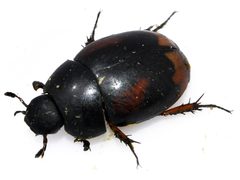
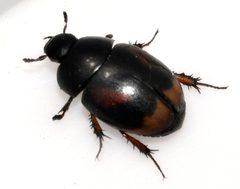
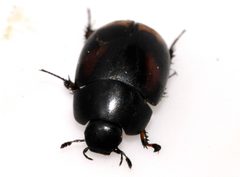
A small water scavenger beetle in the Hydrophilidae, native to the Palearctic region but introduced to North America and Oceania. are frequently observed in and decaying organic matter. The has been widely transported through human activity and is now established on multiple continents.
Pronunciation
How to pronounce Sphaeridium scarabaeoides: /sfɪəˈrɪdiʌm skærəˈbiːɔɪdiːz/
These audio files are automatically generated. While they are not always 100% accurate, they are a good starting point.
Identification
The rounded, highly convex body shape and -associated help distinguish this from most other Hydrophilidae. The combination of small size, dark coloration, and scarab-like form separates it from elongate water scavenger beetles in the same . Examination of antennal club structure and hind leg may be needed for definitive identification.
Images
Habitat
Associated with , decaying plant matter, and moist organic detritus. Often found in cattle dung and other herbivore . Requires moist to wet conditions. Not a true aquatic despite name, though may occur in saturated substrates.
Distribution
Native to Europe, North Africa, and Asia. Introduced and established in North America (Canada, USA, Mexico), Hawaiian Islands, and parts of Oceania. Records from Azores, Japan, and Central Asia. GBIF records indicate presence in São Miguel and Santa Maria (Azores).
Diet
Feeds on and decaying organic matter. Larvae and are saprophagous, consuming microorganisms and decomposing material in moist organic substrates.
Behavior
are active in pats and may be found in large numbers. Strong fliers capable of locating fresh dung resources. Has been observed forming in suitable substrate.
Ecological Role
Contributes to decomposition and nutrient cycling. Part of the dung beetle in pastures and grasslands, though less specialized than true dung beetles (Scarabaeidae).
Human Relevance
Introduced to multiple continents, likely through livestock transport and maritime shipping. Now a component of introduced fauna in North America and Pacific islands. May have minor impact on dung decomposition in agricultural settings.
Similar Taxa
- Sphaeridium lunatumSimilar size, shape, and ; distinguished by elytral markings and subtle differences in body proportions.
- Other Hydrophilidae (e.g., Hydrobius, Cercyon)More elongate body form, different antennal structure, and often truly aquatic habits separate these from the compact, -dwelling Sphaeridium.
More Details
Taxonomic Note
The Sphaeridium was historically placed in its own Sphaeridiidae or treated as a Sphaeridiinae within Hydrophilidae. Current classification places it in Hydrophilidae: Sphaeridiinae.
Introduction History
First recorded in North America in the 19th century; now widespread across temperate regions of the continent. Hawaiian records represent a more recent introduction.