
Hydrochidae
Thomson, C. G., 1859
Elongate Water Scavenger Beetles
Genus Guides
1Hydrochidae is a of aquatic beetles in the order Coleoptera, containing a single Hydrochus with approximately 180–200+ worldwide. These small elongate water scavenger beetles are found in freshwater across multiple continents including Europe, Asia, Africa, and the Americas. The family is sometimes treated as the Hydrochinae within Hydrophilidae. Species-level is well-developed, with recent revisions documenting substantial diversity in Central America (26 species), South America (77 species in Bolivia, Brazil, and Paraguay alone), and the Mediterranean region.
Pronunciation
How to pronounce Hydrochidae: /haɪˈdrɒkɪˌdi/
These audio files are automatically generated. While they are not always 100% accurate, they are a good starting point.
Identification
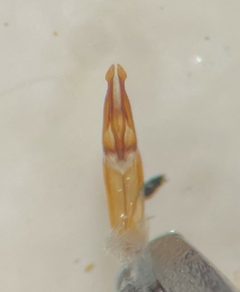
Identification to level requires examination of male genitalia; external alone is generally insufficient due to subtle interspecific differences. Keys based on male genitalia are available for regional faunas including Morocco and Central America. The can be distinguished from other small aquatic beetles by its elongate body form and association with benthic .
Images
Appearance
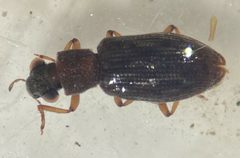
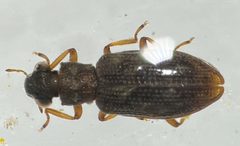
Small, elongate aquatic beetles with streamlined bodies adapted for life in freshwater. The Hydrochus exhibits considerable morphological diversity, with distinguished by features of the male genitalia, body , and punctation patterns. Habitus images show compact, somewhat cylindrical bodies typical of benthic water beetles.
Habitat
Freshwater including lakes, streams, rivers, and unusual wetland formations. Larvae are benthic, living at the water bottom. are aquatic and associated with the same freshwater systems. Specific microhabitat preferences vary by and region.
Distribution
Worldwide distribution with notable diversity in: West Mediterranean (Spain, Morocco with 12+ ), Central America (26 species), South America (77 species documented from Bolivia, Brazil, Paraguay), North America, Turkey, Iran, and East Asia including Japan. Undercollected in parts of the Middle East and East Mediterranean relative to West Mediterranean.
Seasonality
activity varies by region; specimens collected year-round in tropical regions, with more restricted activity periods in temperate zones. Specific seasonal patterns not well documented for most .
Diet
Larvae feed on Naididae worms (Oligochaeta) based on laboratory observations of Hydrochus japonicus. feeding habits not well documented.
Life Cycle
Complete with , larval, pupal, and stages. Larvae possess a terminal spiracular atrium but do not appear to breathe at the water surface, remaining benthic throughout development.
Behavior
Larvae are benthic, living at the bottom of freshwater rather than at the water surface. are aquatic. Specific behavioral details for most remain unknown.
Ecological Role
Benthic or scavengers in freshwater ; larvae consume oligochaete worms. Described as having 'great ecological interest' as aquatic Coleoptera, though specific ecosystem functions are not well quantified.
Human Relevance
Subject of taxonomic research due to high and complex identification; no documented direct economic importance or pest status. Serve as indicators of freshwater biodiversity and quality in some regions.
Similar Taxa
- HydrophilidaeHydrochidae is sometimes placed as Hydrochinae within Hydrophilidae; both are aquatic beetles in superfamily Hydrophiloidea but Hydrochidae (or Hydrochinae) is distinguished by elongate body form and exclusively benthic larval habit versus the more diverse habits of Hydrophilidae sensu stricto
- HydraenidaeBoth are small aquatic beetles in similar freshwater ; Hydraenidae typically have clubbed and different body proportions, while Hydrochidae have elongate bodies and larvae with terminal spiracular atria
More Details
Taxonomic Status
The 's rank is disputed: treated as distinct family Hydrochidae by most modern authors, but as Hydrochinae within Hydrophilidae by some. Contains only the Hydrochus Leach, 1817.
Larval Ecology
Long considered 'mystery larvae' due to lack of ecological knowledge; first detailed observations from laboratory rearing of Hydrochus japonicus confirmed benthic habit and feeding on Naididae worms.
Species Diversity
More than 200 recognized globally, with recent descriptions substantially increasing known diversity in Central and South America. The West Mediterranean is the most diverse Palearctic region.
Sources and further reading
- BugGuide
- GBIF taxonomy match
- iNaturalist taxon
- NCBI Taxonomy
- Catalogue of Life
- The Hydrochidae (Coleoptera) of Morocco with a redescription of Hydrochus cf. obtusicollis Fairmaire, 1877
- Taxonomy of Central American water beetles in the genus Hydrochus Leach, 1817 (Coleoptera: Hydrochidae)
- Erzurum Jeolojik Oluşumları ve Muş Hamurpet Gölü Helophoridae, Hydrochidae, Hydrophilidae (Coleoptera) Üzerine Faunistik Bir Çalışma A Faunistic Study of Helophoridae, Hydrochidae, Hydrophilidae (Coleoptera) in Erzurum Geological Formations and Muş Hamurpet Lake
- An annotated checklist of the aquatic Polyphaga (Coleoptera) of Egypt III. Families: Helophoridae, Georissidae, Hydrochidae, Spercheidae, Scirtidae, Elmidae, Dryopidae, Limnichidae and Heteroceridae
- Taxonomy of water beetles in the genus Hydrochus Leach, 1817, from Bolivia, Brazil and Paraguay (Coleoptera: Hydrochidae)
- Aquatic Coleoptera (Dryopidae, Dytiscidae, Elmidae, Gyrinidae, Haliplidae, Helophoridae, Hydrochidae, Hydrophilidae, Noteridae, Psephenidae) of Iowa: Distributional Records and Notes
- Laboratory rearing of Hydrochus japonicus (Coleoptera: Hydrochidae) suggests larvae live at the water bottom
- Hydrochus farsicus sp.n. from Iran and notes on other Palearctic species of the genus (Coleoptera: Hydrophiloidea: Hydrochidae)
- New Faunistic Records of Helophoridae, Hydrochidae, and Hydrophilidae (Coleoptera) from the Wetland Habitats of Tekirdağ Province, Türkiye
- Contributo alla conoscenza dei coleotteri acquatici nei bacini idrografici della provincia di Brescia (Lombardia) (Coleoptera: Gyrinidae, Haliplidae, Noteridae, Dytiscidae, Helophoridae, Hydrochidae, Hydrophilidae, Hydraenidae, Psephenidae, Heteroceridae, Dryopidae, Elmidae)