
Anisandrus obesus
Hulcr, Dole, Beaver & Cognato, 2007
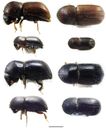
Anisandrus obesus is an ambrosia beetle native to eastern North America that specializes in boring into the sapwood of Big Tooth Aspen (Populus grandidentata). Females construct characteristic gallery systems consisting of a single entrance tunnel approximately 7 mm deep followed by two lateral tunnels parallel to the wood surface. The maintains an obligate with ambrosia fungi, which larvae consume without expanding parental galleries. Progeny exhibit strongly female-biased sex ratios (approximately 6:1), with only females emerging in spring to disperse and attack new .
Pronunciation
How to pronounce Anisandrus obesus: /ˌænɪˈsændrəs oʊˈbiːsəs/
These audio files are automatically generated. While they are not always 100% accurate, they are a good starting point.
Images
Habitat
Sapwood of Big Tooth Aspen (Populus grandidentata); general woody are attacked by emerging females in spring
Distribution
Eastern North America: recorded from New Brunswick, Nova Scotia, Ontario, and Québec in Canada
Seasonality
Active April through July: females construct entrance holes in April, laid by May, larvae develop through June, progeny emerge by mid-July; occurs in parental galleries
Diet
Symbiotic fungus cultivated within galleries; larvae feed exclusively on this fungus without expanding galleries
Host Associations
- Populus grandidentata - primary Big Tooth Aspen; specific study for gallery construction and development
- woody hosts - secondary attacked by emerging females in spring for new colony establishment
Life Cycle
Females bore entrance tunnels ~7 mm into sapwood and create two lateral tunnels parallel to the surface. Following symbiotic fungal establishment, are deposited along gallery walls by May. Three larval instars feed on cultivated fungus within the parental gallery. occurs through June, with progeny appearing by mid-July. Progeny adults overwinter in parental galleries; only females emerge in spring to initiate new attacks on woody
Behavior
Females construct uniformly distributed entrance holes over surfaces. Gallery architecture consists of a single entrance tunnel with two lateral branches. Larvae remain within parental galleries and do not excavate additional tunnels. Strong female-biased : only females emerge in spring; males do not leave parental galleries
Ecological Role
Wood-boring ambrosia beetle that facilitates fungal for larval nutrition; contributes to decomposition and nutrient cycling in aspen stands
More Details
Taxonomic Note
Described in 2007; previously classified within broader Xyleborus or related ambrosia beetle