
Ambrosiodmus minor
Wood & Bright, 1992
Punky Wood Ambrosia Beetle
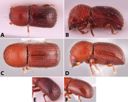
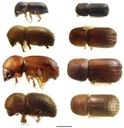
Ambrosiodmus minor is an ambrosia beetle in the southeastern United States, including Florida. It cultivates a unique ambrosia fungus, Flavodon subulatus, which causes rapid wood rot in dead trees. The is considered of low economic importance as evident major impacts have not been observed, though wood decay from this association is increasing across its introduced range. Native to Asia, it has established in North America and has been recorded from mainland China with documented associations on multiple tree .
Pronunciation
How to pronounce Ambrosiodmus minor: /æmˈbroʊsiˌɒdməs ˈmaɪnɔr/
These audio files are automatically generated. While they are not always 100% accurate, they are a good starting point.
Images
Habitat
Dead trees and decayed wood; primarily colonizes recently dead trees that retain sufficient nutrients to support fungal gardens.
Distribution
Native to Southern Asia; introduced and established in southeastern United States including Florida, Mississippi, and other states; recorded from mainland China with expanding range documentation.
Diet
Cultivates and feeds upon ambrosia fungus Flavodon subulatus; the farms this fungus in specialized gardens within wood galleries. The fungus is capable of true wood decomposition, metabolizing decayed wood into nutritious food for the beetle—an unusual capability among ambrosia fungi.
Host Associations
- Flavodon subulatus - mutualistic Primary ambrosia fungus cultivated by the ; causes rapid wood rot in dead trees
- Ficus - plantDocumented in mainland China
- Morus alba - plantDocumented in mainland China
- Morus nigra - plantDocumented in mainland China
- Prunus armeniaca - plantDocumented in mainland China
- Prunus persica - plantDocumented in mainland China
- Punica granatum - plantDocumented in mainland China
- Pyrus - plantDocumented in mainland China
- Vitis vinifera - plantDocumented in mainland China
Behavior
cultivate fungal gardens of Flavodon subulatus within wood galleries. The transports fungal in specialized pocket-like structures (mycangia) to new trees. This mutualistic association represents one of the few known cases where an ambrosia fungus has evolved true wood-degrading capabilities rather than merely extracting easily available nutrients.
Ecological Role
Contributes to wood decay and decomposition in dead trees through its association with Flavodon subulatus. The fungal accelerates breakdown of woody material in forest , though the primarily colonizes already dead or dying trees rather than killing healthy ones.
Human Relevance
Considered a low-importance in the United States as no major economic or ecological impacts have been documented. The and its associated fungus are increasing in in dead trees across Florida and the Southeast. The unique wood-decaying ability of its fungal has attracted research interest for potential biotechnological applications in wood processing.
Similar Taxa
- Ambrosiodmus leconteiCongeneric ambrosia beetle with similar fungus-farming ; both cultivate Flavodon fungi and share morphological traits typical of the
- Ambrosiophilus nodulosusAnother introduced ambrosia beetle in the same Scolytinae with overlapping distribution in the southeastern United States
Sources and further reading
- BugGuide
- GBIF taxonomy match
- iNaturalist taxon
- NCBI Taxonomy
- Catalogue of Life
- Six new Dracula ants from Madagascar: Minor workers become queens in Mystrium | Blog
- Litaneutria minor – agile ground mantid | Beetles In The Bush
- Bug Eric: Priocnemis minorata
- Research on Fungus-farming Beetles Reveals a New Wood-decaying Fungus
- New ant species explodes to defend its colony | Blog
- New Area Records and New Hosts of Ambrosiodmus minor (Stebbing) (Coleoptera: Curculionidae: Scolytinae) in Mainland China
- The Punky Wood Ambrosia Beetle and Fungus in Florida that Cause Wood Rot: Ambrosiodmus minor and Flavodon subulatus
- First Record of the Introduced Ambrosia Beetle Ambrosiophilusnodulosus (Eggers) in Mississippi, with Notes on the Distribution of Ambrosiodmus minor (Stebbing) (Coleoptera: Curculionidae: Scolytinae)