
Phloeosinus sequoiae
Hopkins, 1903
Redwood Bark Beetle
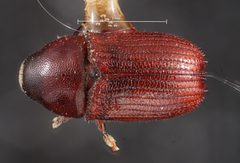
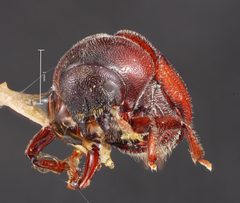
Phloeosinus sequoiae is a small bark beetle in the Curculionidae, commonly known as the Redwood Bark Beetle. The was described by Hopkins in 1903 and is associated with Sequoia and Sequoiadendron species. It belongs to a of crenulate bark beetles that tunnel beneath bark of conifers.

Pronunciation
How to pronounce Phloeosinus sequoiae: //ˌflioʊˈsaɪnəs sɪˈkwɔɪ.aɪ//
These audio files are automatically generated. While they are not always 100% accurate, they are a good starting point.
Identification
Distinguished from other Phloeosinus by association with Sequoia ; from other bark beetles by the crenulate declivity pattern on the . Specific identification requires examination of microscopic features including pronotal and elytral .
Images
Habitat
Associated with coast redwood (Sequoia sempervirens) and giant sequoia (Sequoiadendron giganteum); inhabits bark and phloem of living or recently dead trees.
Distribution
Western North America; recorded from California (range of Sequoia sempervirens and Sequoiadendron giganteum) and British Columbia.
Diet
Phloem tissue of Sequoia and Sequoiadendron ; larvae feed on inner bark.
Host Associations
- Sequoia sempervirens - coast redwood
- Sequoiadendron giganteum - giant sequoia
Behavior
Bores galleries in bark of trees; typical bark beetle involving mate attraction and gallery construction for -laying.
Ecological Role
Contributes to nutrient cycling in redwood ; may accelerate mortality of stressed or damaged trees but is not considered a primary mortality agent of healthy mature trees.
Human Relevance
Of interest in forest management and conservation of redwood ; not a major economic pest.
Similar Taxa
- Phloeosinus cupressiAlso in Phloeosinus with crenulate declivity, but associated with Cupressus rather than Sequoia
- Other Scolytinae bark beetlesSimilar size and habits, but distinguished by specificity and elytral declivity structure
More Details
Taxonomic Note
Scolytinae, traditionally treated as , is now classified as a within Curculionidae based on molecular phylogenetic studies.