
Phloeosinus cupressi
Hopkins, 1903
cypress bark beetle
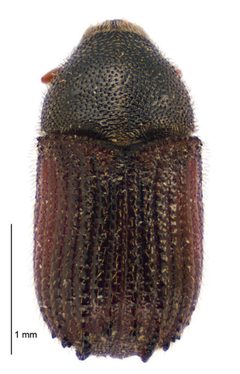
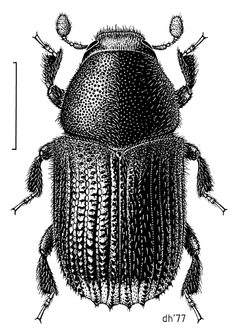
Phloeosinus cupressi is a crenulate bark beetle native to North America that has become in Australia and New Zealand. It poses a serious threat to Cupressus trees and related conifers, with potential ecological and economic impacts globally. Climate change is projected to expand its suitable northward by approximately 18% under RCP6.0 scenarios.
Pronunciation
How to pronounce Phloeosinus cupressi: //ˌfloʊ.iˈoʊ.saɪ.nəs kuˈprɛs.aɪ//
These audio files are automatically generated. While they are not always 100% accurate, they are a good starting point.
Images
Habitat
Temperate, subtropical, and Mediterranean zones; found under bark of dead or dying trees, felled trees, or deadwood.
Distribution
Native to North America; currently established in Canada, United States, Panama, Australia, and New Zealand. Projected suitable areas under climate change include Europe, South America, China, and expanded ranges in Australia and New Zealand. Currently absent from China but at risk of establishment.
Diet
feed on phloem tissues and bore into small twigs upon .
Host Associations
- Cupressus - primary
- Cupressus macrocarpa -
- Cupressus arizonica -
- Cupressus tortulosa -
- Chamaecyparis lawsoniana -
- Platycladus orientalis -
- Thuja plicata -
- Thuja occidentalis -
- Sequoia sempervirens -
- Callitris spp. -
Life Cycle
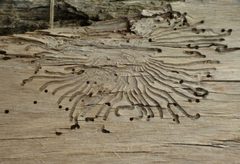
emerge and bore into small twigs, creating tunnels that extend downward from the center while preserving a thin outer bark layer. Bored twigs subsequently break off and attract additional adults. occurs preferentially under bark of dead or dying trees, though more commonly found beneath felled trees or deadwood.
Behavior
Upon , bore into small twigs creating characteristic tunnels. Frequency and severity of has been observed to be gradually increasing under current climate conditions.
Ecological Role
Destructive forest pest posing serious threat to forest and urban greenery. using parasitic wasp Rhaphitelus maculatus has been employed.
Human Relevance
Major economic and ecological threat to cypress plantations and urban greenery. Global trade of Cupressus increases risk of spread, necessitating and monitoring in high-risk regions.
Sources and further reading
- BugGuide
- Wikipedia
- GBIF taxonomy match
- iNaturalist taxon
- Catalogue of Life
- Cecidomyiidae | Beetles In The Bush
- galls | Beetles In The Bush
- 🌿 Botanizing w/ the Webster Groves Nature Study Society (WGNSS) Botany Group at Rockwoods Reservation – 3 Nov 2025 | Beetles In The Bush
- October | 2021 | Beetles In The Bush
- Let’s make a deal! | Beetles In The Bush
- Missouri | Beetles In The Bush | Page 4
- Predicting Phloeosinus cupressi (Coleoptera: Curculionidae: Phloeosinus) Distribution for Management Planning Under Climate Change