
Purealus
Anderson
Species Guides
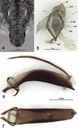
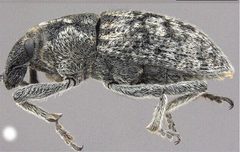
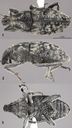
1Purealus is a of cleonine weevils (Curculionidae: Lixinae: Cleonini) to the southwestern United States. The genus was erected to accommodate Purealus beckelorum, a that cannot be placed in existing North American genera Apleurus or Scaphomorphus due to a unique combination of morphological characters. The genus is distinguished by two autapomorphies within Cleonini: a distinctly tumescent and asperate base of elytral interval 3, and widely separated procoxae. The single known species is winter-active and ground-dwelling in arid environments.
Pronunciation
How to pronounce Purealus: /pʊəˈreɪləs/
These audio files are automatically generated. While they are not always 100% accurate, they are a good starting point.
Identification
The combination of two characters distinguishes Purealus from all other Cleonini: (1) base of elytral interval 3 distinctly tumescent and asperate, and (2) widely separated procoxae. These traits separate it from the superficially similar North American Apleurus and Scaphomorphus, with which it shares some characters but lacks the diagnostic characters defining the monophyly of either genus. The medially tumescent rostrum and condition provide additional distinguishing features.
Images
Habitat
Arid including open sandy flats, open alkaline areas around lakes, and dirt roadways. Specimens have been collected from beach wash-up (fine debris along lake shore) and directly on bare ground.
Distribution
Known from western Texas (Gaines County, Pecos County) and eastern New Mexico (Lea County, Quay County). Type locality: McKenzie Lake, Gaines County, Texas.
Seasonality
Winter-active. collected in October, November, December, and March.
Behavior
Ground-dwelling; most specimens collected on the ground. No plant associations observed despite extensive field searching of shrubs, herbs, and tiger .
Similar Taxa
- ApleurusShares some characters but lacks the diagnostic characters used to define Apleurus monophyly; distinguished by tumescent/asparate elytral interval 3 base and widely separated procoxae
- ScaphomorphusShares some characters but lacks the diagnostic characters used to define Scaphomorphus monophyly; distinguished by tumescent/asparate elytral interval 3 base and widely separated procoxae
More Details
Phylogenetic placement
Phylogenetic affinities remain unresolved. Addition of character state coding to a comprehensive analysis of world Cleonini did not provide significant information on relationships to other .
Collection circumstances
Despite extensive fieldwork searching vegetation and associated , no plant associations have been discovered. The of this remains poorly understood.