
Apleurus
Chevrolat, L.A.A., 1873
Species Guides
5Apleurus is a of cylindrical weevils in the Curculionidae, established by Chevrolat in 1873. The genus comprises eight described distributed in North America, primarily found in the United States and Mexico. Species are characterized by their elongated, cylindrical body form typical of the group. The genus has been documented in 304 iNaturalist observations, indicating moderate levels of citizen science engagement.
Pronunciation
How to pronounce Apleurus: /æpˈljʊərəs/
These audio files are automatically generated. While they are not always 100% accurate, they are a good starting point.
Identification
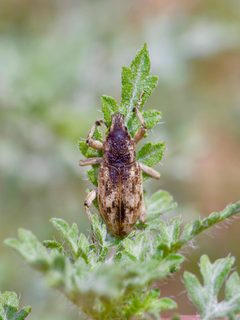
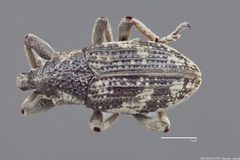
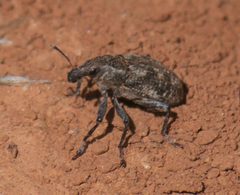
Members of Apleurus can be recognized by their cylindrical body shape, a trait reflected in the for the group. The rostrum (snout) is elongated as in all weevils. Specific identification to level requires examination of subtle morphological features such as vestiture patterns, punctation , and body proportions; several species were originally described by LeConte, Casey, and Fall in the late 19th and early 20th centuries.
Images
Distribution
The occurs in North America, with documented from the United States and Mexico. Specific distribution varies by species: Apleurus aztecus is known from Mexico, while other species such as A. angularis, A. lutulentus, and A. porosus were described from US localities.
More Details
Species Diversity
The contains eight described : Apleurus albovestitus, A. angularis, A. aztecus, A. hystrix, A. jacobinus, A. lutulentus, A. porosus, and A. saginatus. Four of these were described by Thomas L. Casey in 1891, two by John Lawrence LeConte in 1859, one by Henry Fall in 1913, and one by Anderson in 1987.