
Cleonini
Genus Guides
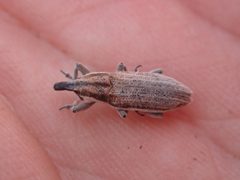
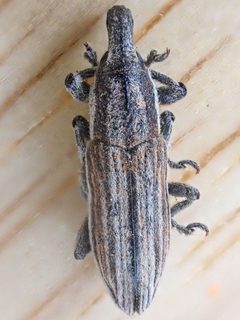
6Cleonini is a tribe of weevils within the Lixinae, comprising approximately 96 extant -group distributed globally. All extant members are hypothesized to be flightless despite frequently possessing fully developed wings (), a unique condition among Lixinae. The tribe exhibits widespread morphological that obscures phylogenetic relationships, with many genera radiating from a common ancestor with weakly resolved internal branching. Cleonini are primarily associated with arid and semi-arid , including deserts and steppe environments across North Africa, the Middle East, Central Asia, and western North America.

Pronunciation
How to pronounce Cleonini: /kleɪˈoʊnɪnaɪ/
These audio files are automatically generated. While they are not always 100% accurate, they are a good starting point.
Identification
Cleonini can be distinguished from other Lixinae tribes by the combination of: flightlessness (unique within Lixinae, though wings may be fully developed); procoxae that are contiguous or nearly so (widely separated in the aberrant Purealus); and morphological features subject to including body shape and vestiture patterns. The tribe shows rampant convergence in external , making identification to genus and frequently dependent on examination of genitalia. Within the tribe, genera are distinguished by combinations of characters including rostral curvature, antennal segment proportions, scrobe morphology, elytral interval structure, and male and female terminalia.
Images
Habitat
Arid and semi-arid environments including deserts, steppe, and dry river valleys. Documented from Moroccan desert, Egyptian desert, Aras River valley (Turkey), and western Texas/eastern New Mexico. Many collected on ground in winter months in arid .
Distribution
Global distribution with concentration in Palearctic region. Documented from: North Africa (Morocco, Egypt), Turkey (Aras River valley), Pakistan, and western North America (Texas, New Mexico). Specific documented occurrences include new records for Egyptian fauna (Cyphocleonus cenchrus, Maximus absolutus), new records for Turkish fauna (Entymetopus limis, Esamus, Esamus mnischekii), and new genus and from Texas/New Mexico (Purealus beckelorum).
Seasonality
active in winter months in arid of western Texas and eastern New Mexico. Seasonal activity patterns vary by region and .
Diet
Root-feeding. Herbivorous with documented plant associations including: Bassia hirsuta (for Bothynoderes affinis, Maximus strabus, Entymetopus lineolatus, E. limis, Tanymecus tenuis), Suaeda confusa (for Temnorhinus nasutus), and Atriplex micrantha (for Temnorhinus hololeucus).
Host Associations
- Bassia hirsuta - Documented for Bothynoderes affinis, Maximus strabus, Entymetopus lineolatus, E. limis, and Tanymecus tenuis; new record
- Suaeda confusa - Documented for Temnorhinus nasutus; new record
- Atriplex micrantha - Documented for Temnorhinus hololeucus; new record
Life Cycle
Pupal stage occurs in soil. For Entymetopus lineolatus and Asproparthenis steveni, pupae develop within capsules constructed from soil, located beneath plants.
Behavior
Primarily flightless despite frequent presence of fully developed wings; this represents a behavioral and physiological rather than structural constraint. Temnorhinus hololeucus has been documented as capable of to reach plants in desert , representing an exception to the general flightless condition of the tribe. frequently observed on ground surface.
Ecological Role
Root-feeding herbivores in arid and semi-arid . Role in plant dynamics and nutrient cycling in desert and steppe environments not quantified.
Human Relevance
Some likely of agricultural significance as root-feeding pests, though specific economic impacts not documented in available sources. Taxonomic importance due to complex phylogenetic relationships and .
Similar Taxa
- TanymeciniAlso within Lixinae; distinguished by capability (Tanymecini are not flightless), different associations, and non-contiguous procoxae in most . Both tribes occur sympatrically in Aras River valley and share some host plants including Bassia hirsuta.
- Other Lixinae tribesCleonini uniquely flightless among Lixinae; other tribes possess capability and show different biogeographic patterns.
Sources and further reading
- BugGuide
- iNaturalist taxon
- NCBI Taxonomy
- Two newly recorded species of tribe Cleonini (Coleoptera: Curculionidae) from Egypt
- Aras vadisi Cleonini ve Tanymecini (Coleoptera: Curculionidae) türleri üzerinde biyolojik ve biyocoğrafik notlar
- Eurycleonus talamellii n. sp. of Cleonine weevil from the Moroccan desert (Coleoptera: Curculionidae: Lixinae: Cleonini)
- Two species of Cleonini new for Pakistan and new synonymies Coleoptera: Curculionidae: Lixinae)
- Cleonini (Coleoptera: Curculionidae: Lixinae) are monophyletic and flightless: tribe overview, rampant adult homoplasy and illustrated global diversity
- Purealus beckelorum, a new genus and species of cleonine weevil from western Texas and eastern New Mexico (Coleoptera, Curculionidae, Lixinae, Cleonini)