
Otiorhynchini
Schönherr, 1826
Genus Guides
3- Agronus(broad-nosed weevils)
- Otiorhynchus(root weevils)
- Sciopithes
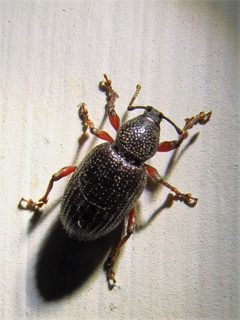
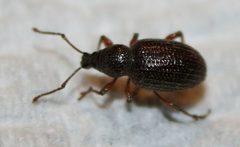
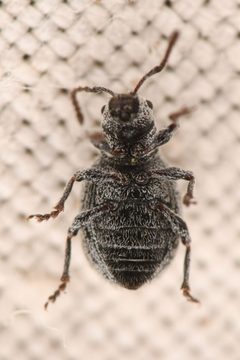
Otiorhynchini is a tribe of true weevils within the Entiminae, Curculionidae. The tribe was established by Schönherr in 1826 and contains approximately 24 extant , including the large and economically significant genus Otiorhynchus. Members of this tribe are part of the broad-nosed weevil group, characterized by their relatively short, broad rostrums compared to other weevil lineages. The tribe includes both extant and fossil genera, with two extinct genera known from the fossil record.
Pronunciation
How to pronounce Otiorhynchini: /ˌoʊtiˌoʊˈrɪŋkaɪni/
These audio files are automatically generated. While they are not always 100% accurate, they are a good starting point.
Identification
Otiorhynchini belongs to the Entiminae, whose members are distinguished from other Curculionidae by their short, broad rostrum and the position of the geniculate (elbowed) , which arise near the base of the rostrum rather than near its apex. Within Entiminae, tribal-level identification requires examination of detailed morphological characters including tarsal structure, claw , and features of the and mesosternum. The Otiorhynchus, the type genus of this tribe, contains that are often recognized by their compact body form and frequently (wingless) condition in females.
Images
Distribution
The tribe has a broad distribution corresponding to that of its constituent . The genus Otiorhynchus, the most -rich member, is primarily distributed across the Palearctic region with numerous species in Europe, Asia, and North Africa. Several genera show more restricted distributions: Kocheriana is to the Canary Islands, and Neotournieria is restricted to the western Mediterranean. Other genera such as Sciobius and Sciopithes occur in southern Africa.
Human Relevance
Several within Otiorhynchus are significant agricultural and horticultural pests. The black vine weevil (Otiorhynchus sulcatus) and strawberry root weevil (Otiorhynchus ovatus) are particularly damaging, with larvae feeding on roots and causing foliar damage. These species have been introduced to North America and other regions beyond their native Palearctic range, where they impact berry crops, ornamentals, and nursery stock. Management of these pests is complicated by the parthenogenetic common in many Otiorhynchus species.
Similar Taxa
- BrachyderiniAnother large tribe within Entiminae; distinguished from Otiorhynchini by differences in tarsal structure, particularly the presence of a distinct tooth or lobe on the third tarsal segment, and details of the mesosternal receptacle.
- NaupactiniNew World tribe of Entiminae with similar general body form; separated by differences in claw structure, with Naupactini typically having toothed or appendiculate claws, and by geographic distribution which is primarily Neotropical.
More Details
Fossil Record
The tribe includes two extinct known from fossils: †Otiorhynchites and †Otiorrhynchites (the latter likely a lapsus or synonym). These fossil indicate the tribe has existed since at least the Cenozoic.
Parthenogenesis
Many in the Otiorhynchus reproduce by , with females producing female offspring without . This reproductive mode has facilitated the spread of pest species by allowing single individuals to establish new .