Orchestes fagi
(Linnaeus, 1758)
Beech leaf-mining weevil, beech leaf-miner beetle
Orchestes fagi is a small to Europe that has become in North America, where it attacks beech (Fagus grandifolia). The mine the leaves of beech trees, while undergo an extended of eight to nine months, on tree boles. The species has spread through eastern Nova Scotia, Canada, with human-assisted transport via firewood and timber implicated in its range expansion.
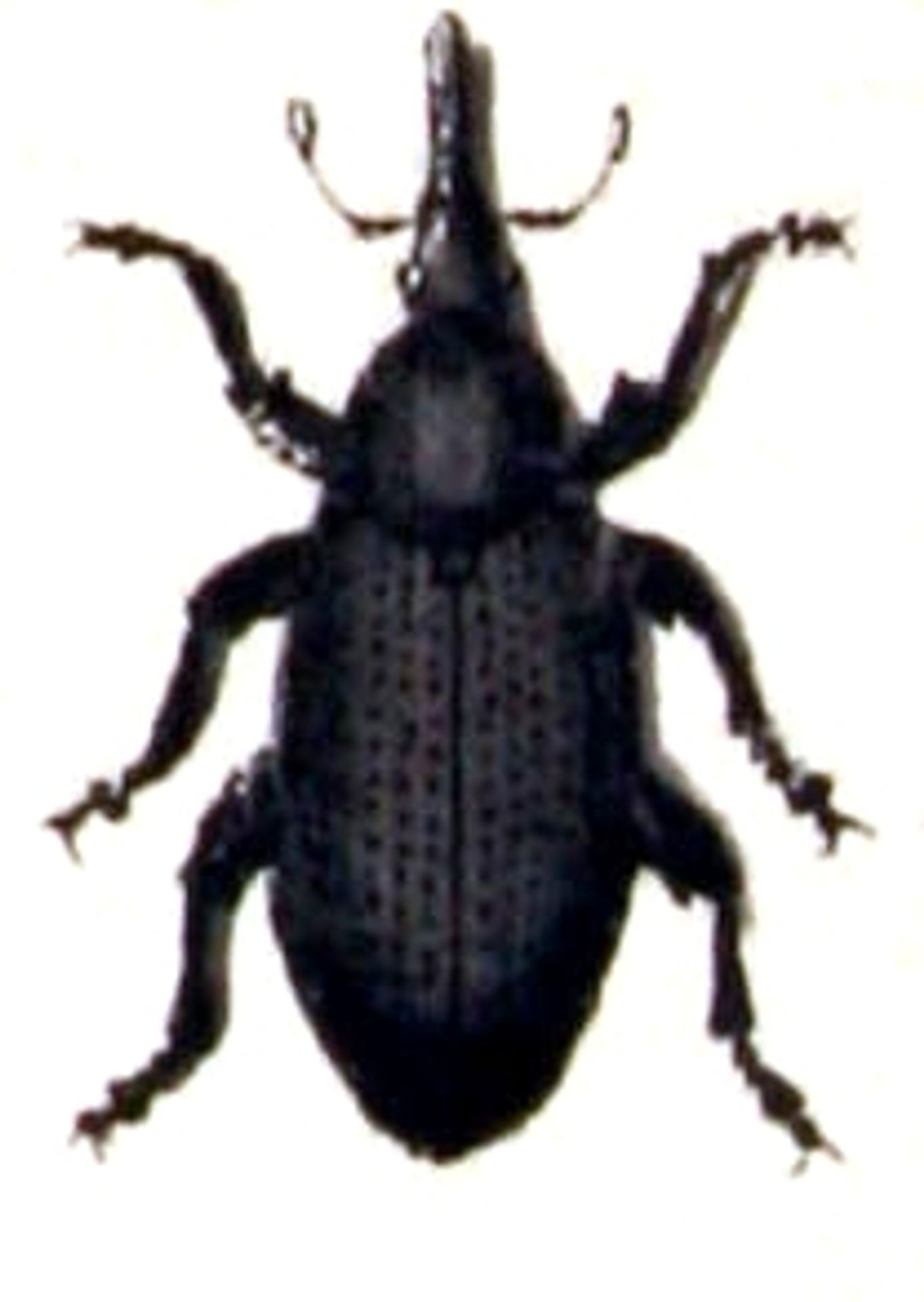
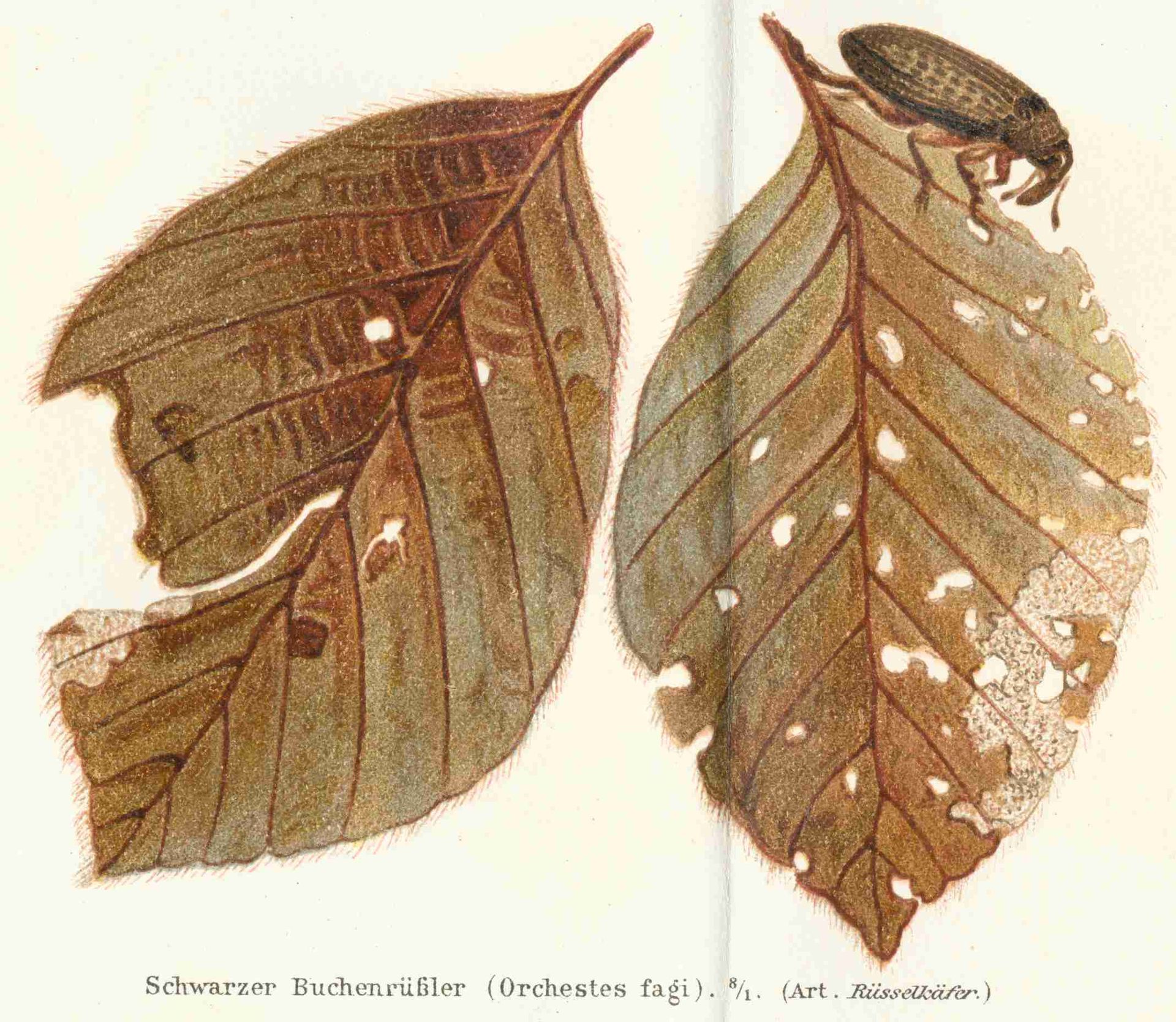
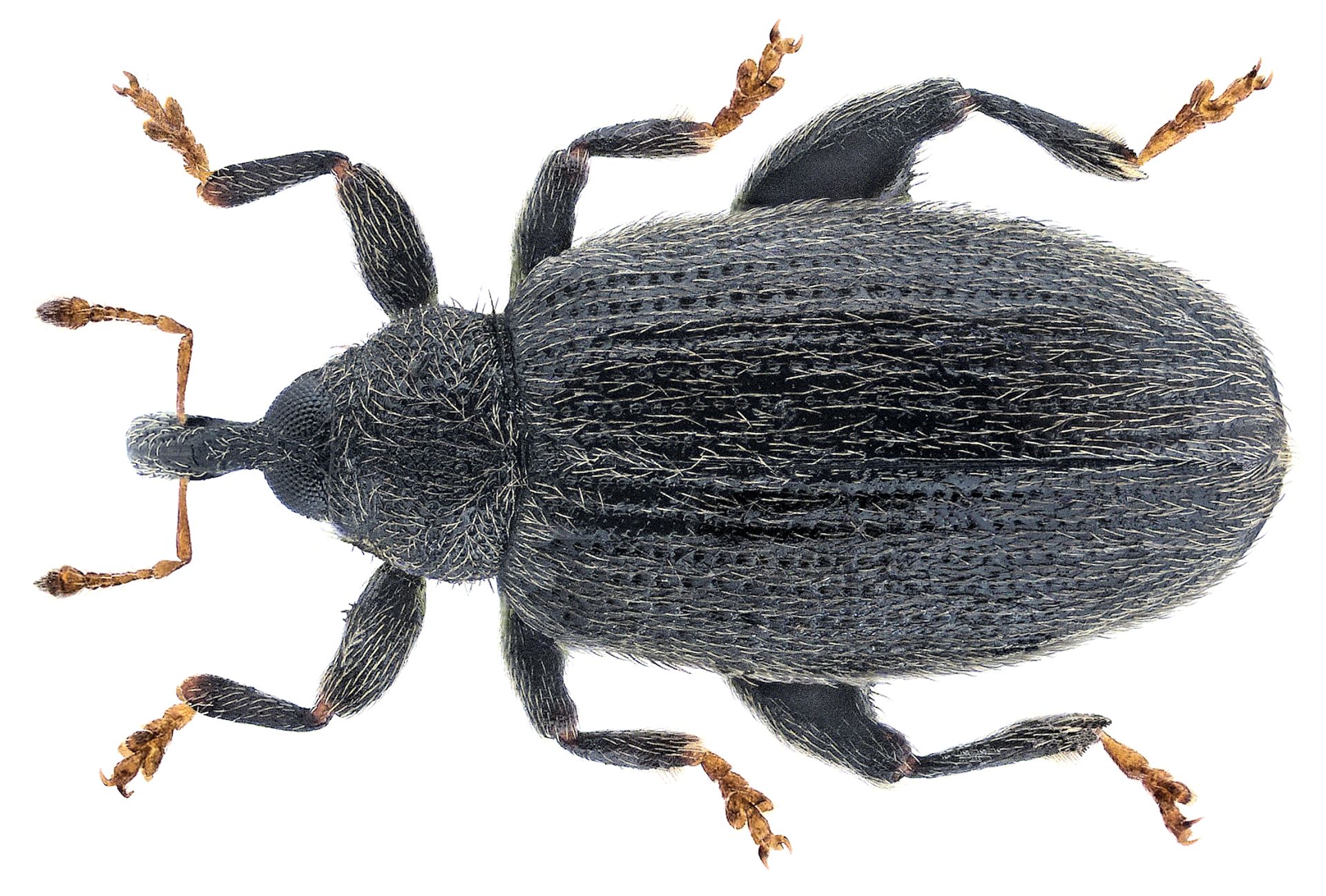
Pronunciation
How to pronounce Orchestes fagi: /ɔrˈkɛstes ˈfɑːdʒi/
These audio files are automatically generated. While they are not always 100% accurate, they are a good starting point.
Identification
can be monitored using , green, or sticky triangular prism traps, which capture significantly more individuals than other colours or trap designs. Light , dark blue, and red traps are less effective. No specific morphological distinguishing features from similar Orchestes are described in available sources.
Images
Habitat
Forested areas containing beech trees; in Europe associated with Fagus sylvatica, in North America with Fagus grandifolia. overwinter on the base, middle, and upper boles of trees and adjacent including red maple (Acer rubrum) and red spruce (Picea rubens), favoring areas with relatively high bark roughness. Rarely found on branches, moss, duff, or soil beneath trees.
Distribution
to Europe (including Belgium); in eastern North America, specifically established in Nova Scotia, Canada with multiple distantly distributed reported.
Seasonality
are present on woody stems from July through May, reflecting an extended period. In Nova Scotia, active adults captured in traps; specific seasonal activity patterns in range not detailed in sources.
Diet
mine the leaves of beech trees (Fagus ). feeding habits not explicitly described in available sources.
Host Associations
- Fagus sylvatica - primary European beech; in Europe
- Fagus grandifolia - primary beech; in Nova Scotia, Canada
- Acer rubrum - siteRed maple; found on boles near areas
- Picea rubens - siteRed spruce; found on boles near areas
Life Cycle
undergo for eight to nine months of the year, on tree boles. Larval stage mines leaves of beech trees. Specific details on laying, larval development duration, , and time not described in available sources.
Behavior
favor on parts of trees with relatively high bark roughness. Between July and May, woody stems near areas harbor diapausing adults. Adults are attracted to , green, and visual stimuli. Baiting traps with the volatile 9-geranyl-p-cymene does not increase capture rates.
Ecological Role
Leaf-mining of beech trees; in North America, an pest contributing to stress on beech . Firewood and timber transport facilitate range expansion, creating forestry management concerns.
Human Relevance
Pest of ornamental and forest beech trees in North America. Human-mediated spread occurs through transport of firewood and timber containing . programs using coloured are deployed to track invasion spread in Canada.
Similar Taxa
- Orchestes steppensisAnother from Asia that mines leaves of elms; previously misidentified as European elm weevil. Distinguished by association (elm vs. beech) and geographic origin.
More Details
Invasion pathway
The harvest and transport of wood from areas may facilitate spread, potentially explaining multiple, distantly distributed in eastern Nova Scotia.
Taxonomic history
Formerly known as Rhynchaenus fagi; reclassified to Orchestes fagi.
Sources and further reading
- BugGuide
- Wikipedia
- GBIF taxonomy match
- iNaturalist taxon
- NCBI Taxonomy
- Catalogue of Life
- Nasty scale insects spell trouble for American beech trees: Beech bark scale, Cryptococcus fagisuga — Bug of the Week
- Italian Society of Vegetation Science signs with Pensoft to publish its journal on ARPHA | Blog
- biodiversity | Blog - Part 35
- Lepidoptera | Blog - Part 3
- Influence of trap colour, type, deployment height, and a host volatile on monitoring Orchestes fagi (Coleoptera: Curculionidae) in Nova Scotia, Canada
- Hitching a ride: firewood as a potential pathway for range expansion of an exotic beech leaf-mining weevil, Orchestes fagi (Coleoptera: Curculionidae)
- Influence of trap colour, type, deployment height, and a host volatile on monitoring Orchestes fagi (Coleoptera: Curculionidae) in Nova Scotia, Canada–ERRATUM